BESSY G.
Protected Area
Lac Bizerte
Why dive here
With 156+ marine species recorded in the area - including dolphins, great white sharks, mobula rays (devil rays), octopuses and sea turtles - BESSY G. offers some of Tabarka's richest wreck diving. Water ranges 16-28°C, warmest July, August, September.
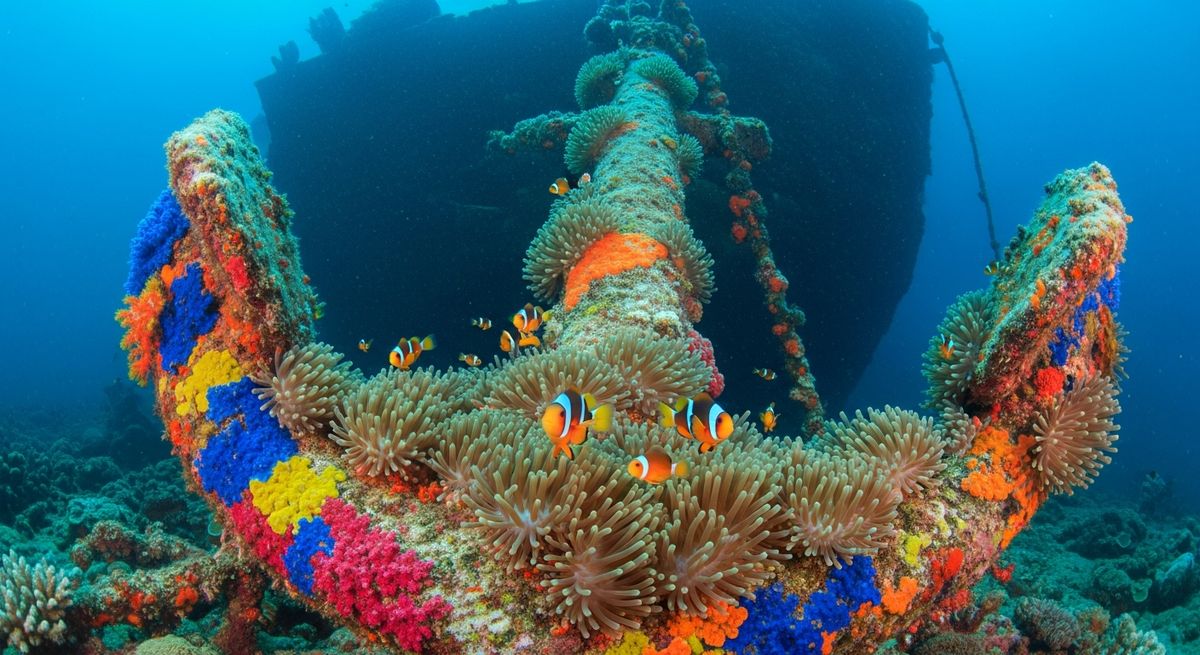
The Bessy G. is a proper old girl, a freighter that ran aground off Ras el Koran back in '78. We love a wreck with a story, and this one, sitting upright at just 12 metres, tells hers pretty clearly. You can see the damage from the grounding on the port side, where the hull is buckled. Descending onto the deck, you’ll fin past the superstructure, now completely colonised by sponges and soft corals. Our favourite part has to be exploring the cargo holds, where sunlight streams in from above, illuminating shoals of damselfish darting between the decaying metal. Look closer and you'll spot moray eels peering from crevices, and the occasional octopus tucked into a dark corner. We'd suggest going in the late morning; the light penetration is just lovely then, really bringing out the colours of the gorgonians. It’s an accessible wreck, ideal for anyone comfortable with finning around a decent-sized structure, and offers a real sense of history beneath the waves. The visibility here can be hit-or-miss with strong winds, but on a good day, it’s a magnificent dive.
Typical BESSY G. Dive Profile
Illustrative profile based on site depth and type. Actual dive profiles vary - always follow your dive computer and training.
Safety Notes
Wreck site - avoid penetration without wreck diving certification. Watch for sharp metal and entanglement hazards.
BESSY G. Wreck History
Year Sunk
1978
Vessel Type
cargo ship
Cause
grounding
The MV Bessy G. was a modern motor vessel, built in 1961 by the Clelands Shipbuilding Company. For seventeen years, she plied the seas as a typical short-sea cargo carrier. Her final voyage began in July 1978, when she departed Antwerp with a cargo destined for Tripoli, Libya. The journey through the English Channel, across the Bay of Biscay, and into the Mediterranean was routine, until she approached the coast of Tunisia.
On July 12, 1978, the Bessy G. ran hard aground near the port of Tabarka. The exact cause of the navigational error is not recorded, but the result was terminal. Despite being a relatively new and well-founded ship, the efforts to refloat her failed. She was declared a total loss and abandoned to the sea, which would slowly begin the process of breaking her apart.
Lying in just one meter of water, the wreck of the Bessy G. is a highly accessible site for novice divers and snorkelers. Having been pounded by decades of Mediterranean storms, the vessel is thoroughly broken up. Divers can explore a wide debris field consisting of steel hull plates, sections of the superstructure, and parts of her engine and machinery. The shallow, sunlit waters have encouraged marine life to colonize the wreckage, turning this modern maritime casualty into a vibrant artificial reef.
Reviews for BESSY G.
Conditions
Ocean conditions, forecast and tides for BESSY G.
BESSY G. Ocean Conditions
Monthly averages for BESSY G., sourced from Open-Meteo marine data - nearest station: Open-Meteo marine grid (37.3, 9.6) (20km away)
October Averages
Sea Temperature
24°C
76°F · Range: 23–25.7°C
Air Temperature
23°C
73°F
Wind Speed
8.01 m/s
15.6 knots
Atmospheric Pressure
1017.9 hPa
Based on 4 years of monitoring data · Data sources: Open-Meteo marine data
Plan & book
Ways to dive Tabarka, from day trips to liveaboards.
Day trips & courses
via GetYourGuideGuided dives, courses and snorkel trips with instant booking.
Find dive trips in TabarkaPlaces to stay
via Booking.comHotels and dive resorts near Tabarka.
Search stays in TabarkaDive insurance
Most travel insurance excludes or limits scuba. Check what you need before you go.
Dive insurance explainedPartner links: we may earn a commission if you book, at no extra cost to you. How we make money
Where to Stay near BESSY G.
Prices from Booking.com. We may earn a commission at no extra cost to you.