FREDERICK L BLAIR
Protected Area
Lobster Area Closure (Gander Bay)
Why dive here
With 65+ marine species recorded in the area - including blue sharks, blue whales, dwarf minke whales, humpback whales and ocean sunfish (mola mola) - FREDERICK L BLAIR offers some of Newfoundland's richest wreck diving. Water ranges 0-14°C, warmest July, August, September.
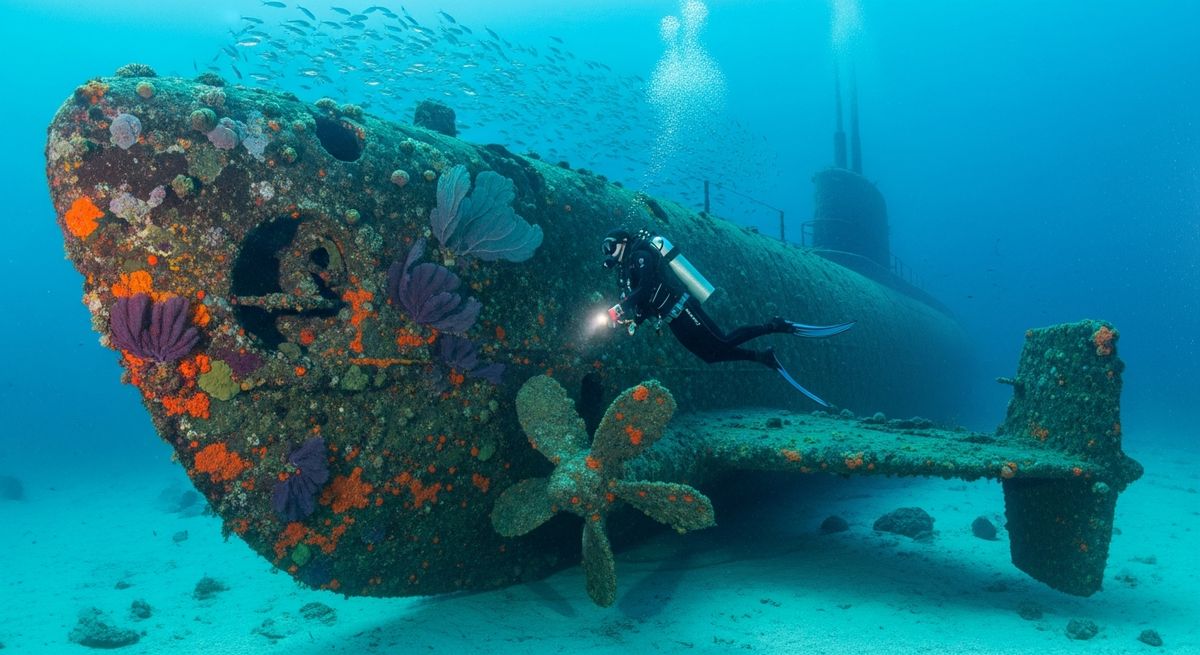
The Frederick L Blair, stranded off Herring Neck, isn't your typical deep-water wreck. This wooden fishing vessel, beached after an engine room fire in 1971, sits in surprisingly shallow water. We love that it’s accessible to almost anyone, a fantastic shore dive if you’re exploring Newfoundland. What you'll find here is less about penetration and more about the skeletal remains of a working boat, slowly succumbing to the sea. The timbers are still largely intact, creating shadowy nooks and crannies that are home to sculpins and anemones. You can trace the outline of its 36-metre length, imagining the crew’s hurried escape. We’d suggest diving this one on a calm day; the visibility can drop quickly with a chop, but when it’s clear, the light filtering through the remains is striking. It’s an interesting contrast to the area's deeper, steel wrecks.
Safety Notes
Wreck site - avoid penetration without wreck diving certification. Watch for sharp metal and entanglement hazards.
Cold water this month (avg 11°C). Drysuit or thick wetsuit (7mm+) recommended.
Reviews for FREDERICK L BLAIR
Conditions
Ocean conditions, forecast and tides for FREDERICK L BLAIR
FREDERICK L BLAIR Ocean Conditions
Monthly averages for FREDERICK L BLAIR, sourced from Open-Meteo marine data + Copernicus Marine (EU) - nearest station: Open-Meteo marine grid (47.85, -53.09) (38km away)
October Averages
Sea Temperature
11°C
51°F · Range: 8.4–13.7°C
Current Speed
1 cm/s
Direction: E (90°)
Salinity
30.75 PSU
Based on 4 years of monitoring data · Data sources: Open-Meteo marine data + Copernicus Marine (EU)
Plan & book
Ways to dive Newfoundland, from day trips to liveaboards.
Day trips & courses
via GetYourGuideGuided dives, courses and snorkel trips with instant booking.
Find dive trips in NewfoundlandPlaces to stay
via Booking.comHotels and dive resorts near Newfoundland.
Search stays in NewfoundlandDive insurance
Most travel insurance excludes or limits scuba. Check what you need before you go.
Dive insurance explainedPartner links: we may earn a commission if you book, at no extra cost to you. How we make money
Where to Stay near FREDERICK L BLAIR
Prices from Booking.com. We may earn a commission at no extra cost to you.