Diving in Newfoundland
Why dive here
Newfoundland offers some of Canada's richest diving, with 65+ marine species recorded in the area - including blue sharks, blue whales, dwarf minke whales, humpback whales and ocean sunfish (mola mola). Water ranges 0-14°C, warmest July, August, September.
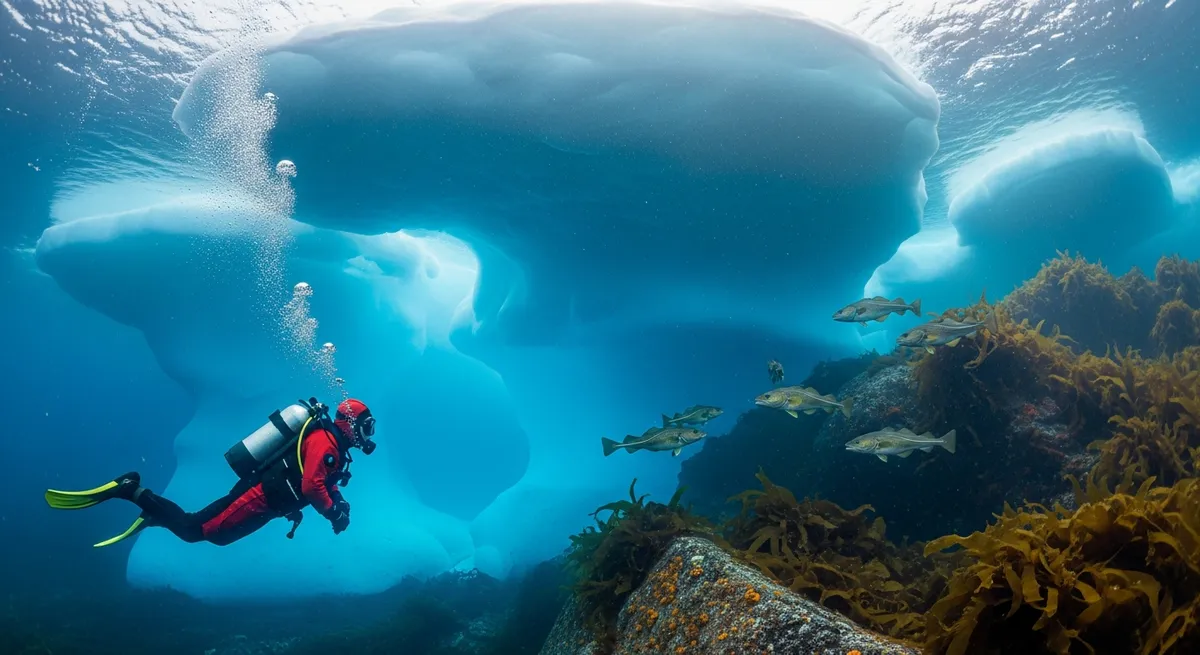
Newfoundland diving isn't for the faint-hearted, but for those who brave the chilly Atlantic, it’s a truly unique experience. We love it because it throws something completely different at you. Think iceberg diving in early summer, where the light shifts through the ice like a living kaleidoscope, or the Bell Island WWII wrecks - massive, haunting, and incredibly well-preserved. The wrecks are our favourite; a cold water preservation miracle. You'll find long rough dabs resting on plating and Newfoundland eelpout peeking from the shadows. Visibility can be epic, sometimes pushing 30 meters, especially outside the spring melt. Strong currents are common around the wrecks, so good buoyancy and comfort in moving water are a must. Keep an eye out for common minke whales or even a Greenland shark if you’re lucky, especially further offshore. This isn’t a place for casual reef dives; it's about big wrecks, big animals, and big adventure.
Newfoundland Dive Site Map
Dive sites and dive centres in Newfoundland
Newfoundland Dive Sites
30 dive sites in Newfoundland
Black Reef
Black Reef, off Newfoundland, gives you a real taste of North Atlantic diving. We've found the rocky ledges here are surprisingly active, with plenty of Atlantic cod nosing around the kelp. Keep an eye out for the smaller stuff too, like the elusive snake blenny peeking from crevices or the colourful Sevenline Shrimp. It's a spot that rewards a slower pace, good for divers who enjoy exploring the intricate ecosystems of colder waters rather than chasing big pelagics. Surface intervals can be just as interesting, with various gulls and terns often circling overhead.
Black Rocks
Newfoundland diving means cold water, sure, but Black Rocks offers a unique perspective on North Atlantic life. We usually drop in here expecting a rocky bottom, and it delivers, with plenty of nooks for things like the oddly charming daubed shanny or a lumpsucker clinging to a crevice. It’s not about huge pelagics; instead, think smaller, tougher creatures thriving in these colder waters. We’ve spotted Greenland shrimp picking their way across the rocks, and if you’re patient, a Newfoundland eelpout might just peek out. Surface intervals often bring sightings of kittiwakes or arctic terns, reminding you of the wild beauty above and below. This site is a good pick for those curious about resilient, lesser-seen species.
BLUEBACK
The Blueback, a wooden fishing vessel, sits at 30 metres just off Black Head in Newfoundland. She caught fire in St. John's back in '77, got towed out, exploded, and eventually settled here. You'll find a scattered wreck, not a pristine intact hull, but that makes for interesting exploring. We've seen wolfish poking out from under debris, and the lobster population around the broken timbers is usually pretty healthy. It's a dive for those who enjoy picking apart a story from the fragments, rather than cruising through a perfect ghost ship.
Catamaran Reef
Catamaran Reef is a northern coral reef site off Newfoundland, Canada, offering a unique cold-water experience. While the corals are less colourful than their tropical cousins, they support a surprising amount of fish life, including Atlantic cod and Newfoundland eelpout. Above the surface, we often spot a variety of seabirds like puffins and guillemots. It’s a good choice for divers looking to explore a different kind of reef environment, away from the usual warm-water destinations.
CLAMOR
Alright, let's talk about Clamor. Most divers hear "wreck" and picture depths, maybe some swim-throughs, but Clamor throws all that out the porthole. It’s barely submerged, a fishing vessel that ran aground and then decided to settle in for good. You’re literally diving in about two metres of water, sometimes less depending on the tide. Our favourite thing about Clamor is how accessible it makes wreck diving. You can snorkel it, free dive it, or just about stand up in it with a tank on. The stern post and mast often poke out of the water, a stark reminder of its past life. What you'll find below is a wonderfully collapsed frame, twisted metal, and the ghostly outline of what was once a working boat. We love how the kelp has embraced every surface, creating a living tapestry. Look closely and you’ll spot sculpins nestled in the wreckage, tiny crabs scuttling amongst the barnacles, and sometimes a curious harbour seal will pop by to say hello. It's not a deep, dark wreck, but it's full of character and a really unique way to experience a piece of Newfoundland's maritime history. If you're looking for an easy, fascinating surface interval dive or just want to explore a wreck without the commitment of deep water, Clamor is your spot. Just remember a good wetsuit, that North Atlantic chill is real even when it's shallow.
East Reefs
Newfoundland’s East Reefs offer a different kind of dive, a refreshing change from the usual tropical fare. Here, the water is cool and clear, often around 5-10°C, so a drysuit is definitely your friend. We've found the visibility can be excellent, sometimes pushing 20 meters, letting you appreciate the rugged beauty of the underwater landscape. Keep an eye out for colourful anemones clinging to the rock walls and the occasional inquisitive cod swimming past. It’s a dive for those who appreciate cooler water diving and the unique marine life of the North Atlantic.
East Reefs
Newfoundland’s East Reefs offer a different kind of dive, a refreshing change from the usual tropical fare. Here, the water is cool and clear, often around 5-10°C, so a drysuit is definitely your friend. We've found the visibility can be excellent, sometimes pushing 20 meters, letting you appreciate the rugged beauty of the underwater landscape. Keep an eye out for colourful anemones clinging to the rock walls and the occasional inquisitive cod swimming past. It’s a dive for those who appreciate cooler water diving and the unique marine life of the North Atlantic.
FAIR ISLAND TRADER (POSSIBLY)
The Fair Island Trader is one of those Newfoundland wrecks we just keep coming back to. It’s barely a dive, really, sitting in maybe five metres of water, but what it lacks in depth it more than makes up for in character. This old wooden schooner, scuttled back in ‘76 after springing a leak, is a ghostly skeleton now. We love finning slowly over the scattered timbers, imagining it full of cargo, heading from Coley’s Point. Visibility can be a bit variable here, depending on the day, but when it’s good, the light plays beautifully through the green-blue water. Look closely and you’ll find plenty of life tucked into the nooks and crannies. We’ve spotted sculpins hunkering down amongst the beams, sometimes a curious lumpfish, and there are always plenty of crabs scuttling across the seabed. It’s an easy, relaxing dive, perfect for photographers wanting to play with ambient light or anyone just wanting a quiet hour with a piece of history. Bring a torch, even in the shallows, to really pick out the details.
FOAM V
The FOAM V in Newfoundland isn't your typical deep wreck dive. She’s an absolute outlier, a fishing vessel stranded and sunk on February 18, 1973, with her superstructure still breaking the surface. This 43-meter long wreck offers something truly unique. We love how you can snorkel or free dive around her exposed sections, then slip below for shallow scuba exploring. We usually fin a circuit, starting with the bow, looking for the tell-tale shimmer of capelin in the spring. Her holds are open, inviting you inside for a quick peek. Sunlight penetrates easily, illuminating the schools of small rockfish that have claimed the interior. We often find lumpfish clinging to the plates in the cooler months. The real magic happens when the sun shines directly on the wreck, painting the rust in a thousand shades of orange and brown. It’s a shallow, accessible wreck, perfect for divers who appreciate history and don't mind a bit of a chill. Plus, the surrounding kelp beds are always worth a slow pass on the way back to shore.
FREDERICK L BLAIR
The Frederick L Blair, stranded off Herring Neck, isn't your typical deep-water wreck. This wooden fishing vessel, beached after an engine room fire in 1971, sits in surprisingly shallow water. We love that it’s accessible to almost anyone, a fantastic shore dive if you’re exploring Newfoundland. What you'll find here is less about penetration and more about the skeletal remains of a working boat, slowly succumbing to the sea. The timbers are still largely intact, creating shadowy nooks and crannies that are home to sculpins and anemones. You can trace the outline of its 36-metre length, imagining the crew’s hurried escape. We’d suggest diving this one on a calm day; the visibility can drop quickly with a chop, but when it’s clear, the light filtering through the remains is striking. It’s an interesting contrast to the area's deeper, steel wrecks.
Halfway Reef
Halfway Reef in Newfoundland is a fascinating spot, especially for those who appreciate a dive with a strong sense of place. While it’s not your typical tropical coral reef, the unique cold-water environment here supports a different kind of beauty. You’ll find some hardy corals and a surprising array of fish, like Atlantic cod, navigating the ledges. What truly makes Halfway Reef stand out, though, is the seabird action. Expect to surface amidst rafts of Atlantic Puffins, Razorbills, and Gannets, a real treat for birdwatchers. It’s a site best suited for divers comfortable with cooler temperatures and keen to experience a distinct North Atlantic ecosystem.
HMS CALYPSO
The HMS Calypso, or what’s left of her, offers a fascinating glimpse into naval history right here in Newfoundland. We love this site not for its depth-because there isn’t any-but for the sheer scale and character of the remains. Built in 1883, she was a true behemoth in her day, a corvette with impressive firepower, eventually serving as a training ship and then a store hulk. Today, she’s a sprawling wreck, partially salvaged, but still significant. What you’ll explore are the broken timbers and ironwork that tell a story of a ship slowly reclaimed by the sea. It’s a shallow dive, more of a snorkel or wade in places, but don’t let that fool you into thinking it’s not interesting. We'd suggest going at high tide for the best visibility; the water can be a bit silty otherwise. Look closely among the wreckage and you'll find sculpins hunkering down, their camouflage almost perfect against the dark wood, and occasionally some smaller rock crabs scuttling between the gaps. It’s less about vibrant corals and more about the stark beauty of decay and history merging with the subtle marine life of a northern sea. Ideal for history buffs and those who appreciate the quiet dignity of a forgotten vessel.
Newfoundland Dive Centres
1 dive shop and operator in Newfoundland
Ocean Wildlife in Newfoundland
65 species recorded in Newfoundland
Newfoundland Daylight & Sunrise/Sunset
Sunrise and sunset times for Newfoundland, calculated from coordinates
Today - Sunday 11 October
Sunrise
05:46
Sunset
16:57
Daylight
11h 11m
Golden Hour
16:15
First light (dawn) at 05:15 · Last light (dusk) at 17:28
Monthly Averages
| Month | Sunrise | Sunset | Daylight |
|---|---|---|---|
| Jan | 07:20 | 16:06 | 8h 46m |
| Feb | 06:43 | 16:54 | 10h 11m |
| Mar | 05:50 | 17:37 | 11h 47m |
| Apr | 04:47 | 18:22 | 13h 35m |
| May | 03:57 | 19:05 | 15h 8m |
| JunLongest | 03:34 | 19:35 | 16h 1m |
| Jul | 03:49 | 19:31 | 15h 42m |
| Aug | 04:27 | 18:51 | 14h 23m |
| Sep | 05:10 | 17:50 | 12h 41m |
| OctNow | 05:52 | 16:49 | 10h 57m |
| Nov | 06:39 | 15:58 | 9h 19m |
| DecShortest | 07:17 | 15:41 | 8h 24m |
Times are approximate local times based on longitude. Actual times may vary slightly depending on the exact timezone observed in Newfoundland.
Where to Stay near Newfoundland
Prices from Booking.com. We may earn a commission at no extra cost to you.
Marine Protected Areas near Newfoundland
13 protected areas near Newfoundland - please respect local regulations when diving
Lobster Area Closure (Gander Bay)
Terra Nova Migratory Bird Sanctuary
Eastport – Duck Island Marine Protected Area
Baccalieu Island Ecological Reserve
Bellevue Beach Provincial Park
Eastport – Round Island Marine Protected Area
Mistaken Point
Deadman's Bay Provincial Park
Funk Island Ecological Reserve
Witless Bay Ecological Reserve
Lobster Area Closure (Gooseberry Island)
Gooseberry Cove Provincial Park
Showing 12 largest of 13
Getting to Newfoundland
St. John's
Gander
Saint-Pierre
Plan & book
Ways to dive Newfoundland, from day trips to liveaboards.
Day trips & courses
via GetYourGuideGuided dives, courses and snorkel trips with instant booking.
Find dive trips in NewfoundlandPlaces to stay
via Booking.comHotels and dive resorts near Newfoundland.
Search stays in NewfoundlandDive insurance
Most travel insurance excludes or limits scuba. Check what you need before you go.
Dive insurance explainedPartner links: we may earn a commission if you book, at no extra cost to you. How we make money