HMS CALYPSO
Protected Area
Lobster Area Closure (Glovers Harbour)
Why dive here
With 65+ marine species recorded in the area - including blue sharks, blue whales, dwarf minke whales, humpback whales and ocean sunfish (mola mola) - HMS CALYPSO offers some of Newfoundland's richest wreck diving. Water ranges 0-14°C, warmest July, August, September.
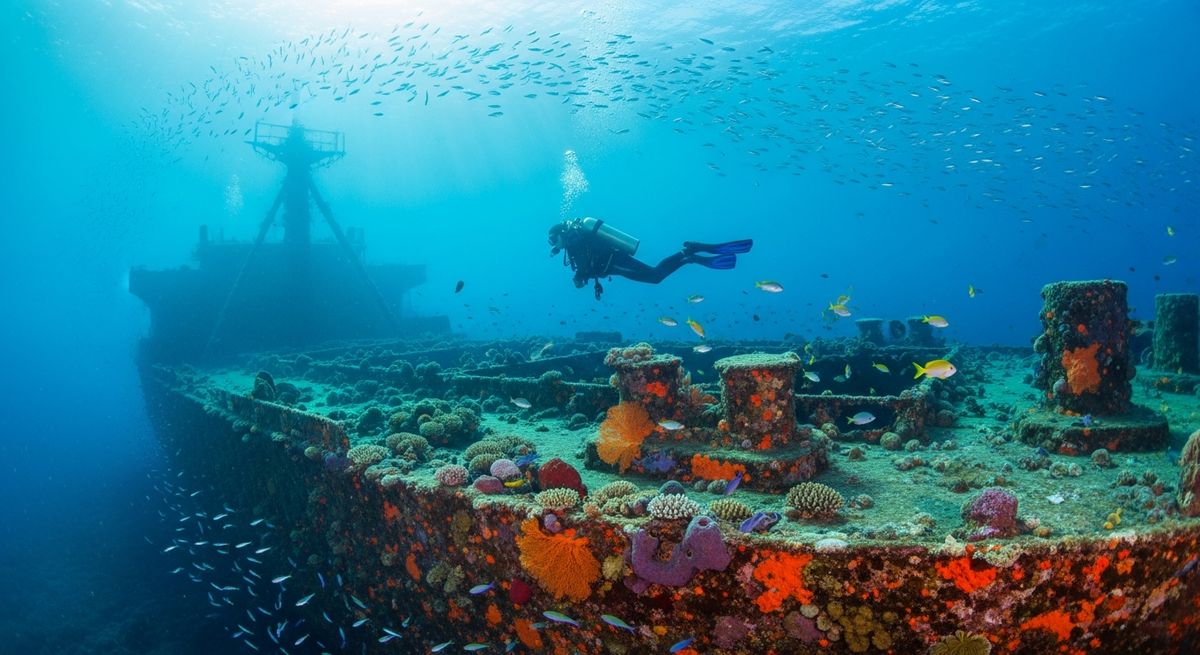
The HMS Calypso, or what’s left of her, offers a fascinating glimpse into naval history right here in Newfoundland. We love this site not for its depth-because there isn’t any-but for the sheer scale and character of the remains. Built in 1883, she was a true behemoth in her day, a corvette with impressive firepower, eventually serving as a training ship and then a store hulk. Today, she’s a sprawling wreck, partially salvaged, but still significant. What you’ll explore are the broken timbers and ironwork that tell a story of a ship slowly reclaimed by the sea. It’s a shallow dive, more of a snorkel or wade in places, but don’t let that fool you into thinking it’s not interesting. We'd suggest going at high tide for the best visibility; the water can be a bit silty otherwise. Look closely among the wreckage and you'll find sculpins hunkering down, their camouflage almost perfect against the dark wood, and occasionally some smaller rock crabs scuttling between the gaps. It’s less about vibrant corals and more about the stark beauty of decay and history merging with the subtle marine life of a northern sea. Ideal for history buffs and those who appreciate the quiet dignity of a forgotten vessel.
Safety Notes
Wreck site - avoid penetration without wreck diving certification. Watch for sharp metal and entanglement hazards.
Cold water this month (avg 11°C). Drysuit or thick wetsuit (7mm+) recommended.
Reviews for HMS CALYPSO
Conditions
Ocean conditions, forecast and tides for HMS CALYPSO
HMS CALYPSO Ocean Conditions
Monthly averages for HMS CALYPSO, sourced from Open-Meteo marine data + Copernicus Marine (EU) - nearest station: Open-Meteo marine grid (47.85, -53.09) (38km away)
October Averages
Sea Temperature
11°C
51°F · Range: 8.4–13.7°C
Current Speed
1 cm/s
Direction: E (90°)
Salinity
30.75 PSU
Based on 4 years of monitoring data · Data sources: Open-Meteo marine data + Copernicus Marine (EU)
Plan & book
Ways to dive Newfoundland, from day trips to liveaboards.
Day trips & courses
via GetYourGuideGuided dives, courses and snorkel trips with instant booking.
Find dive trips in NewfoundlandPlaces to stay
via Booking.comHotels and dive resorts near Newfoundland.
Search stays in NewfoundlandDive insurance
Most travel insurance excludes or limits scuba. Check what you need before you go.
Dive insurance explainedPartner links: we may earn a commission if you book, at no extra cost to you. How we make money
Where to Stay near HMS CALYPSO
Prices from Booking.com. We may earn a commission at no extra cost to you.