HMS DRAKE
Protected Area
Mistaken Point
Why dive here
With 65+ marine species recorded in the area - including blue sharks, blue whales, dwarf minke whales, humpback whales and ocean sunfish (mola mola) - HMS DRAKE offers some of Newfoundland's richest wreck diving. Water ranges 0-14°C, warmest July, August, September.
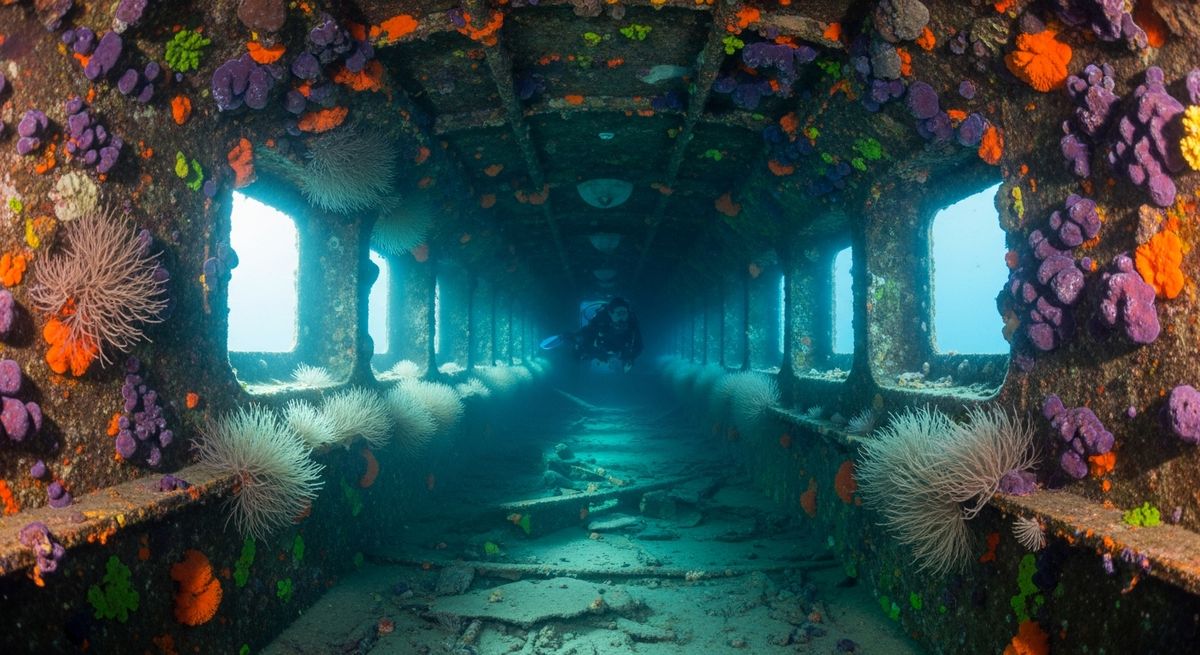
The HMS Drake isn't your typical deep wreck, and that's precisely why we love it. Sunk in 1822 off Eastern Head, this sloop lies essentially at surface level, making it a fantastic experience for snorkelers, freedivers, and even just a low-tide shore walk. We’ve spent hours tracing the timbers, which are surprisingly intact considering the centuries of North Atlantic abuse. You’ll see the wooden skeleton of the ship, its ribs exposed to the elements, now completely encrusted with mussels and anemones. It feels like stepping into a maritime museum, only the artifacts are still in situ, swaying gently with the tide. Look closely in the crevices; we often spot sculpins tucked amongst the wood, and sometimes a curious crab scuttles out from beneath a beam. It’s a raw, historical dive, a genuine piece of history you can touch and explore without needing a tank. It’s particularly good for those new to wreck exploration, offering a safe, shallow introduction to maritime heritage. We’d suggest going at slack tide for the clearest views, though the surge can add a dramatic element if you're feeling adventurous.
Safety Notes
Wreck site - avoid penetration without wreck diving certification. Watch for sharp metal and entanglement hazards.
Cold water this month (avg 11°C). Drysuit or thick wetsuit (7mm+) recommended.
Reviews for HMS DRAKE
Conditions
Ocean conditions, forecast and tides for HMS DRAKE
HMS DRAKE Ocean Conditions
Monthly averages for HMS DRAKE, sourced from Open-Meteo marine data + Copernicus Marine (EU) - nearest station: Open-Meteo marine grid (47.85, -53.09) (38km away)
October Averages
Sea Temperature
11°C
51°F · Range: 8.4–13.7°C
Current Speed
1 cm/s
Direction: E (90°)
Salinity
30.75 PSU
Based on 4 years of monitoring data · Data sources: Open-Meteo marine data + Copernicus Marine (EU)
Plan & book
Ways to dive Newfoundland, from day trips to liveaboards.
Day trips & courses
via GetYourGuideGuided dives, courses and snorkel trips with instant booking.
Find dive trips in NewfoundlandPlaces to stay
via Booking.comHotels and dive resorts near Newfoundland.
Search stays in NewfoundlandDive insurance
Most travel insurance excludes or limits scuba. Check what you need before you go.
Dive insurance explainedPartner links: we may earn a commission if you book, at no extra cost to you. How we make money
Where to Stay near HMS DRAKE
Prices from Booking.com. We may earn a commission at no extra cost to you.