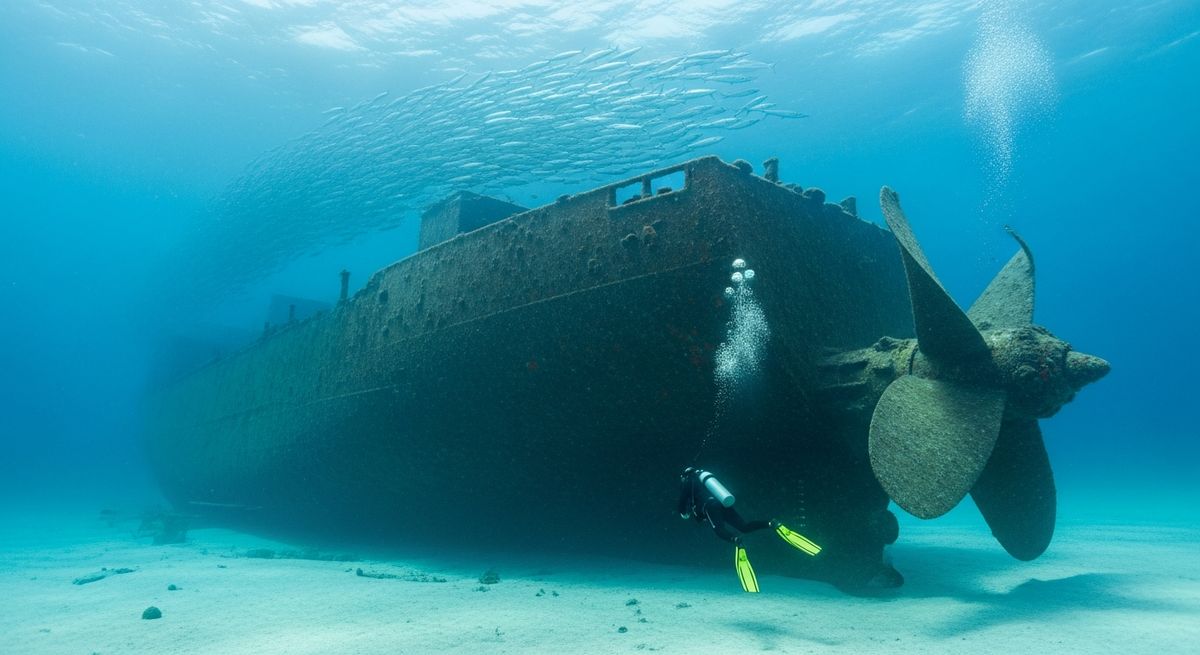
LORD STRATHCONA
Protected Area
Witless Bay Ecological Reserve
Why dive here
With 65+ marine species recorded in the area - including blue sharks, blue whales, dwarf minke whales, humpback whales and ocean sunfish (mola mola) - LORD STRATHCONA offers some of Newfoundland's richest wreck diving. Water ranges 0-14°C, warmest July, August, September.
The Lord Strathcona wreck isn't just a dive, it's a cold-water history lesson. We're talking a proper steamship, torpedoed in 1942 right off Wabana, now sitting upright at 40 metres. That’s deep, and the water is *cold*, so a drysuit and good thermal protection are non-negotiable here. Dropping down, the sheer scale of the Strathcona hits you. It’s a big ship, well-preserved by the chill, and the holds are surprisingly open to exploration if you've got the wreck certs and a good guide. We love poking around the bow, where the torpedo impact is still evident – a visceral reminder of its fate. Our favourite part has to be the mast, often bristling with anemones and the occasional large cod, slowly disappearing into the gloom above. Visibility can be excellent on a calm day, 20 metres isn't uncommon, letting you appreciate the full length of the deck. This is a dive for experienced wreck enthusiasts who appreciate maritime history and aren’t fazed by the deep and the cold.
Typical LORD STRATHCONA Dive Profile
Illustrative profile based on site depth and type. Actual dive profiles vary - always follow your dive computer and training.
Safety Notes
Deep dive (40m) - monitor air consumption closely. Advanced certification recommended.
Wreck site - avoid penetration without wreck diving certification. Watch for sharp metal and entanglement hazards.
Cold water this month (avg 11°C). Drysuit or thick wetsuit (7mm+) recommended.
Always perform a 3-minute safety stop at 5m before surfacing.
Nearest Dive Centres to LORD STRATHCONA
Dive shops near LORD STRATHCONA
View all dive centres in NewfoundlandReviews for LORD STRATHCONA
Conditions
Ocean conditions, forecast and tides for LORD STRATHCONA
LORD STRATHCONA Ocean Conditions
Monthly averages for LORD STRATHCONA, sourced from Open-Meteo marine data + Copernicus Marine (EU) - nearest station: Open-Meteo marine grid (47.85, -53.09) (38km away)
October Averages
Sea Temperature
11°C
51°F · Range: 8.4–13.7°C
Current Speed
1 cm/s
Direction: E (90°)
Salinity
30.75 PSU
Based on 4 years of monitoring data · Data sources: Open-Meteo marine data + Copernicus Marine (EU)
Plan & book
Ways to dive Newfoundland, from day trips to liveaboards.
Day trips & courses
via GetYourGuideGuided dives, courses and snorkel trips with instant booking.
Find dive trips in NewfoundlandPlaces to stay
via Booking.comHotels and dive resorts near Newfoundland.
Search stays in NewfoundlandDive insurance
Most travel insurance excludes or limits scuba. Check what you need before you go.
Dive insurance explainedPartner links: we may earn a commission if you book, at no extra cost to you. How we make money
Where to Stay near LORD STRATHCONA
Prices from Booking.com. We may earn a commission at no extra cost to you.