J-3
Protected Area
Arrecife de Puerto Morelos
Why dive here
With 177+ marine species recorded in the area - including barracuda, bull sharks, dolphins, eagle rays and nurse sharks - J-3 offers some of Cozumel's richest reef diving. Water ranges 27-30°C, warmest August, September, October.
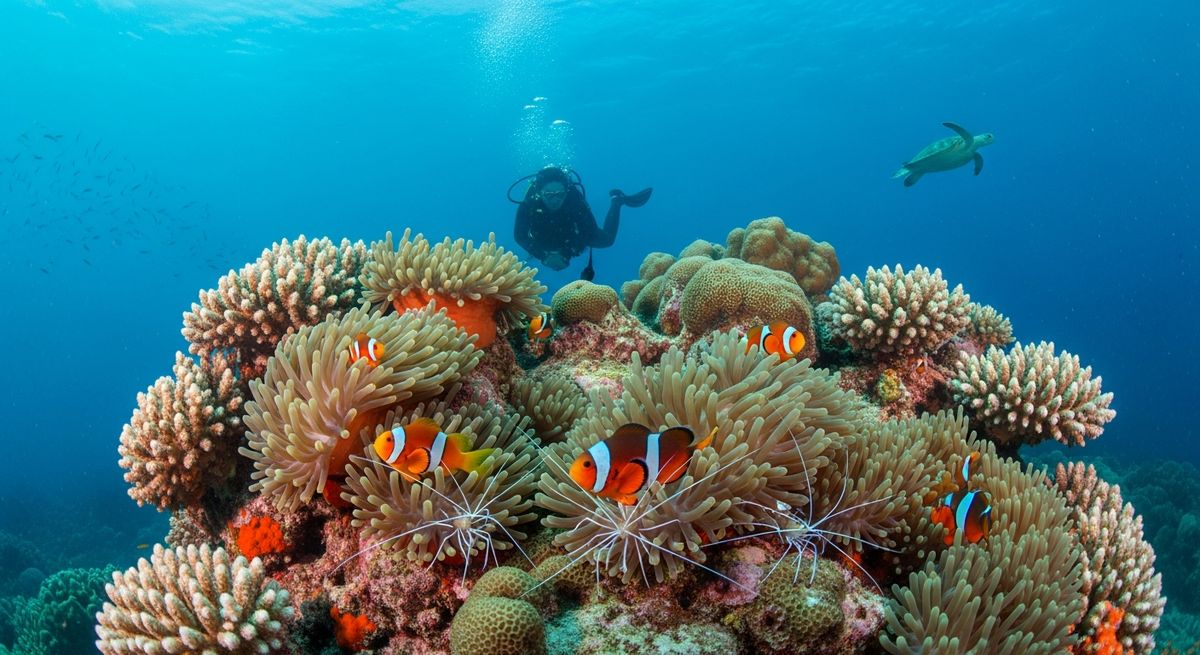
J-3 is one of our picks for a leisurely drift when you just want to soak up the reef. You're only about five minutes from shore, and the site itself is shallow, topping out around 9m, making it perfect for a long bottom time. We love drifting over the expansive white sand, watching for the tiny, shy things like Crested Gobies popping up from the substrate, or the flash of a Green Razorfish darting into the sand if you get too close. Then you hit the coral wall. It isn't a dramatic drop like some of Cozumel's famous sites, but it's a vibrant, dense collection of coral heads and crevices, absolutely packed with juvenile parrotfish, blennies, and grunt. We’ve had some cracking encounters here with large Sargassum Triggerfish, just cruising, unfazed by our presence. Keep an eye out for the Ruby Brittle Stars tucked into the darker nooks. Visibility averages a comfortable 13m. This site is brilliant for newer divers or those who prefer a relaxed pace, offering plenty to see without the pressure of strong currents or deep profiles. It’s also our favourite for underwater photography when we’re focusing on macro subjects.
Safety Notes
Strong currents typical this month (avg 79 cm/s). Good buoyancy control essential.
Nearest Dive Centres to J-3
Dive shops near J-3
Aquanauts
Dorado Buceo
Dive with Ruben
Tolok Divers Mexico
Deportes Acuáticos/Aquatic Sports
Dive Balam
Reviews for J-3
Conditions
Ocean conditions, forecast and tides for J-3
J-3 Ocean Conditions
Monthly averages for J-3, sourced from NOAA NDBC + Copernicus Marine (EU) - nearest station: Yucatan Basin - 120 NM ESE of Cozumel, MX (227km away)
October Averages
Sea Temperature
30°C
85°F · Range: 28.7–32.3°C
Air Temperature
29°C
84°F
Current Speed
78.6 cm/s
Direction: NE (36.7°)
Chlorophyll-a
0.046 mg/m³
Very clear (oligotrophic)
Salinity
35.99 PSU
Wave Height
1.1m
6.7s period
Wind Speed
5.5 m/s
10.7 knots
Atmospheric Pressure
1010.7 hPa
Visibility
24.1 nmi
Based on 5 years of monitoring data · Data sources: NOAA NDBC + Copernicus Marine (EU)
Plan & book
Ways to dive Cozumel, from day trips to liveaboards.
Day trips & courses
via GetYourGuideGuided dives, courses and snorkel trips with instant booking.
Find dive trips in CozumelPlaces to stay
via Booking.comHotels and dive resorts near Cozumel.
Search stays in CozumelDive insurance
Most travel insurance excludes or limits scuba. Check what you need before you go.
Dive insurance explainedPartner links: we may earn a commission if you book, at no extra cost to you. How we make money
Where to Stay near J-3
Prices from Booking.com. We may earn a commission at no extra cost to you.