Las Palmas Reef
Protected Area
Arrecifes de Cozumel
Why dive here
With 177+ marine species recorded in the area - including barracuda, bull sharks, dolphins, eagle rays and nurse sharks - Las Palmas Reef offers some of Cozumel's richest reef diving. Water ranges 27-30°C, warmest August, September, October.
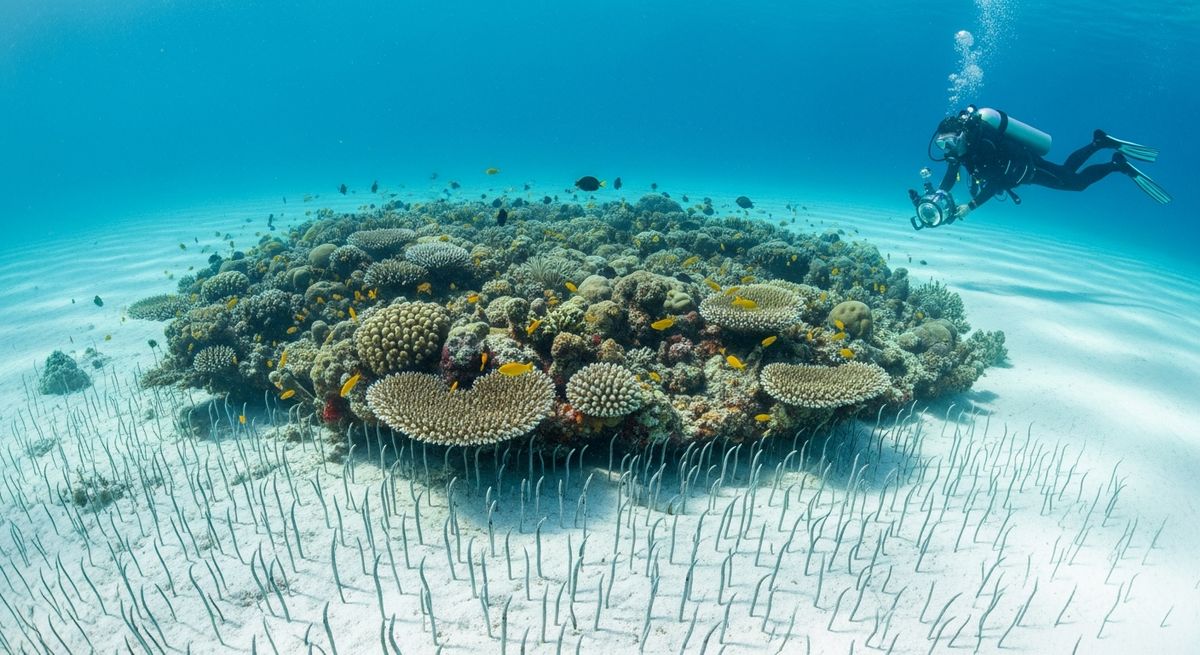
Las Palmas Reef is a relaxed drift, perfect for an afternoon or, better yet, a night dive. We love that it’s usually mellow, no ripping currents here, just a gentle push along a sandy slope dotted with coral heads. The max depth of 18m means plenty of bottom time, and we often find ourselves lingering over the details. During the day, look for queen conchs moving slowly over the sand and big schools of bluestriped grunts hanging out under ledges. We've seen bonefish cruising the edges, too. But at night, Las Palmas really comes alive. The resident octopus often makes an appearance, flowing across the reef. We always spot spiny lobsters waving antennae from crevices, and the king crabs are usually out foraging. Keep an eye peeled for playful squid hovering in the dive lights, changing colours as they investigate you. It's an easy, rewarding dive for anyone who appreciates the slower pace and wants to see the reef's nocturnal shift.
Safety Notes
Strong currents typical this month (avg 79 cm/s). Good buoyancy control essential.
Nearest Dive Centres to Las Palmas Reef
Dive shops near Las Palmas Reef
Blue Note Scuba Diving
Scuba XOC Dive Center Cozumel
Scuba Life Cozumel
CARIBE PARADISE DIVERS
Roberta's Scuba Shack
HAMMER HEAD DIVING & SNORKELING
Reviews for Las Palmas Reef
Conditions
Ocean conditions, forecast and tides for Las Palmas Reef
Las Palmas Reef Ocean Conditions
Monthly averages for Las Palmas Reef, sourced from NOAA NDBC + Copernicus Marine (EU) - nearest station: Yucatan Basin - 120 NM ESE of Cozumel, MX (227km away)
October Averages
Sea Temperature
30°C
85°F · Range: 28.7–32.3°C
Air Temperature
29°C
84°F
Current Speed
78.6 cm/s
Direction: NE (36.7°)
Chlorophyll-a
0.046 mg/m³
Very clear (oligotrophic)
Salinity
35.99 PSU
Wave Height
1.1m
6.7s period
Wind Speed
5.5 m/s
10.7 knots
Atmospheric Pressure
1010.7 hPa
Visibility
24.1 nmi
Based on 5 years of monitoring data · Data sources: NOAA NDBC + Copernicus Marine (EU)
Plan & book
Ways to dive Cozumel, from day trips to liveaboards.
Day trips & courses
via GetYourGuideGuided dives, courses and snorkel trips with instant booking.
Find dive trips in CozumelPlaces to stay
via Booking.comHotels and dive resorts near Cozumel.
Search stays in CozumelDive insurance
Most travel insurance excludes or limits scuba. Check what you need before you go.
Dive insurance explainedPartner links: we may earn a commission if you book, at no extra cost to you. How we make money
Where to Stay near Las Palmas Reef
Prices from Booking.com. We may earn a commission at no extra cost to you.