Ojo de Agua
Protected Area
Arrecife de Puerto Morelos
Why dive here
With 177+ marine species recorded in the area - including barracuda, bull sharks, dolphins, eagle rays and nurse sharks - Ojo de Agua offers some of Cozumel's richest drift diving. Water ranges 27-30°C, warmest August, September, October.
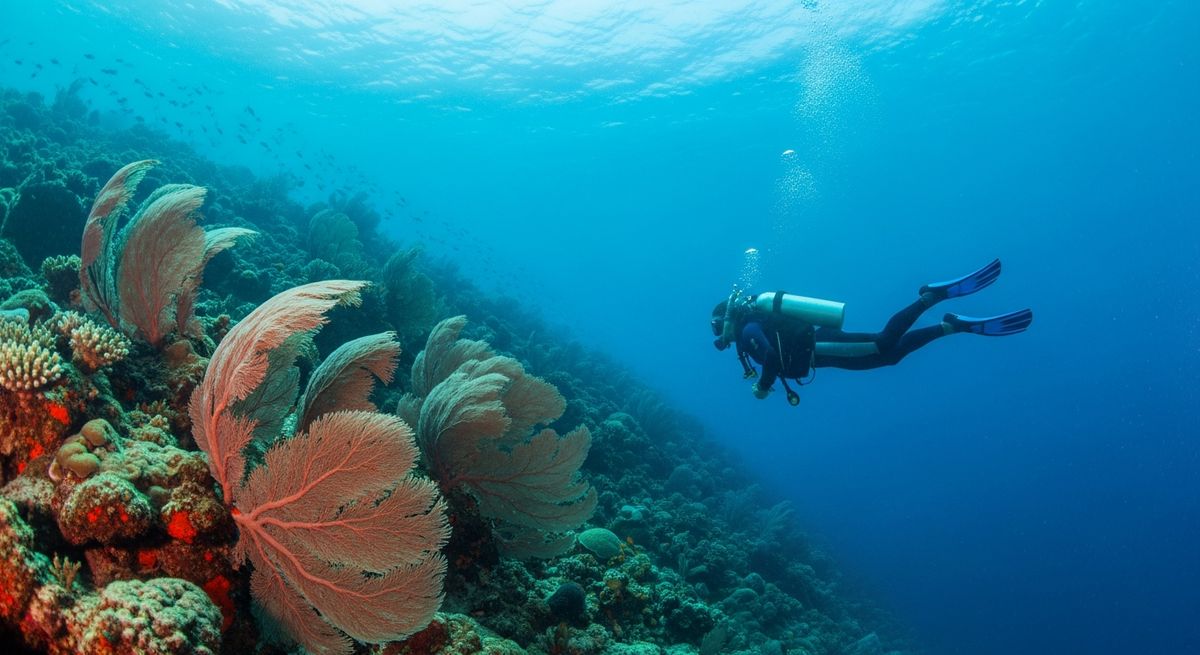
Ojo de Agua is one of those spots on Cozumel where we always find ourselves lingering a bit longer. It's not a deep dive, peaking at maybe 5 metres, but it offers such a unique feel. You're essentially diving a cenote right where it meets the sea, and that freshwater upwelling creates a hazy thermocline. It feels like swimming through a watercolour painting. We love drifting through that mix of salt and fresh, watching the light refract in the most surreal ways. The real draw here, for us, is the sheer volume of fish that gather around the freshwater source. You'll see schools of grunts and snappers, sometimes barracudas just hanging motionless. We’ve spotted Key Brotulas tucked into crevices and plenty of angelfish, from Queen to French, foraging on the bottom. It’s also our favourite spot for night dives on the island. The low light really brings out the lobsters and octopus, and the freshwater haze takes on an ethereal glow with your torch beam. The visibility averages around 11 metres, which is decent for a shallow, nutrient-rich site. We'd suggest going early morning or late afternoon to avoid any crowds. This spot is perfect for photographers who love unique lighting or anyone looking for a relaxed, atmospheric dive away from the deeper drift sites Cozumel is famous for.
Safety Notes
Drift dive - carry a surface marker buoy (SMB) and stay with your group. Brief the current direction before entry.
Strong currents typical this month (avg 79 cm/s). Good buoyancy control essential.
Nearest Dive Centres to Ojo de Agua
Dive shops near Ojo de Agua
Dive with Ruben
Dorado Buceo
Tolok Divers Mexico
Aquanauts
Deportes Acuáticos/Aquatic Sports
Scuba Total
Reviews for Ojo de Agua
Conditions
Ocean conditions, forecast and tides for Ojo de Agua
Ojo de Agua Ocean Conditions
Monthly averages for Ojo de Agua, sourced from NOAA NDBC + Copernicus Marine (EU) - nearest station: Yucatan Basin - 120 NM ESE of Cozumel, MX (227km away)
October Averages
Sea Temperature
30°C
85°F · Range: 28.7–32.3°C
Air Temperature
29°C
84°F
Current Speed
78.6 cm/s
Direction: NE (36.7°)
Chlorophyll-a
0.046 mg/m³
Very clear (oligotrophic)
Salinity
35.99 PSU
Wave Height
1.1m
6.7s period
Wind Speed
5.5 m/s
10.7 knots
Atmospheric Pressure
1010.7 hPa
Visibility
24.1 nmi
Based on 5 years of monitoring data · Data sources: NOAA NDBC + Copernicus Marine (EU)
Plan & book
Ways to dive Cozumel, from day trips to liveaboards.
Day trips & courses
via GetYourGuideGuided dives, courses and snorkel trips with instant booking.
Find dive trips in CozumelPlaces to stay
via Booking.comHotels and dive resorts near Cozumel.
Search stays in CozumelDive insurance
Most travel insurance excludes or limits scuba. Check what you need before you go.
Dive insurance explainedPartner links: we may earn a commission if you book, at no extra cost to you. How we make money
Where to Stay near Ojo de Agua
Prices from Booking.com. We may earn a commission at no extra cost to you.