Carlo Rock
Why dive here
With 58+ marine species recorded in the area - including blue sharks, blue whales, humpback whales, orcas and seals & sea lions - Carlo Rock offers some of Alaska's richest wreck diving. Water ranges 5-15°C, warmest July, August, September.
Diving Carlo Rock, you’re in for an experience that’s a little raw, a little wild, and completely Alaskan. The site itself is a rugged rocky outcrop, dropping into depths that feel profound and untouched. We often spot big sunflower stars clinging to the rock face, along with various salmon species, depending on the season, making their way past. Keep an eye out for the spiny dogfish and the surprising, almost prehistoric-looking spotted ratfish. This dive suits those who appreciate the chillier waters and the unique, hardy marine life of the North Pacific.
Safety Notes
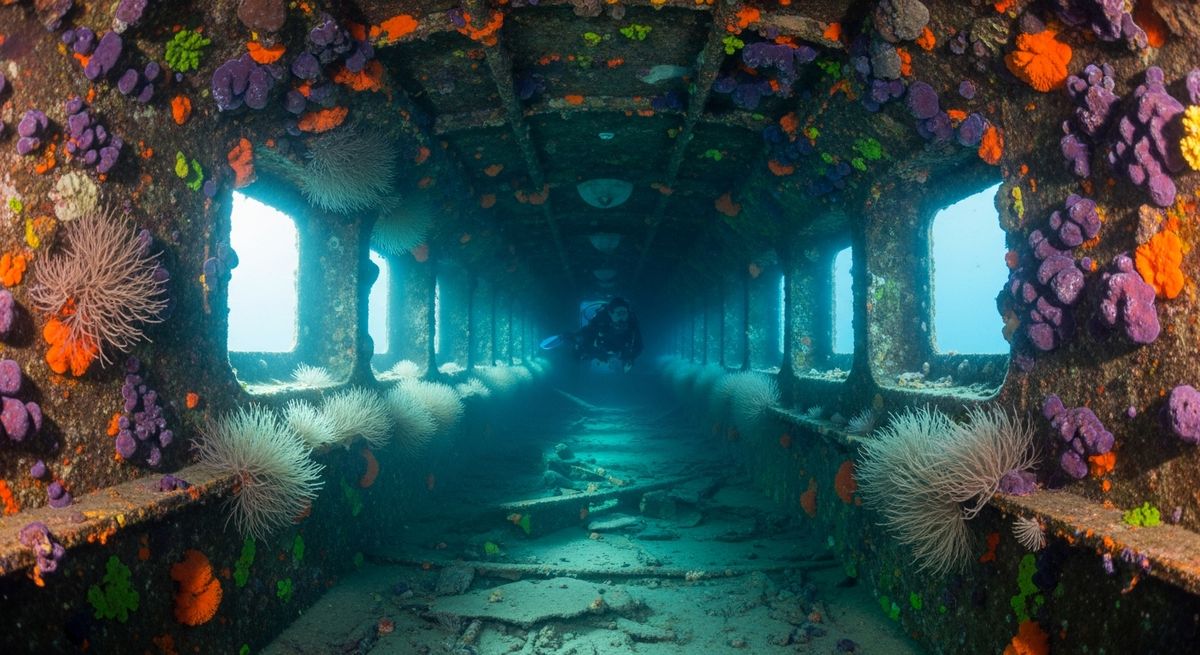
Wreck site - avoid penetration without wreck diving certification. Watch for sharp metal and entanglement hazards.
Cold water this month (avg 11°C). Drysuit or thick wetsuit (7mm+) recommended.
Carlo Rock Wreck History
Year Sunk
1919
Vessel Type
barge
Cause
storm
Tonnage
867 GRT
The Carlingford was a steel schooner-barge built in 1896, part of a fleet of unpowered vessels designed to be towed by steamers across the Great Lakes. In late November 1919, the Carlingford, laden with 90,000 bushels of barley, was under tow by the steamer G.G. Barnum. They were caught in one of the infamous and violent Great Lakes storms. The tow line snapped, leaving the Carlingford and its crew at the mercy of the tempest. The vessel foundered and sank, though thankfully, its crew was rescued by the G.G. Barnum before she went down.
Today, the Carlingford rests upright and remarkably intact in the cold, preserving waters of Lake Superior. The wreck is a favorite among technical divers due to its depth and condition. Divers can explore the decks, see the intact masts, and peer into the cargo holds still filled with barley. The site serves as a poignant reminder of the power of the Great Lakes and the perils faced by sailors during the golden age of steam and sail.
Reviews for Carlo Rock
Conditions
Ocean conditions, forecast and tides for Carlo Rock
Carlo Rock Ocean Conditions
Monthly averages for Carlo Rock, sourced from Open-Meteo marine data - nearest station: Open-Meteo marine grid (57, -135.4) (0km away)
October Averages
Sea Temperature
11°C
51°F · Range: 8.5–12.8°C
Air Temperature
8°C
47°F
Wind Speed
6.44 m/s
12.5 knots
Atmospheric Pressure
1007.9 hPa
Based on 4 years of monitoring data · Data sources: Open-Meteo marine data
Plan & book
Ways to dive Alaska, from day trips to liveaboards.
Day trips & courses
via GetYourGuideGuided dives, courses and snorkel trips with instant booking.
Find dive trips in AlaskaPlaces to stay
via Booking.comHotels and dive resorts near Alaska.
Search stays in AlaskaDive insurance
Most travel insurance excludes or limits scuba. Check what you need before you go.
Dive insurance explainedPartner links: we may earn a commission if you book, at no extra cost to you. How we make money
Where to Stay near Carlo Rock
Prices from Booking.com. We may earn a commission at no extra cost to you.