Diving in Alaska
Why dive here
Alaska offers some of United States's richest diving, with 58+ marine species recorded in the area - including blue sharks, blue whales, humpback whales, orcas and seals & sea lions.
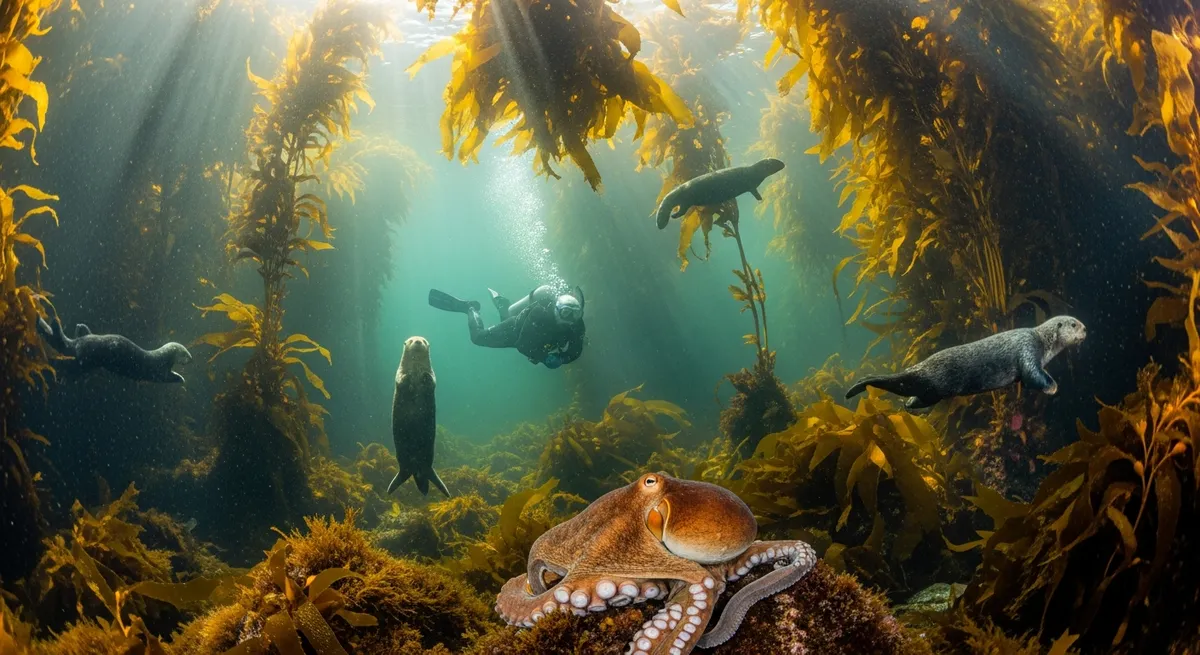
Okay, Alaska. Let's just be clear: this isn't your average warm-water escape. This is serious cold-water diving, often extreme, and it demands respect. But if you're prepared, the rewards are genuinely unlike anywhere else we've been. Picture yourself descending into thick kelp forests, the fronds swaying like ancient underwater trees, while sea otters frolic nearby, completely oblivious to your presence. We love the sheer wildness of it here, the feeling of diving in genuinely untouched waters where every dive feels like an exploration. Our favorite experiences often involve encounters with Steller sea lions, their immense size and curious nature making for truly exhilarating dives. The visibility can be surprisingly good, sometimes stretching 20 meters, letting you appreciate the scale of the underwater landscape, from rugged pinnacles to deep reefs. You'll find a world dominated by various nudibranchs, wolf eels peeking from their lairs, and a surprising array of invertebrates like the vibrant parrot shrimp or the peculiar four-spined squat lobster. Don't forget Dutch Harbor for some fascinating WWII wreck diving, a stark contrast to the natural beauty but equally compelling. This isn't a place for casual divers; currents can be strong, and the water is always cold, even in summer. But for those seeking something raw, wild, and utterly unique, Alaska delivers.
Alaska Dive Site Map
Dive sites and dive centres in Alaska
Alaska Dive Sites
89 dive sites in Alaska
Alarm Rocks
Alarm Rocks, true to its name, is a collection of rocky outcrops in Alaska. We often find good numbers of salmon here, particularly during their runs. Look for Spiny Dogfish patrolling the deeper sections and keep an eye out for California Spot Prawns tucked into crevices. It’s a site best suited for divers who appreciate colder water and an opportunity to spot some unique Pacific Northwest marine life.
Alert Rock
Alert Rock is where we send divers looking for something a bit different, a little wilder than your average temperate dive. Dropping down, you hit this massive underwater rock formation, jagged and craggy, just begging to be explored. We love watching the giant kelp sway in the surge here, feeling that cold water on your face, knowing you’re truly somewhere special. The real show, for us, is the macro stuff and the sheer abundance of critters that thrive in these rich Alaskan waters. Keep your eyes peeled for those horned shrimp tucked into crevices, and we’ve spotted more than a few spotted ratfish gliding along the rocky bottom. Our favourite is just how many different sea stars you’ll find, especially the sunflower stars, bright orange against the darker rock. This isn't a dive for coral fanatics, obviously, but if you appreciate the rugged beauty of a northern ecosystem and want to see some serious invertebrate action, Alert Rock delivers. We usually suggest bringing an extra layer of thermal protection, as the water can be brisk even in summer.
Amethyst Rock
Amethyst Rock isn't your typical tropical drift. Here, the water is cool, dark, and feels wonderfully wild. You’ll be exploring rocky slopes, often draped in kelp, where giant green anemones bloom in surprising splashes of color. Keep an eye out for the lurking spiny dogfish and the scuttling Dungeness crabs, often a bit bigger than you expect. It's a dive for those who appreciate robust, cold-water ecosystems and a true sense of northern wilderness underwater.
Bar Rocks
Bar Rocks off Alaska offers a surprisingly robust dive, particularly if you’re keen on invertebrates. The bottom is mostly rocky, a classic Pacific Northwest scene with plenty of crevices and overhangs for creatures to hide. We’ve had good luck spotting Dungeness and Red Rock Crabs here, along with the occasional Slender Crab skittering across the rocks. Keep an eye out for sunflower stars too, their arms slowly moving over the substrate. It's a reliable dive for those who enjoy poking around the rocky seafloor, and it’s a good spot to tick off a giant octopus if you’re patient.
Benson Rock
Benson Rock offers a quintessential Alaskan dive, raw and invigorating. We’ve found decent visibility here, especially in the calmer summer months, letting you really appreciate the rough-hewn rock structures. Keep an eye out for the big skates gliding across the seabed and the ubiquitous red rock crabs scuttling between crevices. It's a solid dive for those who appreciate colder water, a bit of adventure, and want to see some serious Pacific Northwest species in their natural, rugged habitat.
Bligh Reef
Bligh Reef isn't your typical coral reef; think cold water and rugged beauty. We've often spotted Orcas cruising the surrounding waters, and the nooks of the reef hold giant octopus. It's a raw, wild place best suited for experienced divers comfortable with unpredictable Alaskan conditions. If you're after something truly different, Bligh offers a stark, memorable dive.
Blow Reef
Blow Reef in Alaska offers a stark contrast to tropical diving, with its cold, nutrient-rich waters supporting a different kind of beauty. Divers here will likely encounter various salmon species, Dungeness and slender crabs, and large spiral bryozoan colonies. It’s a site best suited for experienced cold-water divers keen on exploring a unique sub-arctic ecosystem and appreciating marine life adapted to chillier environments. We’d also keep an eye out for orcas passing through the area.
Bonson Rock
Bonson Rock in Alaska offers a proper cold water dive, a real contrast to those tropical trips. Drop down onto rocky slopes, where the big draw is often the chance to spot some hefty Big Skates cruising along the bottom. We’ve also seen plenty of Spiny Dogfish hanging around, and if you have a good eye, tiny Roughpatch Shrimp hiding in the nooks. It’s a dive for those who appreciate the unique beauty of northern waters and don't mind a bit of chill.
Boussole Rock
Boussole Rock, tucked away in Alaskan waters, offers a different kind of dive. It's not about colourful corals here, but rather a robust rocky environment supporting some truly unique Pacific Northwest creatures. We've seen Big Skates gliding past, their wide fins undulating slowly, and plenty of those quirky Spotted Ratfish, almost prehistoric in their appearance. Dungeness Crabs are usually scuttling in the crevices, and if you're lucky, a Spiny Dogfish might cruise by. This spot is definitely for divers who appreciate the resilience of cold-water ecosystems and the chance to encounter some less common, but equally fascinating, marine life.
Breaker Reef
Breaker Reef offers a proper Alaskan cold-water experience. We’ve seen healthy stands of soft corals clinging to the rocky substrate, often shrouded in thick kelp forests. Keep an eye out for nudibranchs, rockfish, and the occasional wolf eel poking out from crevices. It’s a site for divers who appreciate the subtle beauty of temperate waters and are comfortable with cooler temperatures and potentially challenging surface conditions.
Carlo Rock
Diving Carlo Rock, you’re in for an experience that’s a little raw, a little wild, and completely Alaskan. The site itself is a rugged rocky outcrop, dropping into depths that feel profound and untouched. We often spot big sunflower stars clinging to the rock face, along with various salmon species, depending on the season, making their way past. Keep an eye out for the spiny dogfish and the surprising, almost prehistoric-looking spotted ratfish. This dive suits those who appreciate the chillier waters and the unique, hardy marine life of the North Pacific.
Celestial Reef
Celestial Reef in Alaska offers cold-water diving for experienced drysuit divers. Expect to see colorful anemones, sponges, and various rockfish clinging to the reef structure. The conditions here can be challenging, with strong currents and lower visibility common, so it's best suited for those comfortable with such environments. Dive planning is key, as conditions shift quickly.
Show all 89 dive sites in Alaska
- Chanal Reef
- Client Reefs
- Cluster Reefs
- Cohen Reef
- Cohen Reef
- Comber Rock
- Cowley Rock
- Danube Rock
- Denny Rock
- Desconocida Reef
- Desconocida Reef
- Douglas Rock
- Eagle Reef
- Eagle Reef
- England Rock
- Escape Reefs
- Ethel Rock
- Fitz Roy Reef
- Flamingo Rock
- Flounce Reef
- Gatenby Rock
- Hankin Reefs
- Hannah Rocks
- Harbour Reefs
- Harrison Reef
- Harvey Rock
- Hastings Reef
- Haswell Reef
- Hawkins Rock
- Hayes Rock
- Iliuliuk Reef
- James Rock
- John Rock
- Judd Rock
- Kindakun Rock
- Kipcke Rock
- Klunkwoi Rocks
- Kogangas Rock
- Lancaster Reef
- La Perouse Reef
- Mallard Rock
- Marchand Reef
- McCreight Rock
- Mountain Point
- New England Rocks
- Newington Rock
- North Iron Rock
- NORTH ROAMER
- Observatory Rock
- Pidwell Reef
- Pleasant Island Reef
- Quadra Rocks
- Quequitz Reefs
- Rage Reefs
- Rennell Reef
- Roller Reef
- Rouse Reef
- Selwyn Rocks
- Shields Rock
- Shields Rock
- Silistria Shoal
- Sivart Rock
- South Iron Rock
- Table Rock
- Tanu Rock
- Tatnall Reefs
- Testlatlints Rock
- Thorndike Shoal
- Thorn Rock
- Tingley Rock
- VAMPY
- Vanderbilt Reef
- Vanderbilt Reef
- Wimble Rocks
- Wimble Rocks
- Winnifred Rocks
- Woods Rock
Alaska Dive Centres
No dive centres listed in Alaska yet. Browse all dive centres.
Ocean Wildlife in Alaska
58 species recorded in Alaska
Alaska Daylight & Sunrise/Sunset
Sunrise and sunset times for Alaska, calculated from coordinates
Today - Sunday 11 October
Sunrise
06:07
Sunset
17:05
Daylight
10h 58m
Golden Hour
16:17
First light (dawn) at 05:31 · Last light (dusk) at 17:40
Monthly Averages
| Month | Sunrise | Sunset | Daylight |
|---|---|---|---|
| Jan | 07:58 | 15:57 | 8h 0m |
| Feb | 07:10 | 16:57 | 9h 47m |
| Mar | 06:06 | 17:50 | 11h 45m |
| Apr | 04:51 | 18:47 | 13h 56m |
| May | 03:49 | 19:41 | 15h 51m |
| JunLongest | 03:19 | 20:19 | 17h 0m |
| Jul | 03:37 | 20:12 | 16h 34m |
| Aug | 04:27 | 19:20 | 14h 54m |
| Sep | 05:21 | 18:08 | 12h 47m |
| OctNow | 06:14 | 16:55 | 10h 41m |
| Nov | 07:13 | 15:54 | 8h 41m |
| DecShortest | 07:58 | 15:29 | 7h 31m |
Times are approximate local times based on longitude. Actual times may vary slightly depending on the exact timezone observed in Alaska.
Where to Stay near Alaska
Prices from Booking.com. We may earn a commission at no extra cost to you.
Marine Protected Areas near Alaska
2 protected areas near Alaska - please respect local regulations when diving
Forrester Island
Dall Bay
Getting to Alaska
Sandspit
Masset
Prince Rupert
Plan & book
Ways to dive Alaska, from day trips to liveaboards.
Day trips & courses
via GetYourGuideGuided dives, courses and snorkel trips with instant booking.
Find dive trips in AlaskaPlaces to stay
via Booking.comHotels and dive resorts near Alaska.
Search stays in AlaskaDive insurance
Most travel insurance excludes or limits scuba. Check what you need before you go.
Dive insurance explainedPartner links: we may earn a commission if you book, at no extra cost to you. How we make money