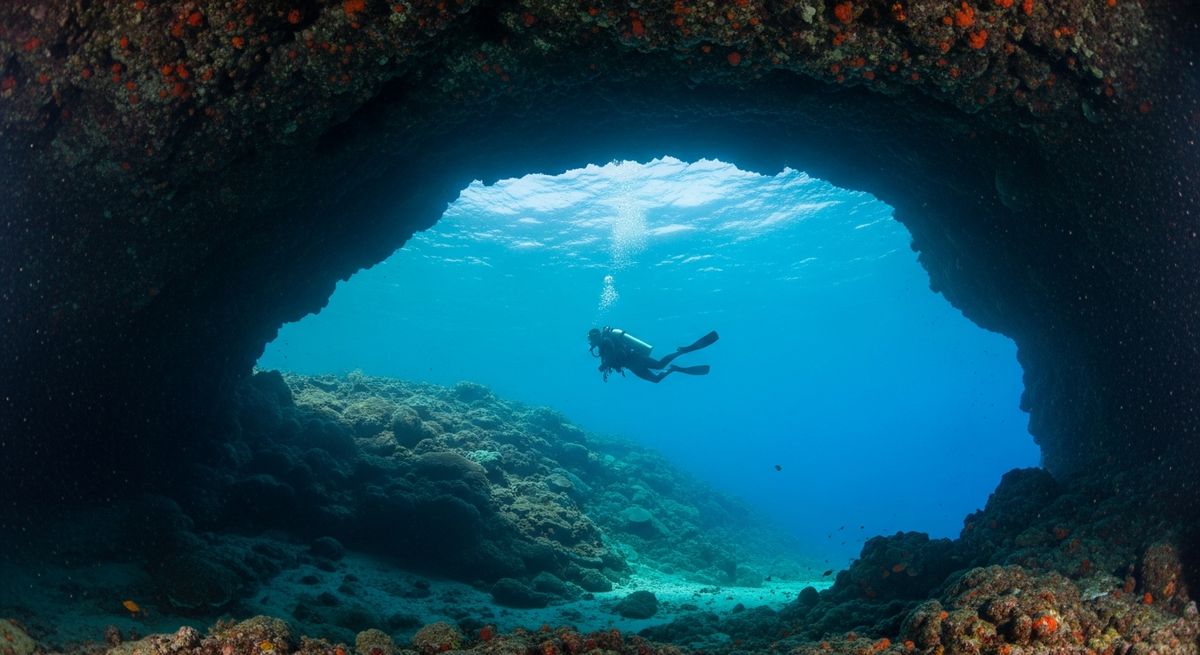
Madison Blue Spring - Florida Keys

Madison Blue Spring offers a cool, clear freshwater dive experience away from the Keys' saltwater reefs. It’s a popular spot for cavern and cave training, with easy access into a well-mapped system. You'll likely spot freshwater residents like longnose gar and American eels, alongside intriguing shells like the Pilsbry tusk shell. Visibility is generally excellent, making it a good choice for divers looking to refine their buoyancy or explore a different side of Florida's underwater world.

Location
Florida Keys, United States, North America
Coordinates
30.480436, -83.244360
Type
cave

Best Time to Dive in Florida Keys

The warmest water temperatures in Florida Keys occur in July, averaging 31.5°C (up to 34.8°C). The coolest conditions are in January at 19.3°C.

Monthly Water Temperatures

  • January: 19.3°C (air: 18.5°C)
  • February: 20.5°C (air: 21.6°C)
  • March: 23.1°C (air: 22.4°C)
  • April: 25.5°C (air: 24.3°C)
  • May: 27.8°C (air: 25.9°C)
  • June: 30.2°C (air: 27.5°C)
  • July: 31.5°C (air: 28.3°C)
  • August: 31.5°C (air: 28.3°C)
  • September: 30.2°C (air: 27.3°C)
  • October: 27.3°C (air: 26.0°C)
  • November: 24.1°C (air: 22.3°C)
  • December: 20.9°C (air: 19.8°C)

Nearby Dive Sites in Florida Keys

Nearest Dive Centres to Madison Blue Spring

Marine Life in Florida Keys

Home to 91 recorded species including 69 reef fish, 6 sharks & rays, 3 other, 3 hard corals, 2 sea snails & nudibranchs, 2 sea urchins.

Notable Species

Recommended Packing List for Madison Blue Spring

Based on average water temperature of 26.0°C, currents 1 cm/s.

  • Shorty or Rashguard - warm 26°C water needs minimal exposure protection
  • Mask - essential for every dive
  • Fins
  • BCD - buoyancy compensator
  • Regulator - your most safety-critical piece of gear
  • Dive Computer - tracks depth, time, and NDL
  • Surface Marker Buoy (SMB) - essential for boat pickups
  • Dive Torch - useful for crevices and colour at depth
  • Underwater Camera - capture your diving memories

Frequently Asked Questions

What is the maximum depth for diving at Madison Blue Spring?
The maximum depth for diving at Madison Blue Spring is currently unknown based on the available data. Divers should always consult local dive operators for the most up-to-date information regarding specific dive profiles and depths at this cave diving site.
What kind of marine life and underwater formations can divers expect to see at Madison Blue Spring?
Madison Blue Spring is primarily a cave diving site, known for its unique underwater formations characteristic of a first magnitude spring system. While specific marine life details are not provided, divers can expect to explore the intricate cave passages and the powerful discharge of at least 2,800 liters of water per second. For general information on aquatic life, you can visit our wildlife database.
How challenging is diving at Madison Blue Spring, especially for recreational divers?
Diving at Madison Blue Spring is rated as intermediate in difficulty. As a cave diving site, it requires specialized training and experience beyond standard recreational diving certifications. Recreational divers without appropriate cave diving certification should not attempt to dive here due to the inherent risks and specific skills required for overhead environments.
When is the best time of year to dive Madison Blue Spring for optimal conditions?
Information regarding the best time of year to dive Madison Blue Spring for optimal conditions is not available in our current data. For the most accurate seasonal recommendations and current conditions, it's always best to consult local dive operators or check our When to Dive section for general guidance.
What diving certifications are required to dive at Madison Blue Spring?
Given that Madison Blue Spring is classified as a cave diving site with an intermediate difficulty, specialized cave diving certifications are required. Standard recreational diving certifications are not sufficient for safely navigating overhead environments. Divers must possess appropriate training and experience in cave diving to explore this unique spring system.
What are the typical current conditions and visibility like for divers at Madison Blue Spring?
As a first magnitude spring, Madison Blue Spring is characterized by a significant discharge of at least 2,800 liters of water per second, which can create noticeable current conditions within the spring and cave system. While specific visibility data is not provided, springs often boast excellent clarity. Divers should be prepared for potential currents due to the powerful water flow.