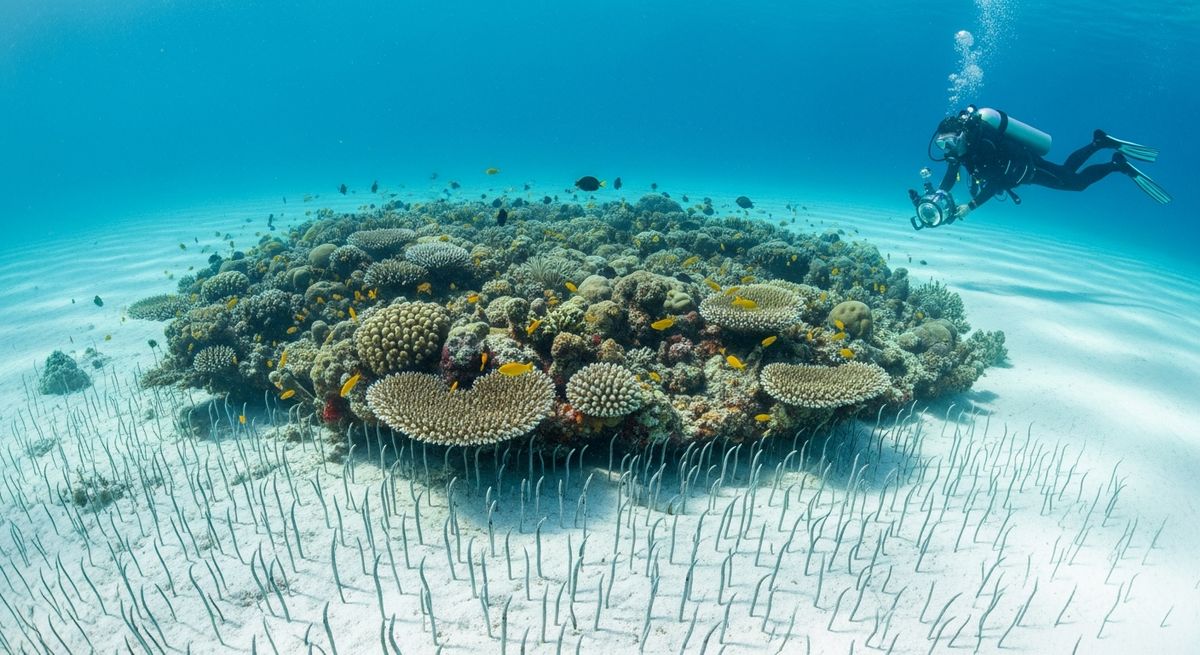
Race Rocks - Great Race
Protected Area
Lower Dungeness
Why dive here
With 35+ marine species recorded in the area - including humpback whales, orcas and seals & sea lions - Race Rocks - Great Race offers some of Pacific Northwest's richest reef diving. Water ranges 7-17°C, warmest July, August, September.
The Space Race (Russian: космическая гонка, romanized: kosmicheskaya gonka, IPA: [kɐsˈmʲitɕɪskəjə ˈɡonkə]) was a 20th-century competition between the Cold War rivals, the United States and the Soviet Union, to achieve superior spaceflight capability. It had its origins in the ballistic missile-based nuclear arms race between the two nations following World War II and the onset of the Cold War.
Typical Race Rocks - Great Race Dive Profile
Illustrative profile based on site depth and type. Actual dive profiles vary - always follow your dive computer and training.
Safety Notes
Cold water this month (avg 11°C). Drysuit or thick wetsuit (7mm+) recommended.
Always perform a 3-minute safety stop at 5m before surfacing.
Nearest Dive Centres to Race Rocks - Great Race
Dive shops near Race Rocks - Great Race
View all dive centres in Pacific NorthwestReviews for Race Rocks - Great Race
Conditions
Ocean conditions, forecast and tides for Race Rocks - Great Race
Race Rocks - Great Race Ocean Conditions
Monthly averages for Race Rocks - Great Race, sourced from NOAA NDBC + Copernicus Marine (EU) - nearest station: 9449880 - Friday Harbor, WA (27km away)
October Averages
Sea Temperature
11°C
53°F · Range: 9.6–11.4°C
Air Temperature
11°C
51°F
Current Speed
3.16 cm/s
Direction: E (108.4°)
Salinity
23.61 PSU
Wind Speed
1.8 m/s
3.5 knots
Atmospheric Pressure
1018.3 hPa
Based on 5 years of monitoring data · Data sources: NOAA NDBC + Copernicus Marine (EU)
Plan & book
Ways to dive Pacific Northwest, from day trips to liveaboards.
Day trips & courses
via GetYourGuideGuided dives, courses and snorkel trips with instant booking.
Find dive trips in Pacific NorthwestPlaces to stay
via Booking.comHotels and dive resorts near Pacific Northwest.
Search stays in Pacific NorthwestDive insurance
Most travel insurance excludes or limits scuba. Check what you need before you go.
Dive insurance explainedPartner links: we may earn a commission if you book, at no extra cost to you. How we make money
Where to Stay near Race Rocks - Great Race
Prices from Booking.com. We may earn a commission at no extra cost to you.