Diving in Pacific Northwest
Why dive here
Pacific Northwest offers some of United States's richest diving, with 35+ marine species recorded in the area - including humpback whales, orcas and seals & sea lions. Water ranges 7-17°C, warmest July, August, September.
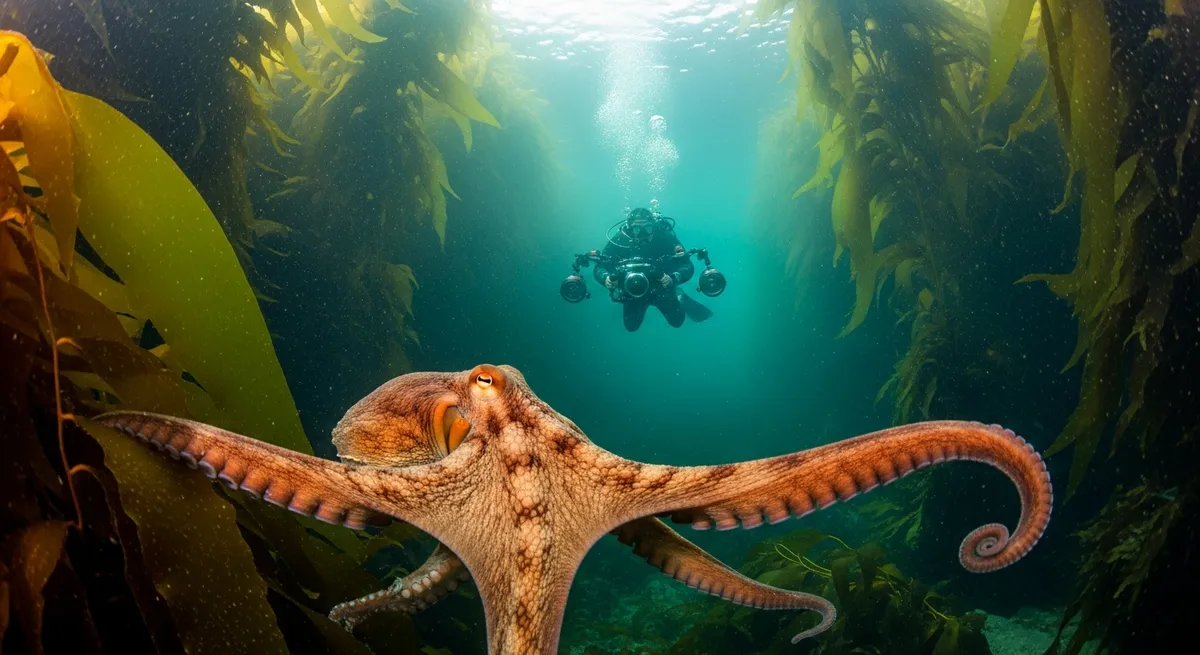
Forget the palm trees; we’re talking about a different kind of magic in the Pacific Northwest. Diving here means pulling on a drysuit and dropping into an emerald world of giant Pacific octopus, their arms unfurling from rocky dens, and the curious, craggy faces of wolf eels peering from crevices. It’s an immersion into a genuinely rich cold-water ecosystem, a stark contrast to the tropics but no less captivating. We love the San Juan Islands, especially for their strong currents that bring in nutrients, attracting schools of Pacific herring so thick they dim the light. Our favourite time to dive is late spring or early autumn; the water is a touch warmer, and visibility tends to be at its best after the winter rains have settled. Look for the delicate, almost translucent Slender Sole blending into the sandy bottom, and keep an eye out overhead for the Common Loon diving for its dinner. Yes, the entries can be a bit rugged, and those currents demand respect, but the reward is a truly unique dive experience, full of life and a quiet, ancient beauty.
Pacific Northwest Dive Site Map
Dive sites and dive centres in Pacific Northwest
Pacific Northwest Dive Sites
149 dive sites in Pacific Northwest
100 Foot Rock
100 Foot Rock, just as the name suggests, offers a deep dive along a substantial rock wall. You’ll find typical Pacific Northwest residents here: plenty of anemones, the occasional crab, and rockfish tucked into crevices. It's a solid choice for experienced divers comfortable with colder water and longer bottom times looking for a straightforward wall dive. Visibility can swing dramatically, so checking conditions is always a good idea.
Alki Beach Park
Alki Beach Park offers a mellow shore dive, perfect for knocking out some skills or enjoying a casual poke around. You'll likely find a few crabs scuttling past and maybe a friendly octopus peeking from a crevice. It’s an easy entry, making it popular for newer divers or those looking for a quick, convenient dip in the Puget Sound.
Alki beach Seattle ferry north
We’ve dived Alki North often, particularly for a quick shore entry. You’ll find a mix of rocky and silty bottom, usually with plenty of greenling, sculpins, and sometimes nudibranchs if you look closely. It’s a reliable spot for an easy current-free dive, good for new divers or anyone wanting to test out new gear without hassle. Visibility can vary wildly, though, from a murky few feet to a decent 15 in summer.
Am/Pm Beach
Am/Pm Beach is a solid choice for an easy Pacific Northwest dive, especially if you're looking for a relaxing shallow soak. The maximum depth of 13m makes it a great spot for newer divers, or just for shaking off the rust. You’ll spend your time poking around the rocky bottom, finding sculpins hunkered down, maybe a crab scuttling past. It’s not a drift dive, so you can really take your time exploring the nooks and crannies. We’ve found the entry to be quite manageable, which is always a plus in this region.
Ansell Point Dive Site
Ansell Point doesn't shout for attention, it just quietly delivers. We love it because it’s consistently good, a reliable spot when you're craving a dive without a lot of fuss. Drop in from the shore, often right into a school of Pacific herring or sardines so thick it feels like swimming through a silver cloud. We've seen fat Common Seals cruising through the kelp, their eyes following you with an almost bored curiosity. Look for the Spotted Ratfish, they have a way of seeming ancient, scuttling along the rocky bottom. It’s a great site for photographers who appreciate the subtle drama of the PNW, and for divers who prefer to take their time exploring. If you hit it at high tide, the visibility tends to be at its best.
Arachne Reef
Arachne Reef. We’ve had some truly fantastic dives here, and we'd argue it’s one of the most underrated spots in the PNW. Forget the big, famous wrecks for a minute; this reef offers a different kind of magic. Dropping down, you’re often greeted by dense schools of pacific sardines, flashing silver as they swirl past. It’s not uncommon to see a spiny dogfish cruising through them, sleek and purposeful. The visibility can swing a bit, but on a good day, when the light filters down through the kelp, the place just glows. Our favourite thing about Arachne has to be the sheer variety of critters tucked into every crevice. We’ve spent entire dives just poking around, spotting slender blade shrimp camouflaged against the rocks, and those oddly charming sweet potato sea cucumbers. Keep an eye out for the four-spined squat lobsters; they’re little characters. You’ll also find plenty of dungeness crab scuttling about. It’s a dive that rewards slow, deliberate exploration. This site is perfect for divers who appreciate the subtle beauty of temperate waters and don't need huge pelagics to feel fulfilled. It’s a fantastic spot for macro photographers, or anyone who enjoys patiently observing behaviour rather than just ticking off big species.
Arachne Reef
Arachne Reef is one of those spots that just keeps giving. We’ve logged countless dives here and it never fails to surprise. Drop down, and you’re instantly enveloped in a forest of kelp, swaying gently in the subtle surge. The light filters through, painting shifting patterns on the rocks below. We’ve spent whole dives just watching the ballet of the Snake Pricklebacks weaving through the fronds, or spotting the brilliant orange of a Sweet Potato Sea Cucumber clinging to the rock face. Our favourite time to dive Arachne is on a slack tide, early in the morning. That’s when the resident Red Rock Crabs are most active, scuttling across the seabed, and you often catch the smaller Humpy Shrimp and Shortscale Eualids out foraging. Look closely into the crevices and you’ll find Prickly Sculpins perfectly camouflaged. We’ve even been lucky enough to hear the distant calls of Orcas from the surface, though seeing them underwater is a rare treat. It’s a site that rewards slow, meticulous divers. Expect to come up a little colder but absolutely buzzing with what you’ve seen.
Arbutus Island
Arbutus Island is one of those spots where you really feel the Pacific Northwest in your bones. We love how the kelp here just explodes out of the deeper water, climbing all the way to the surface, its fronds swaying like a slow-motion curtain. Drop down into that forest and you’re immediately enveloped in a world of green and gold light. Look closely on the rocks for the almost iridescent flash of a Blackbelly Eelpout, a real treat to spot, and we often see gangs of Shiner Perch darting through the stalks. Our favorite part has to be the chance encounters. We’ve had a couple of unforgettable moments with curious giant octopus here, always a thrill when those big eyes turn to look right at you. The Sweet Potato Sea Cucumbers add a splash of unexpected color against the muted tones of the reef, and if you’re lucky, you might even catch a glimpse of a Big Skate cruising the seafloor. It’s not a drift dive, so you can really take your time and explore. This place is perfect for divers who appreciate the subtle beauty of temperate waters and don't mind a bit of a hunt for the smaller, more unusual critters. Just remember your hood; that PNW chill is no joke.
Arbutus Point
Arbutus Point is one of those Pacific Northwest spots that often gets overlooked, but we think it’s worth a look if you’re in the area. It’s an intermediate dive, reaching a comfortable 23 meters, making it good for divers who have a few cold water dives under their belts but don't want anything too strenuous. We’ve found the slope here generally offers good visibility, letting you really take in the usual suspects: plenty of greenlings, rockfish tucked into crevices, and if you’re patient, a grumpy wolf eel peeking out from its den. Look for nudibranchs on the kelp fronds as you ascend.
Atkins Reef
Forget what you think you know about Pacific Northwest diving. Atkins Reef, in the chilly, green embrace of British Columbia’s waters, isn't about tropical colours. It's about life, raw and abundant, thriving in depths that often feel more like outer space than an ocean. We love Atkins for its sheer, unapologetic wildness. Dropping down, you're immediately hit by the dramatic topography. Think sheer walls adorned with giant plumose anemones, their white tentacles swaying like ghostly flowers. Look closer, and the rock walls are a mosaic of red sea urchins, their spines sharp against the darker rock. We've often found ourselves hovering, watching schools of juvenile salmon, maybe chinook or calico, darting through the kelp forests that frame the deeper sections. This isn't a dive for the faint of heart or those expecting 30-meter visibility. The surge can be noticeable, especially closer to the surface, and the water is always cold. But for divers who appreciate dramatic landscapes and a truly robust ecosystem, it’s a revelation. Keep an eye out for common seals zipping past, and if you’re lucky, a spotted ratfish might glide by, its long tail trailing behind. Our favourite moments here are often spent just hanging in the current, observing the sheer density of life – the grey shrimp scuttling over sponges, the sheer number of blue mussels clinging to every available surface. It’s a stark reminder of the ocean’s enduring power.
Atrevida Reef
Atrevida Reef, tucked away in the Pacific Northwest, is one of those spots that reminds us why cold water diving is so special. Forget your preconceived notions of barren rock; this place is alive. We love dropping in to find the reef carpeted in a thick, vibrant layer of anemones – the strawberry anemones really pop with their brilliant reds and oranges. It’s a sensory overload, seeing the sheer density of life clinging to every surface. Our favourite time to dive Atrevida is on a slack tide, ideally just after a good rain has settled some of the suspended particles. That's when visibility can stretch out to a good 15 metres, letting you really appreciate the scale. Keep an eye out for the smaller stuff too; we've spent ages just watching the Sidestriped Shrimp darting between crevices and the Plainfin Midshipman hunkering down on the bottom. If you’re lucky, you might even spot a Spiny Dogfish cruising by in the deeper sections. It’s a site that rewards a slow, observant dive, perfect for photographers or anyone who appreciates the intricate beauty of temperate reefs.
Barnard Castle
Barnard Castle isn’t always easy. We’ve had dives here where the current rips, and you spend more time finning than spotting. But on a calm day, especially with an incoming tide, this site truly shines. The sheer number of species we’ve recorded here tells a story: it’s a food rich environment, and that brings in the big players. We’ve found giant octopus wedged in crevices, their eyes watching us with unnerving intelligence. Dungeness Crabs are everywhere, scuttling across the rocky bottom. Look for the Blackbelly Eelpout, they’re often tucked into the smaller cracks, just their heads peeking out. Keep an eye on the surface, too; the gulls and Guillemots are a good sign of what’s happening below. We especially love it for the variety of pelagic life that drifts by, thanks to the rich Pacific krill blooms. If you’re a diver who appreciates the hunt for interesting critters and doesn't mind a bit of a challenge, Barnard Castle is definitely worth the effort.
Show all 149 dive sites in Pacific Northwest
- Bell Island
- Blake Island Reef
- Blind Reef
- Boiling Reef
- Brant Reef
- Brinn Rock
- Canoe Rock
- Carolina Reef
- Chain Islet
- Channel Reef
- Charles Reef
- Charlotte Wreckeck
- Cooper Reef
- Cottam Reef
- Cottam Reef
- Danger Reefs
- Day Island Wall
- Deep Ridge
- Discovery Island
- Dyer Rocks
- East Entrance Reef
- Edmonds Breakwater
- Edmonds Oil Dock
- Edmonds Underwater Park
- Enterprise Reef
- Entrance Reef
- Escape Reef
- Escape Reef
- Forest Island
- Forge Fitness
- Fort Flagler Pier
- Fulford Reef
- Gabriola Reefs
- G.B. Church
- Glimpse Reefs
- Glimpse Reefs
- Graham`s Wall
- Grant Reefs
- Greys harbor
- Haddington Reefs
- Hagen Reef
- Hagen Reef
- Halftide Reef
- Harney Toe
- Harper s Pier
- Heddington Reef
- Henderson Point
- HMCS Mackenzie
- HMS Express
- Humphries Reef
- Imrie Island
- Indian Reef
- Inner Bajo Reef
- Jimmy Judd Reef
- Joan Rock
- Johnstone Reef
- Jorstad creek
- Kelvin Grove Dive Site
- Keystone Jetty
- Lake Chelan Car Wreck
- Lake Whatcom
- Langley Tire Reef
- Les Davis
- Lewis Reef
- Little Group Islands
- Marina Reef
- McKenzie Bright
- Meadowdale Wharf
- Mikes Beach Resort
- Mouat Reef
- Mouat Reef
- Mystery Reef
- Nanaimo Dive Outfitters
- North Cod Reef
- Nuchatlitz Reef
- Obstruction Reef
- Octopus Hole
- Ogden Point (The Breakwater)
- Pacific Pro Dive
- Patey Rock
- Plover Reefs
- Point Reef
- Porteau Cove Diving Area
- Power Squadron Reef
- Race Rocks - Great Race
- Race Rocks - West and Central
- Reay Island
- Redondo Beach
- Robson Reef
- Rowley Reefs
- Rubly Island
- Saltar s Point Beach
- Salt Creek
- Saltwater State Park
- Satellite Reef
- Saxe Point
- Scarrow Reef
- Schooner Reef
- Seacrest Park
- Seal Reef
- Senanus Island
- S. F. Tolmie
- Shute Reef
- Silvia De Grass Wreck
- Skyline Wall
- Sonora Reef
- Sonora Reef
- South Bedford Island
- South Cod Reef
- South Reef
- South Sand Head
- Spring Bay
- SS Valencia
- Stimpson Reef
- Stradiotti Reef
- Sudden Valley Marina
- Sulivan Reefs
- Sundown Diving
- Sund Rock
- Sunny Side Beach
- Sunrise Beach Park
- Surprise Reef
- Swordfish Island
- Telegraph Cove
- Ten Mile Point
- Three Tree N
- Titlow Beach
- Tozier Rock
- Verbeke Reef
- Village Reef
- Virtue Rock
- Wain Rock
- White Lady (Repulse Rock)
- Whytecliff Park Dive Site
- Willis Point
- Wreck of HMCS Annapolis
- Wreck of the Comet
Pacific Northwest Dive Centres
49 dive shops and operators in Pacific Northwest
Adventure Scuba
Aqua Dive And Water Sports
Aquatic Sports
Blueback Tyee Cove Dive site
Central Oregon Diving
Cottam Point Dive site
Discount Divers
Dive and Sea Sports
Show all 49 dive centres in Pacific Northwest
- Diving Sports Canada
- Edmonds Underwater Sports
- Evergreen Dive Service
- Exotic Aquatics Ltd.
- Family Fun Scuba & Snorkel and Missoula Scuba & Snorkel
- Gone Diving
- Helena Scuba
- Hoodsport 'N Dive
- International Diving Centre
- Jake's Scuba Adventures
- Madrona Point Dive Centre
- MDA (Piti Shop)
- Oceaner Sporting Goods Canada
- Oceanfix.ca
- Ocean Pro Divers
- Ocean Quest Dive Centre
- Ogden Point Dive Centre
- Pacific Pro Dive
- Rowand's Reef Scuba Shop
- Salish Sea Dive Inc.
- Scuba
- Scuba Shop
- Sea Dragon Charters
- Seattle Dive Tours
- Sink Or Swim Scuba Inc.
- Sundown Diving
- Tacoma Scuba
- The Dive Shop
- The Diving Locker
- The Jib dive site
- TL Sea Diving LLC
- UBC Aqua Society
- UB Diving
- Underwater Sports
- Underwater Sports
- Underwater Sports
- Underwater Sports
- Underwater Sports Inc.
- wall beach dive site
- Wilson Diving Corp.
- YSS Dive
Ocean Wildlife in Pacific Northwest
35 species recorded in Pacific Northwest
Pacific Northwest Daylight & Sunrise/Sunset
Sunrise and sunset times for Pacific Northwest, calculated from coordinates
Today - Sunday 11 October
Sunrise
06:29
Sunset
17:37
Daylight
11h 9m
Golden Hour
16:55
First light (dawn) at 05:57 · Last light (dusk) at 18:09
Monthly Averages
| Month | Sunrise | Sunset | Daylight |
|---|---|---|---|
| Jan | 08:04 | 16:46 | 8h 42m |
| Feb | 07:26 | 17:35 | 10h 9m |
| Mar | 06:31 | 18:19 | 11h 48m |
| Apr | 05:27 | 19:05 | 13h 38m |
| May | 04:36 | 19:49 | 15h 13m |
| JunLongest | 04:13 | 20:20 | 16h 7m |
| Jul | 04:28 | 20:15 | 15h 47m |
| Aug | 05:08 | 19:34 | 14h 26m |
| Sep | 05:51 | 18:32 | 12h 41m |
| OctNow | 06:34 | 17:29 | 10h 55m |
| Nov | 07:23 | 16:38 | 9h 15m |
| DecShortest | 08:01 | 16:20 | 8h 19m |
Times are approximate local times based on longitude. Actual times may vary slightly depending on the exact timezone observed in Pacific Northwest.
Where to Stay near Pacific Northwest
Prices from Booking.com. We may earn a commission at no extra cost to you.
Marine Protected Areas near Pacific Northwest
92 protected areas near Pacific Northwest - please respect local regulations when diving
Olympic Coast National Marine Sanctuary
San Juan Islands
San Juan County/Cypress Island Marine Biological Preserve
Smith and Minor Island Aquatic Reserve
Protection Island Aquatic Reserve
Nisqually Reach Aquatic Reserve
Padilla Bay National Estuarine Research Reserve
Cypress Island Aquatic Reserve
Maury Island Aquatic Reserve
Port Susan Bay
Ebey's Landing National Historical Reserve
Skagit-Snoqualmie
Showing 12 largest of 92
Getting to Pacific Northwest
Victoria
Vancouver
Seattle
Plan & book
Ways to dive Pacific Northwest, from day trips to liveaboards.
Day trips & courses
via GetYourGuideGuided dives, courses and snorkel trips with instant booking.
Find dive trips in Pacific NorthwestPlaces to stay
via Booking.comHotels and dive resorts near Pacific Northwest.
Search stays in Pacific NorthwestDive insurance
Most travel insurance excludes or limits scuba. Check what you need before you go.
Dive insurance explainedPartner links: we may earn a commission if you book, at no extra cost to you. How we make money