Carnatic
Protected Area
شعاب البحر الأحمر
Why dive here
With 42+ marine species recorded in the area - including dolphins, humpback whales, seahorses, spinner dolphins and whale sharks - Carnatic offers some of Hurghada's richest wreck diving. Water ranges 21-29°C, warmest July, August, September.
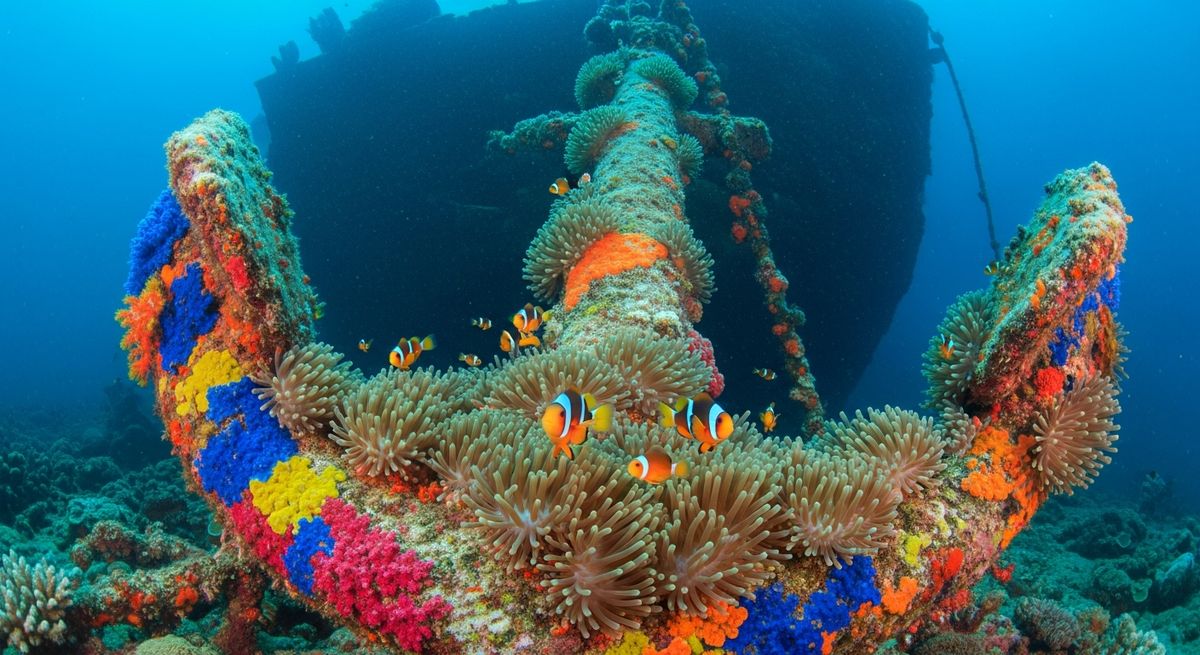
The Carnatic, we think, is one of the more graceful wrecks you'll find in the Red Sea. Sunk in 1869, this old P&O steam-sailer went down while carrying gold and wine, and it’s truly a dive into history. She now lies on her port side, perfectly broken into three main sections that are just begging to be explored. You can fin through the midships where the deck has collapsed, allowing light to pour in and illuminate the interior, creating these beautiful, ethereal shafts. Our favourite part is the stern, where the prop shaft leads you towards the rudder, often enveloped in a swirling cloud of glassfish. We've found the visibility here is usually excellent, often 25 metres plus, which really lets you appreciate the scale of the wreck. Keep an eye out for larger pelagics cruising by; we’ve had some incredible encounters with bottlenose dolphins here, just passing through. It's an ideal dive for those who love penetration, but even staying on the exterior offers plenty to see, with plenty of soft corals clinging to the metalwork. We’d suggest going early in the morning, before the crowds, to truly soak in the quiet grandeur of this old lady.
Safety Notes
Wreck site - avoid penetration without wreck diving certification. Watch for sharp metal and entanglement hazards.
Carnatic Wreck History
Year Sunk
1869
Vessel Type
passenger ship
Cause
grounding
Tonnage
1,776 GRT
The SS Carnatic was a technologically advanced British passenger and mail steamer built in 1862 for the prestigious P&O line. As one of the first ships fitted with a compound steam engine, she was highly efficient for her time, serving the vital route between Suez and Bombay. This was a crucial link in the British Empire's communication with India in the final years before the Suez Canal opened, connecting with other steamers in the Mediterranean via an overland trek.
In September 1869, the Carnatic struck the now-infamous Sha'ab Abu Nuhas reef in the Red Sea. The captain remained confident the ship was stable and that help would soon arrive. However, after two days perched on the coral, the vessel's hull gave way, and she snapped in two, sinking rapidly with the tragic loss of 31 lives. Rumours of a valuable cargo, including £40,000 in gold sovereigns, fueled salvage operations that recovered much of the treasure, but the legend of the 'ship of gold' lives on.
Today, the Carnatic is one of the most iconic and beautiful wrecks in the Red Sea. She rests on her port side in 27 meters of water, her wooden decks long since rotted away to reveal her iron skeleton. This creates a stunning 'cathedral' effect as sunlight streams through the exposed ribs. Divers can easily penetrate the cargo holds, where schools of glassfish now swarm where treasure chests once lay. The entire structure is draped in a breathtaking tapestry of soft corals, making it a world-class dive for both wreck lovers and photographers.
Nearest Dive Centres to Carnatic
Dive shops near Carnatic
Scuba World - Sheraton El Gouna
ORCA DIVE CLUB EL GOUNA
Scuba World Divers - Movenpick El Gouna
Dream Team Divers
Blue Brothers Diving
RedSea-Divers
Reviews for Carnatic
Conditions
Ocean conditions, forecast and tides for Carnatic
Carnatic Ocean Conditions
Monthly averages for Carnatic, sourced from Open-Meteo marine data + Copernicus Marine (EU) - nearest station: Open-Meteo marine grid (27.25, 33.89) (1km away)
October Averages
Sea Temperature
27°C
80°F · Range: 25.2–28°C
Current Speed
29.43 cm/s
Direction: S (170.2°)
Chlorophyll-a
0.069 mg/m³
Very clear (oligotrophic)
Salinity
38.69 PSU
Based on 4 years of monitoring data · Data sources: Open-Meteo marine data + Copernicus Marine (EU)
Plan & book
Ways to dive Hurghada, from day trips to liveaboards.
Day trips & courses
via GetYourGuideGuided dives, courses and snorkel trips with instant booking.
Find dive trips in HurghadaPlaces to stay
via Booking.comHotels and dive resorts near Hurghada.
Search stays in HurghadaDive insurance
Most travel insurance excludes or limits scuba. Check what you need before you go.
Dive insurance explainedPartner links: we may earn a commission if you book, at no extra cost to you. How we make money
Where to Stay near Carnatic
Prices from Booking.com. We may earn a commission at no extra cost to you.