THISBE
Why dive here
THISBE is a wreck dive where divers can encounter humpback whales, spinner dolphins and whale sharks. Water ranges 22-30°C, warmest July, August, September.
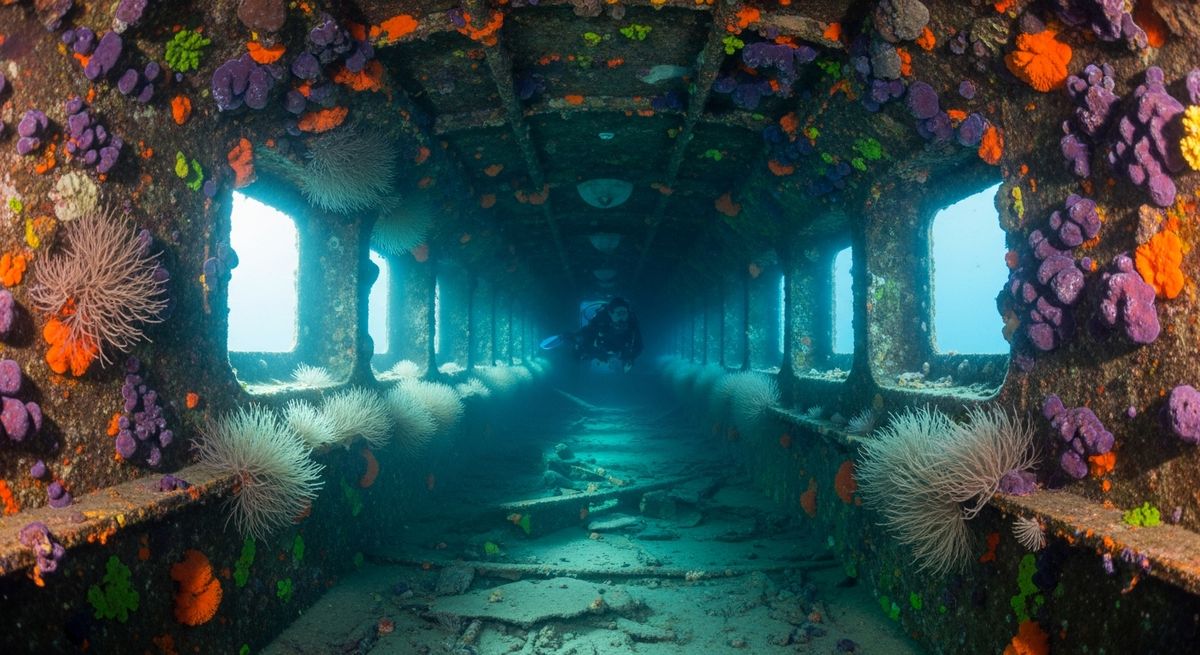
The Thisbe, a cargo vessel that met its end in 1972 after some bad luck and a solidified cargo, sits close to the surface in Safaga. At just a meter deep, this isn't a dive site, it’s a snorkel or free-dive spot, really more of a surface attraction. You’ll see the hull and parts of the superstructure, completely colonised by small reef fish and soft corals. It’s a great option if you have non-diving friends along, or for an easy afternoon bob around, watching the sun glint off the encrusted metal. We’ve seen juvenile snapper darting through the rusted holds, and colourful parrotfish picking at the hull.
Typical THISBE Dive Profile
Illustrative profile based on site depth and type. Actual dive profiles vary - always follow your dive computer and training.
Safety Notes
Wreck site - avoid penetration without wreck diving certification. Watch for sharp metal and entanglement hazards.
Nearest Dive Centres to THISBE
Dive shops near THISBE
United Divers
Fred Lombard
Freedom Divers
Nemo
Dimensions Bleues-Ducks Safaga
Menadive
Reviews for THISBE
Conditions
Ocean conditions, forecast and tides for THISBE
THISBE Ocean Conditions
Monthly averages for THISBE, sourced from Open-Meteo marine data + Copernicus Marine (EU) - nearest station: Open-Meteo marine grid (26.49, 34.08) (12km away)
October Averages
Sea Temperature
28°C
82°F · Range: 26.4–29°C
Current Speed
28.79 cm/s
Direction: S (159.7°)
Chlorophyll-a
0.07 mg/m³
Very clear (oligotrophic)
Salinity
38.69 PSU
Based on 4 years of monitoring data · Data sources: Open-Meteo marine data + Copernicus Marine (EU)
Plan & book
Ways to dive Safaga, from day trips to liveaboards.
Day trips & courses
via GetYourGuideGuided dives, courses and snorkel trips with instant booking.
Find dive trips in SafagaPlaces to stay
via Booking.comHotels and dive resorts near Safaga.
Search stays in SafagaDive insurance
Most travel insurance excludes or limits scuba. Check what you need before you go.
Dive insurance explainedPartner links: we may earn a commission if you book, at no extra cost to you. How we make money
Where to Stay near THISBE
Prices from Booking.com. We may earn a commission at no extra cost to you.