DART
Protected Area
Estação Ecológica Tupinambás
Why dive here
With 55+ marine species recorded in the area - including humpback whales - DART offers some of Arraial do Cabo's richest wreck diving. Water ranges 22-28°C, warmest January, February, March.
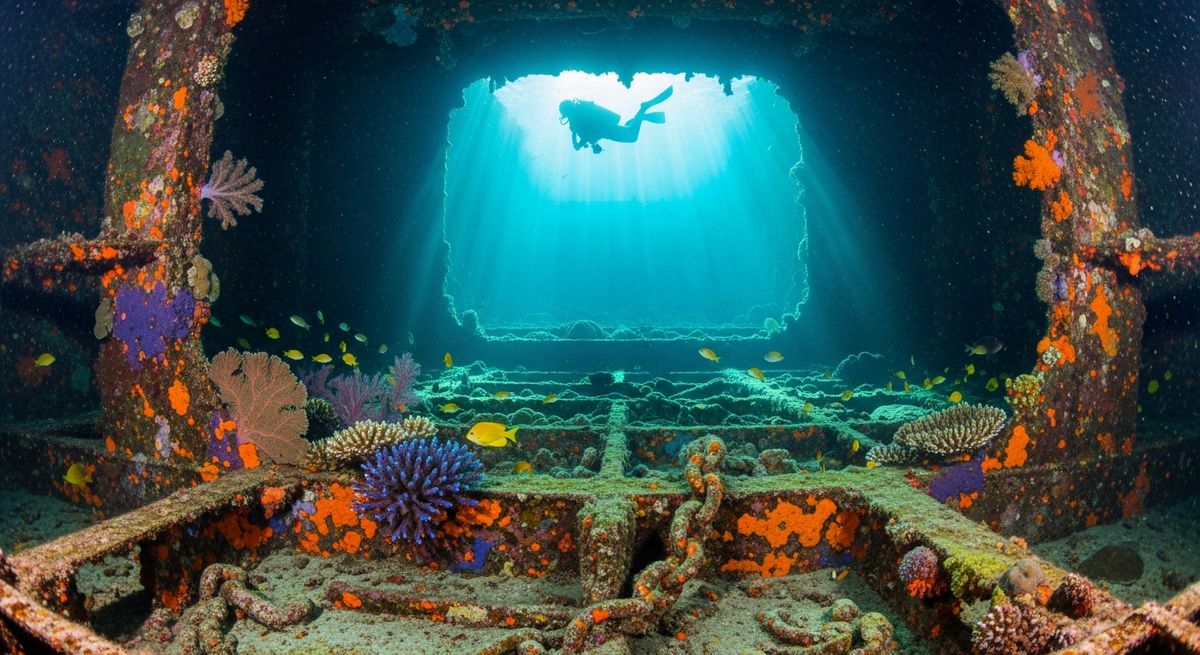
The DART wreck in Arraial do Cabo offers a dive into history, resting upright at 20 meters. This steamship, sunk in 1884, still holds its structure well, a testament to its 1882 build. You can trace its 97.5-meter length, picking out the bow and stern, with the hull largely intact. Schools of grunts and snapper often drift over the deck, and we've spotted moray eels peeking from crevices within the ship’s structure. It's a solid wreck dive, suitable for divers comfortable with deeper sites looking for something with a story.
Typical DART Dive Profile
Illustrative profile based on site depth and type. Actual dive profiles vary - always follow your dive computer and training.
Safety Notes
Depth of 20m - Advanced Open Water certification recommended.
Wreck site - avoid penetration without wreck diving certification. Watch for sharp metal and entanglement hazards.
Always perform a 3-minute safety stop at 5m before surfacing.
Nearest Dive Centres to DART
Dive shops near DART
Narwhal Ilhabela
Prado’s Dive
Oceano Sub
DiveLovers
Estação Mergulho Scuba School
Reviews for DART
Conditions
Ocean conditions, forecast and tides for DART
DART Ocean Conditions
Monthly averages for DART, sourced from Open-Meteo marine data + Copernicus Marine (EU) - nearest station: Open-Meteo marine grid (-23.23, -44.16) (12km away)
October Averages
Sea Temperature
23°C
73°F · Range: 17.8–26.6°C
Current Speed
8.49 cm/s
Direction: SW (225°)
Salinity
35.38 PSU
Based on 4 years of monitoring data · Data sources: Open-Meteo marine data + Copernicus Marine (EU)
Plan & book
Ways to dive Arraial do Cabo, from day trips to liveaboards.
Day trips & courses
via GetYourGuideGuided dives, courses and snorkel trips with instant booking.
Find dive trips in Arraial do CaboPlaces to stay
via Booking.comHotels and dive resorts near Arraial do Cabo.
Search stays in Arraial do CaboDive insurance
Most travel insurance excludes or limits scuba. Check what you need before you go.
Dive insurance explainedPartner links: we may earn a commission if you book, at no extra cost to you. How we make money
Where to Stay near DART
Prices from Booking.com. We may earn a commission at no extra cost to you.