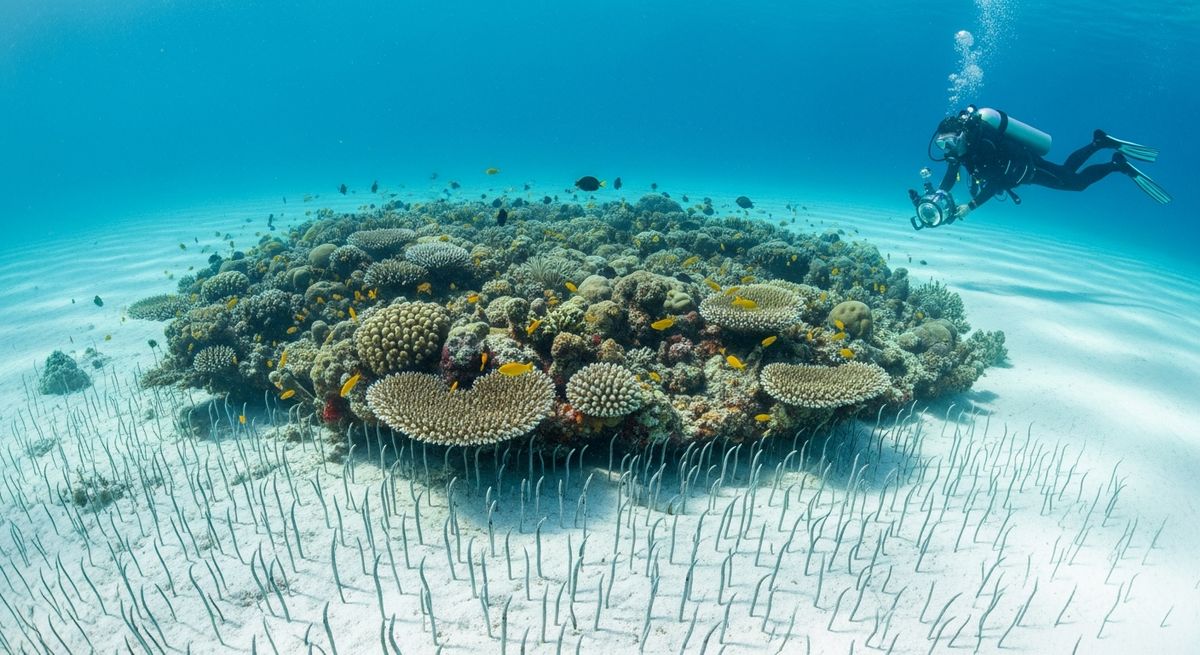
Naufrágio Buenos Aires (Wreck)
Protected Area
Monumento Natural Das Ilhas Cagarras
Why dive here
With 55+ marine species recorded in the area - including humpback whales - Naufrágio Buenos Aires (Wreck) offers some of Arraial do Cabo's richest reef diving. Water ranges 22-28°C, warmest January, February, March.
The Buenos Aires wreck is one of our favourites in Arraial do Cabo. It’s a proper historical dive, a steamship that went down in 1890, and you can really feel that history as you descend. The wreck starts around 13 metres, but the best of it, the main structure, lies deeper, hitting 31 metres. We’d suggest this one for experienced divers; the currents here can be fierce, especially at the surface, and the average visibility of 8 metres means you need to be comfortable navigating a bit of murk. Down amongst the twisted metal, the wreck has become a home. We’ve seen huge schools of kingfish and horse-eye jacks circling the mast, making the whole structure feel alive. Look closely and you’ll spot pygmy filefish camouflaged on the hull, and every crevice seems to hide a pallid snake eel or a grumpy moray. We’ve even been lucky enough to spot eagle rays gliding over the sandy patches nearby. The temperature hovers around 18 degrees, so a good 5mm suit is a smart move. Keep an eye out for stonefish on the bottom, too – they’re masters of disguise and demand respect. It's a dive that rewards slow exploration, letting the story of the ship and its new inhabitants unfold.
Nearest Dive Centres to Naufrágio Buenos Aires (Wreck)
Dive shops near Naufrágio Buenos Aires (Wreck)
KAIMANA DIVE & BOAT
Mar Do Rio
XDIVERS CENTRO DE MERGULHO
DOMAR ATIVIDADES AQUATICAS
Dolphin Dive
Reviews for Naufrágio Buenos Aires (Wreck)
Conditions
Ocean conditions, forecast and tides for Naufrágio Buenos Aires (Wreck)
Naufrágio Buenos Aires (Wreck) Ocean Conditions
Monthly averages for Naufrágio Buenos Aires (Wreck), sourced from Open-Meteo marine data + Copernicus Marine (EU) - nearest station: Open-Meteo marine grid (-23.23, -44.16) (12km away)
October Averages
Sea Temperature
23°C
73°F · Range: 17.8–26.6°C
Current Speed
8.49 cm/s
Direction: SW (225°)
Salinity
35.38 PSU
Based on 4 years of monitoring data · Data sources: Open-Meteo marine data + Copernicus Marine (EU)
Plan & book
Ways to dive Arraial do Cabo, from day trips to liveaboards.
Day trips & courses
via GetYourGuideGuided dives, courses and snorkel trips with instant booking.
Find dive trips in Arraial do CaboPlaces to stay
via Booking.comHotels and dive resorts near Arraial do Cabo.
Search stays in Arraial do CaboDive insurance
Most travel insurance excludes or limits scuba. Check what you need before you go.
Dive insurance explainedPartner links: we may earn a commission if you book, at no extra cost to you. How we make money
Where to Stay near Naufrágio Buenos Aires (Wreck)
Prices from Booking.com. We may earn a commission at no extra cost to you.