Los Gemelos
Protected Area
Sanctuaire de faune et de flore de Malpelo
Why dive here
With 71+ marine species recorded in the area - including barracuda and pufferfish - Los Gemelos offers some of Malpelo Island's richest diving. Water ranges 28-30°C, warmest September, October, November.
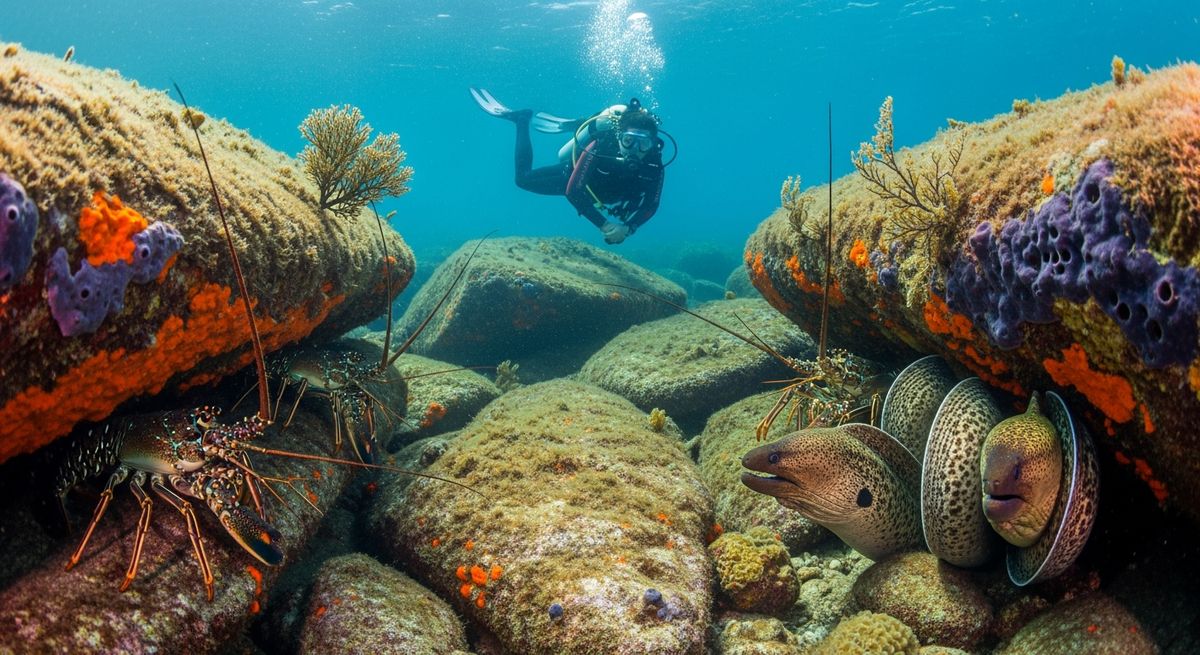
Los Gemelos, or "The Twins," is one of Malpelo’s defining sites, and for good reason. It’s essentially two massive rocks rising from the deep, creating a channel that acts like a natural funnel for everything in the ocean. We love dropping in on the outside, letting the surge push us along the wall, and then drifting into the gap. The sheer volume of fish here is what really hits you – we’re talking thousands of Glasseye Snapper, Maylan, and Bumper, so dense they sometimes block out the light. It’s like being in a fish tornado. Our favourite time to dive Los Gemelos is early morning, just as the light starts filtering down, making the schools shimmer. Keep an eye out for those tricky Bluebanded gobies clinging to the rocks and the flashy Catalina darting between the crevices. While the current can be lively, it’s generally a drift, making it a fantastic experience for divers comfortable with a bit of movement. Expect an exhilarating ride and more fish than you’ll know what to do with.
Reviews for Los Gemelos
Conditions
Ocean conditions, forecast and tides for Los Gemelos
Los Gemelos Ocean Conditions
Monthly averages for Los Gemelos, sourced from Open-Meteo marine data + Copernicus Marine (EU) - nearest station: Open-Meteo marine grid (12.4, -81.47) (108km away)
October Averages
Sea Temperature
30°C
86°F · Range: 29.3–31.3°C
Current Speed
13.42 cm/s
Direction: NE (63.4°)
Chlorophyll-a
0.094 mg/m³
Very clear (oligotrophic)
Salinity
34.38 PSU
Based on 4 years of monitoring data · Data sources: Open-Meteo marine data + Copernicus Marine (EU)
Plan & book
Ways to dive Malpelo Island, from day trips to liveaboards.
Day trips & courses
via GetYourGuideGuided dives, courses and snorkel trips with instant booking.
Find dive trips in Malpelo IslandPlaces to stay
via Booking.comHotels and dive resorts near Malpelo Island.
Search stays in Malpelo IslandDive insurance
Most travel insurance excludes or limits scuba. Check what you need before you go.
Dive insurance explainedPartner links: we may earn a commission if you book, at no extra cost to you. How we make money
Where to Stay near Los Gemelos
Prices from Booking.com. We may earn a commission at no extra cost to you.