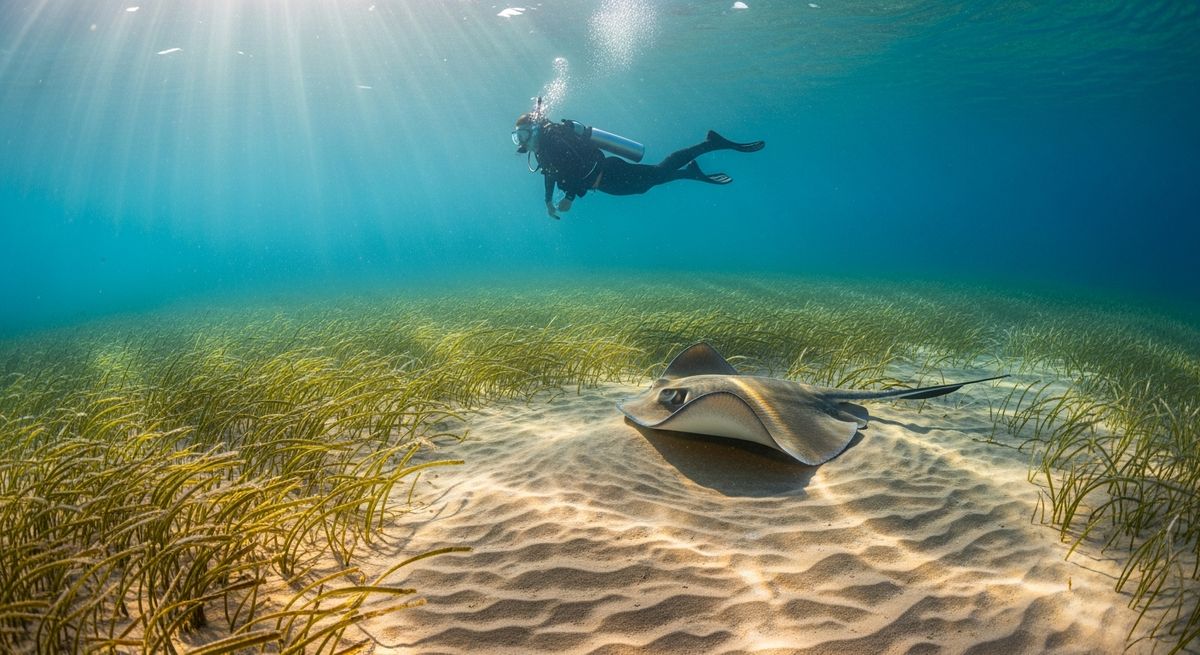
Cape Douglas
Why dive here
With 131+ marine species recorded in the area - including dolphins, humpback whales, seals & sea lions, sea turtles and sperm whales - Cape Douglas offers some of Galápagos Islands's richest diving. Water ranges 23-28°C, warmest February, March, April.
Cape Douglas is where you’ll usually find yourself finning alongside marine iguanas feeding on algae underwater. It’s a unique spectacle, watching them dive, sometimes quite deep, to graze. You might also spot Flightless Cormorants hunting, their distinctive dives a real treat to observe. This site is genuinely a fantastic pick for anyone keen to see the Galápagos's iconic land animals in their underwater element.
Safety Notes
Strong currents typical this month (avg 36 cm/s). Good buoyancy control essential.
Reviews for Cape Douglas
Conditions
Ocean conditions, forecast and tides for Cape Douglas
Cape Douglas Ocean Conditions
Monthly averages for Cape Douglas, sourced from Open-Meteo marine data + Copernicus Marine (EU) - nearest station: Open-Meteo marine grid (-0.32, -90.55) (15km away)
October Averages
Sea Temperature
23°C
74°F · Range: 20.2–26°C
Current Speed
36.24 cm/s
Direction: SW (230.6°)
Chlorophyll-a
0.886 mg/m³
Moderate productivity
Salinity
33.88 PSU
Based on 4 years of monitoring data · Data sources: Open-Meteo marine data + Copernicus Marine (EU)
Plan & book
Ways to dive Galápagos Islands, from day trips to liveaboards.
Day trips & courses
via GetYourGuideGuided dives, courses and snorkel trips with instant booking.
Find dive trips in Galápagos IslandsPlaces to stay
via Booking.comHotels and dive resorts near Galápagos Islands.
Search stays in Galápagos IslandsDive insurance
Most travel insurance excludes or limits scuba. Check what you need before you go.
Dive insurance explainedPartner links: we may earn a commission if you book, at no extra cost to you. How we make money
Where to Stay near Cape Douglas
Prices from Booking.com. We may earn a commission at no extra cost to you.