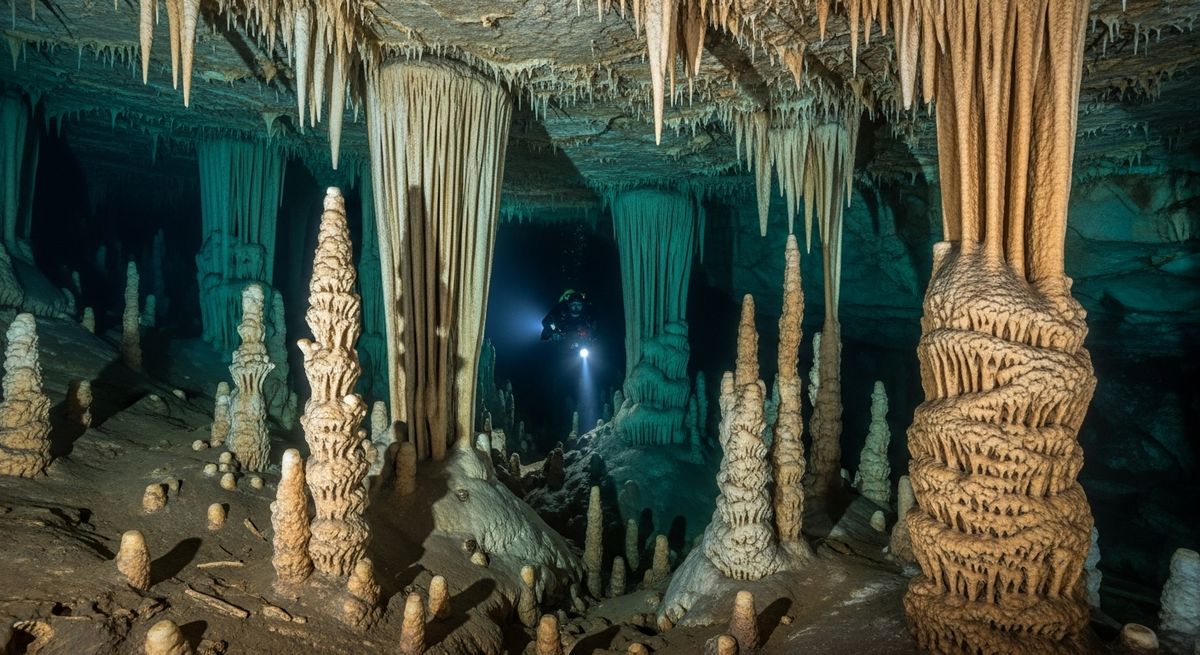
Bat Cave
Protected Area
KK Nusa Penida
Why dive here
With 246+ marine species recorded in the area - including blue-spotted stingrays, bull sharks, grey reef sharks, manta rays and mobula rays (devil rays) - Bat Cave offers some of Lombok & Gili Islands's richest cave diving. Water ranges 28-30°C, warmest April, May, November.
Bat Cave is a surprisingly cool drift dive, best done when the current is running parallel to the coast. You drop onto the reef at about eight meters, then let the water pull you into the cave mouth. It’s not a deep cave, maxing out around 21m, and the entrance is wide enough that you never feel squeezed. Inside, the light plays off the walls, creating this amazing, almost theatrical effect. We love gliding through, spotting juvenile sweetlips and batfish taking shelter, along with the occasional moray eel peeking out. The real highlight, though, is at the back. After about 200 meters, the cave opens into a huge air pocket, and you can surface inside. The air is warm, humid, and there are literally hundreds of bats flitting around above you. It's an incredible sensory experience – the sound of their wings, the smell of the guano, the dim light filtering down. We'd suggest going in the morning; the light is better then, and the currents tend to be more predictable. It's a dive that really sticks with you.
Typical Bat Cave Dive Profile
Illustrative profile based on site depth and type. Actual dive profiles vary - always follow your dive computer and training.
Safety Notes
Overhead environment - never enter without proper cave/cavern training, redundant equipment, and a guideline.
Nearest Dive Centres to Bat Cave
Dive shops near Bat Cave
Reeflex Divers
Ceningan Divers
Twin Island Dive
Siren Diving Lembongan
Tamarind Divers Lembongan
Scuba Center Asia
Reviews for Bat Cave
Conditions
Ocean conditions, forecast and tides for Bat Cave
Bat Cave Ocean Conditions
Monthly averages for Bat Cave, sourced from Open-Meteo marine data + Copernicus Marine (EU) - nearest station: Open-Meteo marine grid (-8.35, 116.05) (0km away)
October Averages
Sea Temperature
30°C
85°F · Range: 28.3–30.9°C
Current Speed
29.15 cm/s
Direction: SW (239°)
Chlorophyll-a
0.223 mg/m³
Clear water
Salinity
33.97 PSU
Based on 4 years of monitoring data · Data sources: Open-Meteo marine data + Copernicus Marine (EU)
Plan & book
Ways to dive Lombok & Gili Islands, from day trips to liveaboards.
Day trips & courses
via GetYourGuideGuided dives, courses and snorkel trips with instant booking.
Find dive trips in Lombok & Gili IslandsPlaces to stay
via Booking.comHotels and dive resorts near Lombok & Gili Islands.
Search stays in Lombok & Gili IslandsDive insurance
Most travel insurance excludes or limits scuba. Check what you need before you go.
Dive insurance explainedPartner links: we may earn a commission if you book, at no extra cost to you. How we make money
Where to Stay near Bat Cave
Prices from Booking.com. We may earn a commission at no extra cost to you.