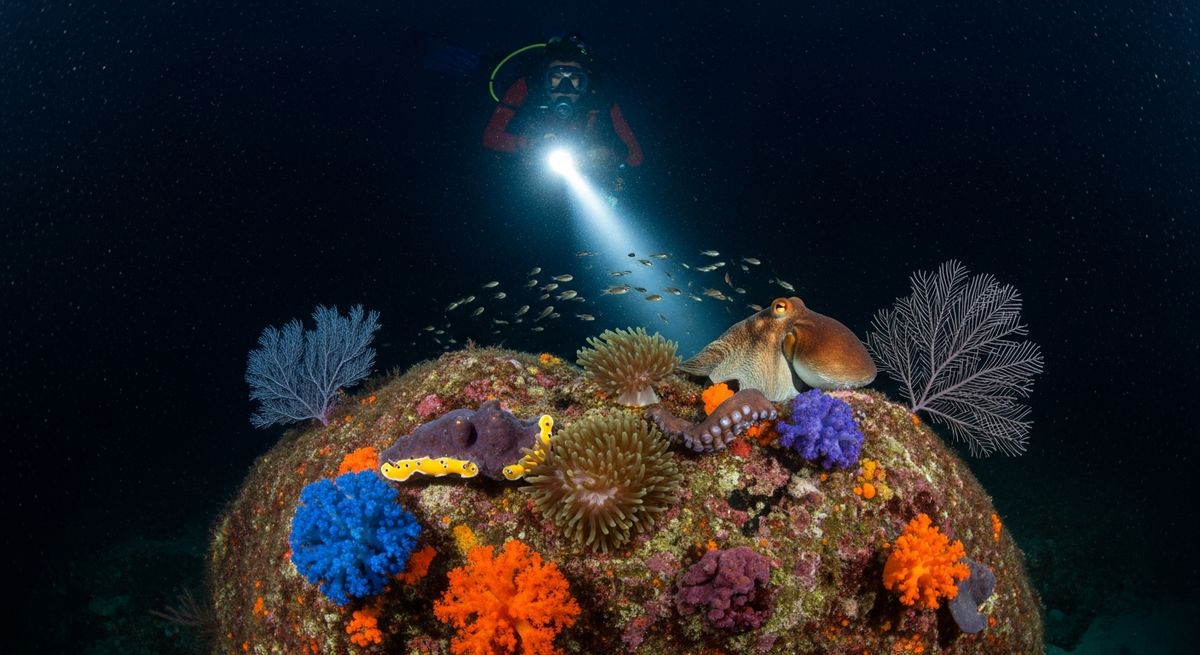
Biaha - Lombok & Gili Islands

Biaha, on Lombok’s east coast, offers a unique experience for those willing to ride out the surface chop. We’ve certainly had our share of vigorous entries here, watching the water churn before dropping below. But once you descend, things typically calm down, revealing a surprisingly sheltered cave system. Inside, you’ll find smaller reef sharks often resting, along with a variety of critters tucked into the crevices. We’d recommend this site for divers comfortable with a bit of a current and confident with their buoyancy, as navigating the cave requires good control.

Location
Lombok & Gili Islands, Indonesia, Southeast Asia
Coordinates
-8.500000, 115.580000

Marine Protected Area: KK Karangasem

Best Time to Dive in Lombok & Gili Islands

The warmest water temperatures in Lombok & Gili Islands occur in December, averaging 30.1°C. The coolest conditions are in August at 28.3°C.

Monthly Water Temperatures

  • January: 29.6°C
  • February: 29.3°C
  • March: 29.6°C
  • April: 30.1°C
  • May: 29.9°C
  • June: 29.2°C
  • July: 28.5°C
  • August: 28.3°C
  • September: 28.6°C
  • October: 29.3°C
  • November: 30.1°C
  • December: 30.1°C

Nearby Dive Sites in Lombok & Gili Islands

Nearest Dive Centres to Biaha

Marine Life in Lombok & Gili Islands

Home to 258 recorded species including 153 reef fish, 44 sharks & rays, 37 hard corals, 10 seagrass & algae, 4 other, 3 clams & mussels.

Notable Species

Recommended Packing List for Biaha

Based on average water temperature of 29.4°C, currents 23 cm/s.

  • Shorty or Rashguard - warm 29°C water needs minimal exposure protection
  • Mask - essential for every dive
  • Fins
  • BCD - buoyancy compensator
  • Regulator - your most safety-critical piece of gear
  • Dive Computer - tracks depth, time, and NDL
  • Surface Marker Buoy (SMB) - essential for boat pickups
  • Dive Torch - useful for crevices and colour at depth
  • Underwater Camera - capture your diving memories

Frequently Asked Questions

What is the maximum depth for diving at Biaha and what marine life can I expect to see there?
The maximum depth for diving at Biaha is currently unknown based on our available data. However, a quick glance into the water below will reveal countless fish, making it a vibrant spot. For more general information on marine life in Lombok & Gili Islands, you can explore our wildlife database.
How difficult is the Biaha dive site, and what are the typical currents and conditions like?
The Biaha dive site is rated as intermediate difficulty. Divers should be aware that surface conditions can involve being thrown around by the swell before descending, with countless fish also being tossed back and forth. Once underwater, it is unlikely to be too much trouble, but good buoyancy and position-awareness are essential to fully enjoy this excellent dive spot on the east coast of Bali.
What are the recommended diving certifications or experience levels required for Biaha?
Given its intermediate difficulty rating, Biaha is recommended for divers who possess good buoyancy control and position-awareness. While specific certifications aren't listed, an intermediate rating typically suggests comfort with varying conditions and some experience beyond entry-level dives. It's always wise to consult with local dive operators in Lombok & Gili Islands for their specific requirements and recommendations.
When is the best time of year to dive at Biaha for optimal conditions and marine life sightings, especially for Mola Mola?
Our current data for the Biaha dive site does not specify the best time of year for optimal conditions or marine life sightings, including Mola Mola. For general guidance on diving seasons in Indonesia, please refer to our When to Dive section. We recommend checking with local dive centers for the most up-to-date information on seasonal conditions and specific marine life encounters.
What kind of underwater topography and features, such as caves or walls, will I encounter at Biaha?
The Biaha dive site is primarily a reef dive. A notable feature you will encounter is a visit to a cave at the start of the dive, adding an exciting element to the underwater topography. This makes it one of the best spots for scuba diving on the east coast of Bali.
Are there specific safety considerations or challenges divers should be aware of when planning a dive at Biaha?
Divers planning a dive at Biaha should be aware of specific safety considerations, particularly the surface conditions where you can be thrown around by the swell before descending. Good buoyancy and position-awareness are crucial to navigate the site effectively and safely enjoy this intermediate difficulty dive. While conditions stabilize once down, maintaining awareness is key.