Blue Corner
Protected Area
KK Nusa Penida
Why dive here
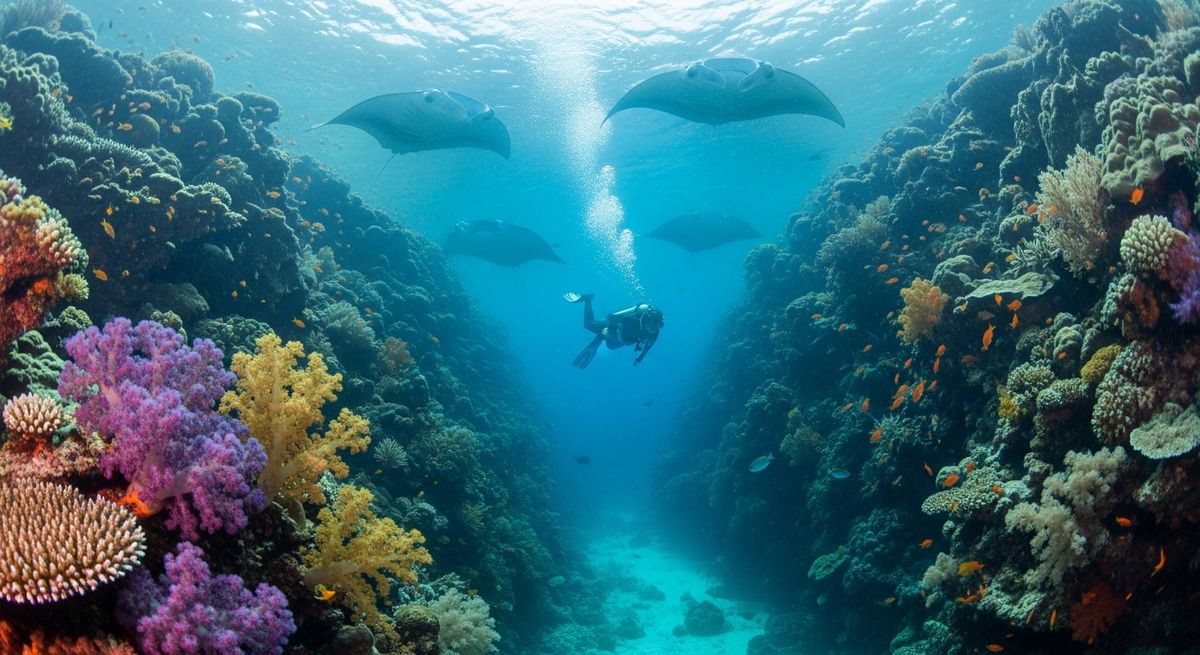
With 246+ marine species recorded in the area - including blue-spotted stingrays, bull sharks, grey reef sharks, manta rays and mobula rays (devil rays) - Blue Corner offers some of Lombok & Gili Islands's richest reef diving. Water ranges 28-30°C, warmest April, May, November.
Blue Corner, for us, is one of those dives that really wakes you up. The name isn't just for show, it's where the deeper, cooler blue water from the Lombok Strait pushes in, bringing with it a whole different energy. You drop onto a coral slope that quickly turns into a serious wall, boulders stacked high, dropping beyond 20 meters. This isn't a drift for beginners; the currents here are famously punchy, often strong enough to genuinely sweep you off course if you’re not paying attention. But that’s the deal with Blue Corner: the current is what brings in the big stuff. We love tucking in behind those massive boulders, out of the main flow, and just watching the show unfold. It’s like a pelagic highway. We’ve seen whitetip reef sharks cruise by, barracuda shoals shimmer in the distance, and if you’re lucky, a thresher shark or even a Mola mola might pass through in season. The visibility averages around 19m, but it feels clearer when you’re watching a manta ray glide past. Keep an eye out for marble rays tucked into the sand, too. This is a dive for experienced divers who appreciate the thrill of a good current and the rewards it brings. You'll spend most of your time scanning the blue, a little bit breathless, hoping for that next big sighting.
Typical Blue Corner Dive Profile
Illustrative profile based on site depth and type. Actual dive profiles vary - always follow your dive computer and training.
Safety Notes
Depth of 20m - Advanced Open Water certification recommended.
Always perform a 3-minute safety stop at 5m before surfacing.
Nearest Dive Centres to Blue Corner
Dive shops near Blue Corner
Blue Corner Dive
French Kiss Divers - Nusa Lembongan
Lembongan Diving center
Lebongan Dive Center
Two Fish Divers Lembongan
Dive Concepts
Reviews for Blue Corner
Conditions
Ocean conditions, forecast and tides for Blue Corner
Blue Corner Ocean Conditions
Monthly averages for Blue Corner, sourced from Open-Meteo marine data + Copernicus Marine (EU) - nearest station: Open-Meteo marine grid (-8.35, 116.05) (0km away)
October Averages
Sea Temperature
30°C
85°F · Range: 28.3–30.9°C
Current Speed
29.15 cm/s
Direction: SW (239°)
Chlorophyll-a
0.223 mg/m³
Clear water
Salinity
33.97 PSU
Based on 4 years of monitoring data · Data sources: Open-Meteo marine data + Copernicus Marine (EU)
Plan & book
Ways to dive Lombok & Gili Islands, from day trips to liveaboards.
Day trips & courses
via GetYourGuideGuided dives, courses and snorkel trips with instant booking.
Find dive trips in Lombok & Gili IslandsPlaces to stay
via Booking.comHotels and dive resorts near Lombok & Gili Islands.
Search stays in Lombok & Gili IslandsDive insurance
Most travel insurance excludes or limits scuba. Check what you need before you go.
Dive insurance explainedPartner links: we may earn a commission if you book, at no extra cost to you. How we make money
Where to Stay near Blue Corner
Prices from Booking.com. We may earn a commission at no extra cost to you.