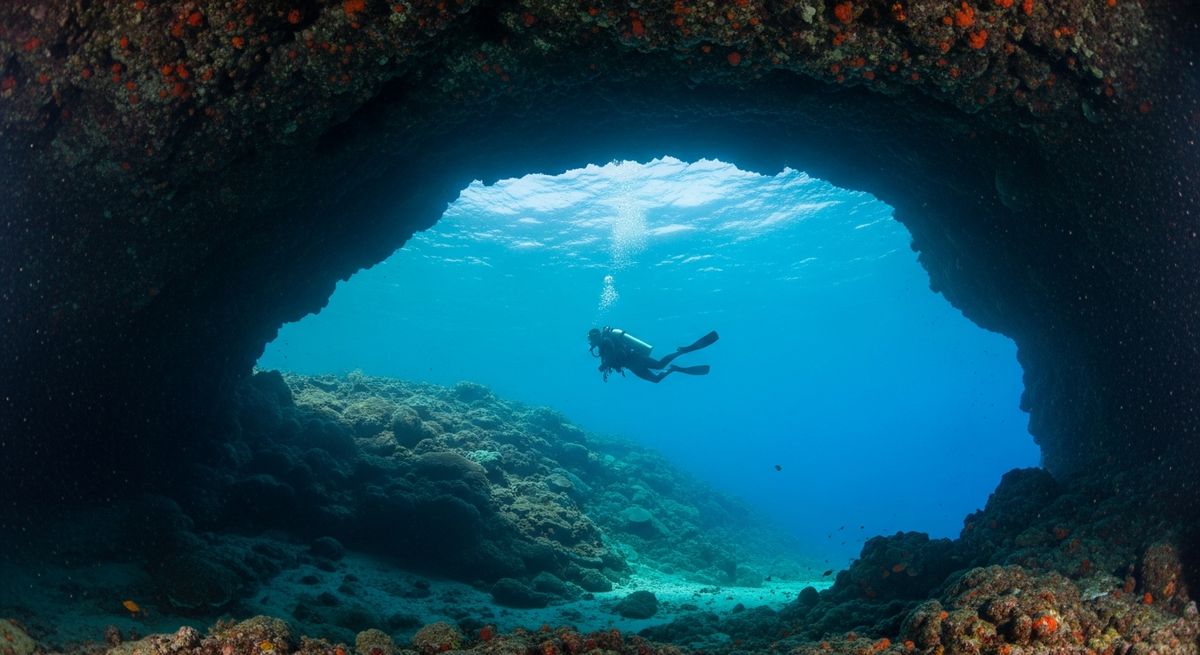
Ceningan wall, Nusa Lembongan, Bali, Indonesia
Protected Area
KK Nusa Penida
Why dive here
With 246+ marine species recorded in the area - including blue-spotted stingrays, bull sharks, grey reef sharks, manta rays and mobula rays (devil rays) - Ceningan wall, Nusa Lembongan, Bali, Indonesia offers some of Lombok & Gili Islands's richest cave diving. Water ranges 28-30°C, warmest April, May, November.
Ceningan Wall is one of those sites we always try to hit if the tides are playing nice. It’s a genuine slack high tide only dive, otherwise you’ll be on a rocket ride in the channel between Ceningan and Penida. Our favourite part is dropping down onto the wall, which is just plastered with soft corals – a real riot of colours swaying in what little current remains. Look closely in the cracks for nudibranchs; there are always a few interesting ones tucked away. Out in the blue, we’ve had some cracking encounters with whitetip reef sharks cruising past, and if you’re lucky, a Mola alexandrini might drift by. It's a site for confident divers who appreciate a bit of a challenge to get to a truly rewarding reef.
Safety Notes
Overhead environment - never enter without proper cave/cavern training, redundant equipment, and a guideline.
Nearest Dive Centres to Ceningan wall, Nusa Lembongan, Bali, Indonesia
Dive shops near Ceningan wall, Nusa Lembongan, Bali, Indonesia
Ceningan Divers
Warnakali
Twin Island Dive
Penida Dive Resort
Reeflex Divers
Big Fish Diving
Reviews for Ceningan wall, Nusa Lembongan, Bali, Indonesia
Conditions
Ocean conditions, forecast and tides for Ceningan wall, Nusa Lembongan, Bali, Indonesia
Ceningan wall, Nusa Lembongan, Bali, Indonesia Ocean Conditions
Monthly averages for Ceningan wall, Nusa Lembongan, Bali, Indonesia, sourced from Open-Meteo marine data + Copernicus Marine (EU) - nearest station: Open-Meteo marine grid (-8.35, 116.05) (0km away)
October Averages
Sea Temperature
30°C
85°F · Range: 28.3–30.9°C
Current Speed
29.15 cm/s
Direction: SW (239°)
Chlorophyll-a
0.223 mg/m³
Clear water
Salinity
33.97 PSU
Based on 4 years of monitoring data · Data sources: Open-Meteo marine data + Copernicus Marine (EU)
Plan & book
Ways to dive Lombok & Gili Islands, from day trips to liveaboards.
Day trips & courses
via GetYourGuideGuided dives, courses and snorkel trips with instant booking.
Find dive trips in Lombok & Gili IslandsPlaces to stay
via Booking.comHotels and dive resorts near Lombok & Gili Islands.
Search stays in Lombok & Gili IslandsDive insurance
Most travel insurance excludes or limits scuba. Check what you need before you go.
Dive insurance explainedPartner links: we may earn a commission if you book, at no extra cost to you. How we make money
Where to Stay near Ceningan wall, Nusa Lembongan, Bali, Indonesia
Prices from Booking.com. We may earn a commission at no extra cost to you.