Deep Blue
Protected Area
KK Karangasem
Why dive here
With 246+ marine species recorded in the area - including blue-spotted stingrays, bull sharks, grey reef sharks, manta rays and mobula rays (devil rays) - Deep Blue offers some of Lombok & Gili Islands's richest reef diving. Water ranges 28-30°C, warmest April, May, November.
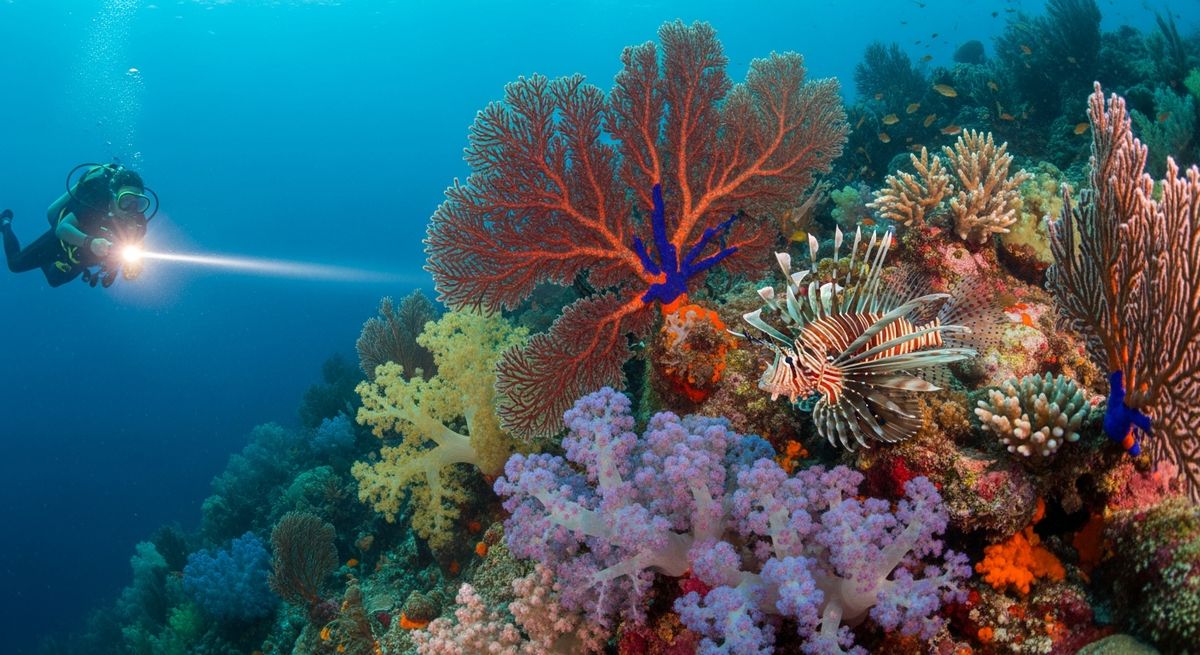
Deep Blue, near the Gilis, is where we head when we want to just strap in and go for a ride. This site is a proper drift, a conveyor belt taking you past fields of staghorn and branch corals. We love that feeling of being effortlessly propelled, watching the reef unfold. You’ll spot plenty of blennies darting in and out, and if you keep your eyes peeled for the smaller stuff, you might even catch a Cobb’s winged murphydoris clinging on. The current here can be assertive, so it’s not a site for your first foray into drift diving. But for those comfortable with a bit of speed, it’s a super rewarding dive. Our favourite part is looking out into the blue, hoping for a glimpse of something larger. We've seen eagle rays cruise by and, on a lucky day, a school of bumphead parrotfish in the distance. Visibility averages around 18 metres, which is usually enough to enjoy the ride without feeling overwhelmed by the speed. It’s a great spot for videographers too, if they can manage to hold steady with the current.
Nearest Dive Centres to Deep Blue
Dive shops near Deep Blue
DIVEONESIA
Bali reef divers
BLD Dive Center
Amed White Sand Divers
Ecodive Bali
Divers Café
Reviews for Deep Blue
Conditions
Ocean conditions, forecast and tides for Deep Blue
Deep Blue Ocean Conditions
Monthly averages for Deep Blue, sourced from Open-Meteo marine data + Copernicus Marine (EU) - nearest station: Open-Meteo marine grid (-8.35, 116.05) (0km away)
October Averages
Sea Temperature
30°C
85°F · Range: 28.3–30.9°C
Current Speed
29.15 cm/s
Direction: SW (239°)
Chlorophyll-a
0.223 mg/m³
Clear water
Salinity
33.97 PSU
Based on 4 years of monitoring data · Data sources: Open-Meteo marine data + Copernicus Marine (EU)
Plan & book
Ways to dive Lombok & Gili Islands, from day trips to liveaboards.
Day trips & courses
via GetYourGuideGuided dives, courses and snorkel trips with instant booking.
Find dive trips in Lombok & Gili IslandsPlaces to stay
via Booking.comHotels and dive resorts near Lombok & Gili Islands.
Search stays in Lombok & Gili IslandsDive insurance
Most travel insurance excludes or limits scuba. Check what you need before you go.
Dive insurance explainedPartner links: we may earn a commission if you book, at no extra cost to you. How we make money
Where to Stay near Deep Blue
Prices from Booking.com. We may earn a commission at no extra cost to you.