Gili Air Slope
Protected Area
KK Pulau Gili Air, Gili Meno, dan Gili Trawangan
Why dive here
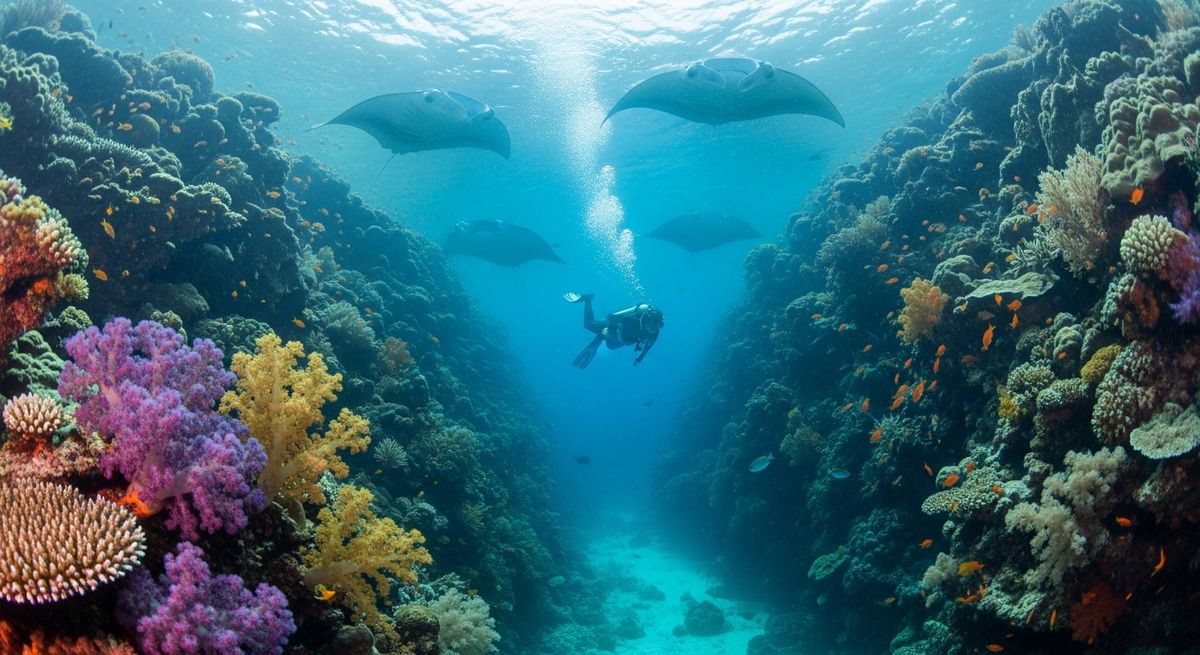
With 246+ marine species recorded in the area - including blue-spotted stingrays, bull sharks, grey reef sharks, manta rays and mobula rays (devil rays) - Gili Air Slope offers some of Lombok & Gili Islands's richest reef diving. Water ranges 28-30°C, warmest April, May, November.
Gili Air Slope is one of our favourite easy dives in the Gilis. It’s a sandy bottom that just gently slopes away from the island, reaching a comfortable maximum depth of 17 metres. We love it because the lack of intense current means you can really take your time, letting you hunt for the smaller stuff without being swept past. You’ll drift over scattered coral bommies, each one a little world of its own. We’ve spotted pipefish tucked into the staghorn corals and often find blue-spotted stingrays half-buried in the sand. Keep an eye out for the fluted and boring clams too, their mantle patterns are surprisingly vibrant. While the macro life, like pygmy seahorses and nudibranchs, is a real draw, the schools of fusiliers here can be incredible, sometimes so thick they form a shimmering wall that momentarily blocks out the sun. It’s an ideal spot for newer divers to build confidence or for photographers wanting a calm environment to focus on macro subjects.
Nearest Dive Centres to Gili Air Slope
Dive shops near Gili Air Slope
Blue Marine Dive Resort
Manta Dive
Dreamdivers
Ocean 5
3Wdive
7 Seas International
Reviews for Gili Air Slope
Conditions
Ocean conditions, forecast and tides for Gili Air Slope
Gili Air Slope Ocean Conditions
Monthly averages for Gili Air Slope, sourced from Open-Meteo marine data + Copernicus Marine (EU) - nearest station: Open-Meteo marine grid (-8.35, 116.05) (0km away)
October Averages
Sea Temperature
30°C
85°F · Range: 28.3–30.9°C
Current Speed
29.15 cm/s
Direction: SW (239°)
Chlorophyll-a
0.223 mg/m³
Clear water
Salinity
33.97 PSU
Based on 4 years of monitoring data · Data sources: Open-Meteo marine data + Copernicus Marine (EU)
Plan & book
Ways to dive Lombok & Gili Islands, from day trips to liveaboards.
Day trips & courses
via GetYourGuideGuided dives, courses and snorkel trips with instant booking.
Find dive trips in Lombok & Gili IslandsPlaces to stay
via Booking.comHotels and dive resorts near Lombok & Gili Islands.
Search stays in Lombok & Gili IslandsDive insurance
Most travel insurance excludes or limits scuba. Check what you need before you go.
Dive insurance explainedPartner links: we may earn a commission if you book, at no extra cost to you. How we make money
Where to Stay near Gili Air Slope
Prices from Booking.com. We may earn a commission at no extra cost to you.