Kubu Reef
Protected Area
KK Karangasem
Why dive here
With 246+ marine species recorded in the area - including blue-spotted stingrays, bull sharks, grey reef sharks, manta rays and mobula rays (devil rays) - Kubu Reef offers some of Lombok & Gili Islands's richest reef diving. Water ranges 28-30°C, warmest April, May, November.
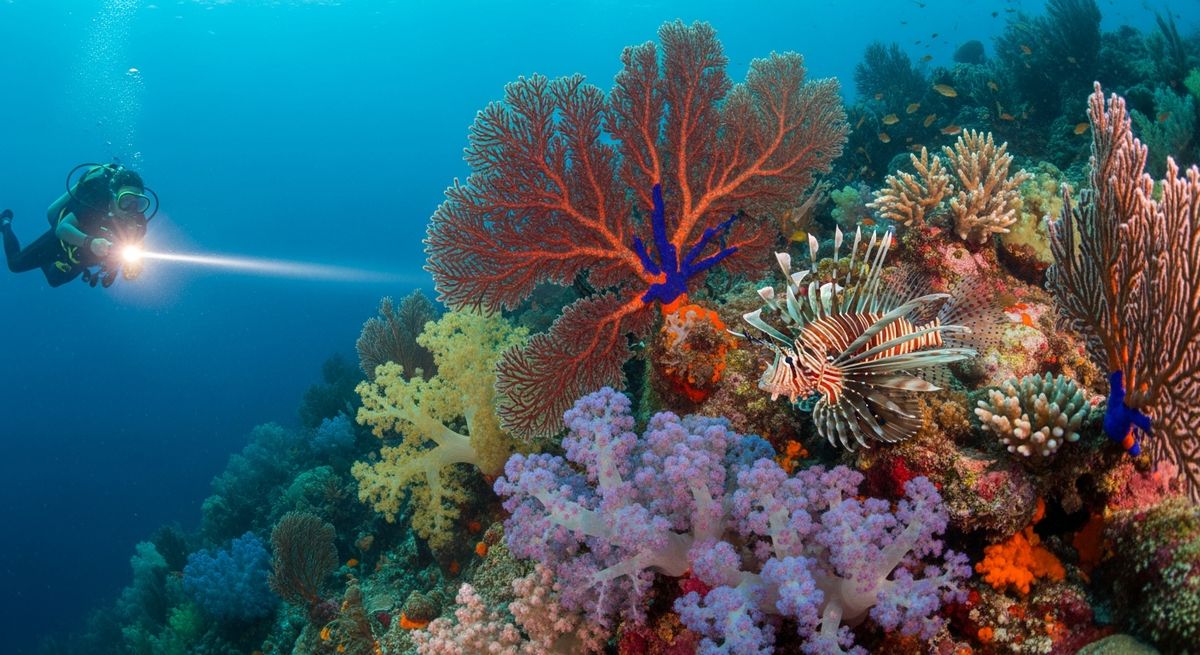
Kubu Reef is one of our favourite shore dives. You suit up on the beach, wade in, and immediately find yourself in this incredible contrast of vibrant corals against volcanic black sand. It’s an easy, gentle slope, dropping to around 20 meters, making it a perfect second dive after the Boga Wreck. We love Kubu for its consistent population of critters. Keep your eyes peeled in the sand for Elegant Sandburrowers, and we’ve often spotted Blue Spotted Stingrays tucked near the coral patches. The main attraction, though, is the sheer density of staghorn and branch corals. They form these sprawling, intricate gardens, absolutely teeming with small reef fish. You'll see schools of yellowstripe monocle bream flitting between the branches. We’ve had some cracking finds here too, like the occasional Freckled Anglerfish perfectly camouflaged among the coral, or a Gardiner's Headshield Slug gliding over the black sand. Visibility averages a comfortable 15 meters, sometimes more, and the lack of strong current means you can really take your time and explore. It’s an ideal site for macro photographers and newer divers who want a relaxed dive with plenty to see.
Nearest Dive Centres to Kubu Reef
Dive shops near Kubu Reef
Relax Bali
Siddhartha Dive Center
Villa Alba Dive Resort
Alam Batu
Liberty Dive Resort
Paradise Diving
Reviews for Kubu Reef
Conditions
Ocean conditions, forecast and tides for Kubu Reef
Kubu Reef Ocean Conditions
Monthly averages for Kubu Reef, sourced from Open-Meteo marine data + Copernicus Marine (EU) - nearest station: Open-Meteo marine grid (-8.35, 116.05) (0km away)
October Averages
Sea Temperature
30°C
85°F · Range: 28.3–30.9°C
Current Speed
29.15 cm/s
Direction: SW (239°)
Chlorophyll-a
0.223 mg/m³
Clear water
Salinity
33.97 PSU
Based on 4 years of monitoring data · Data sources: Open-Meteo marine data + Copernicus Marine (EU)
Plan & book
Ways to dive Lombok & Gili Islands, from day trips to liveaboards.
Day trips & courses
via GetYourGuideGuided dives, courses and snorkel trips with instant booking.
Find dive trips in Lombok & Gili IslandsPlaces to stay
via Booking.comHotels and dive resorts near Lombok & Gili Islands.
Search stays in Lombok & Gili IslandsDive insurance
Most travel insurance excludes or limits scuba. Check what you need before you go.
Dive insurance explainedPartner links: we may earn a commission if you book, at no extra cost to you. How we make money
Where to Stay near Kubu Reef
Prices from Booking.com. We may earn a commission at no extra cost to you.