Kura-Kura Bay
Protected Area
KK Gili Sulat dan Gili Lawang
Why dive here
With 246+ marine species recorded in the area - including blue-spotted stingrays, bull sharks, grey reef sharks, manta rays and mobula rays (devil rays) - Kura-Kura Bay offers some of Lombok & Gili Islands's richest reef diving. Water ranges 28-30°C, warmest April, May, November.
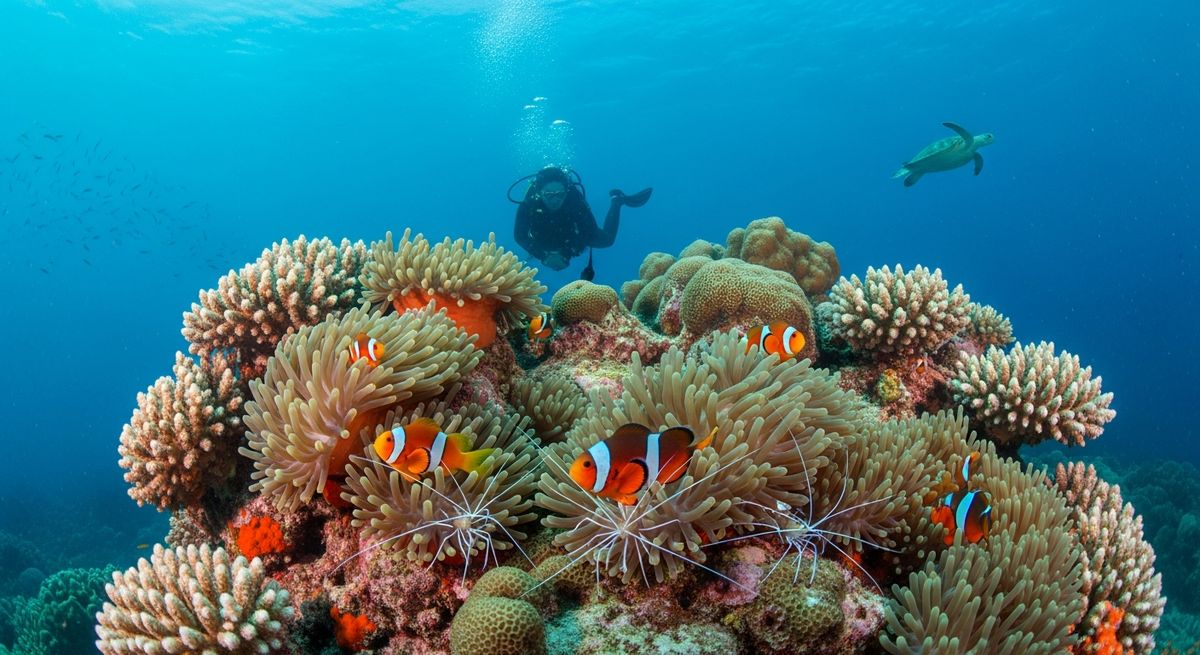
Kura-Kura Bay, just west of Gili Lawang, offers a relaxed dive along a sloping reef. We typically drop down to around 18 metres, cruising over fields of hard coral. It's a gentle drift, often with turtles just cruising by – not a guarantee, but we've seen plenty of them here. Look closely among the coral heads for Yellow-fin flasher-wrasse, darting about, and you'll spot Barred Unicornfish munching on algae. Visibility usually holds around 18 metres, making it a good spot for newer divers or those who just want a chill afternoon exploring the reef without fighting strong currents.
Nearest Dive Centres to Kura-Kura Bay
Dive shops near Kura-Kura Bay
DiveHeaven Lombok
Mocean Diving Centre
Sumbawa Adventure Scuba Diving
Reviews for Kura-Kura Bay
Conditions
Ocean conditions, forecast and tides for Kura-Kura Bay
Kura-Kura Bay Ocean Conditions
Monthly averages for Kura-Kura Bay, sourced from Open-Meteo marine data + Copernicus Marine (EU) - nearest station: Open-Meteo marine grid (-8.35, 116.05) (0km away)
October Averages
Sea Temperature
30°C
85°F · Range: 28.3–30.9°C
Current Speed
29.15 cm/s
Direction: SW (239°)
Chlorophyll-a
0.223 mg/m³
Clear water
Salinity
33.97 PSU
Based on 4 years of monitoring data · Data sources: Open-Meteo marine data + Copernicus Marine (EU)
Plan & book
Ways to dive Lombok & Gili Islands, from day trips to liveaboards.
Day trips & courses
via GetYourGuideGuided dives, courses and snorkel trips with instant booking.
Find dive trips in Lombok & Gili IslandsPlaces to stay
via Booking.comHotels and dive resorts near Lombok & Gili Islands.
Search stays in Lombok & Gili IslandsDive insurance
Most travel insurance excludes or limits scuba. Check what you need before you go.
Dive insurance explainedPartner links: we may earn a commission if you book, at no extra cost to you. How we make money
Where to Stay near Kura-Kura Bay
Prices from Booking.com. We may earn a commission at no extra cost to you.