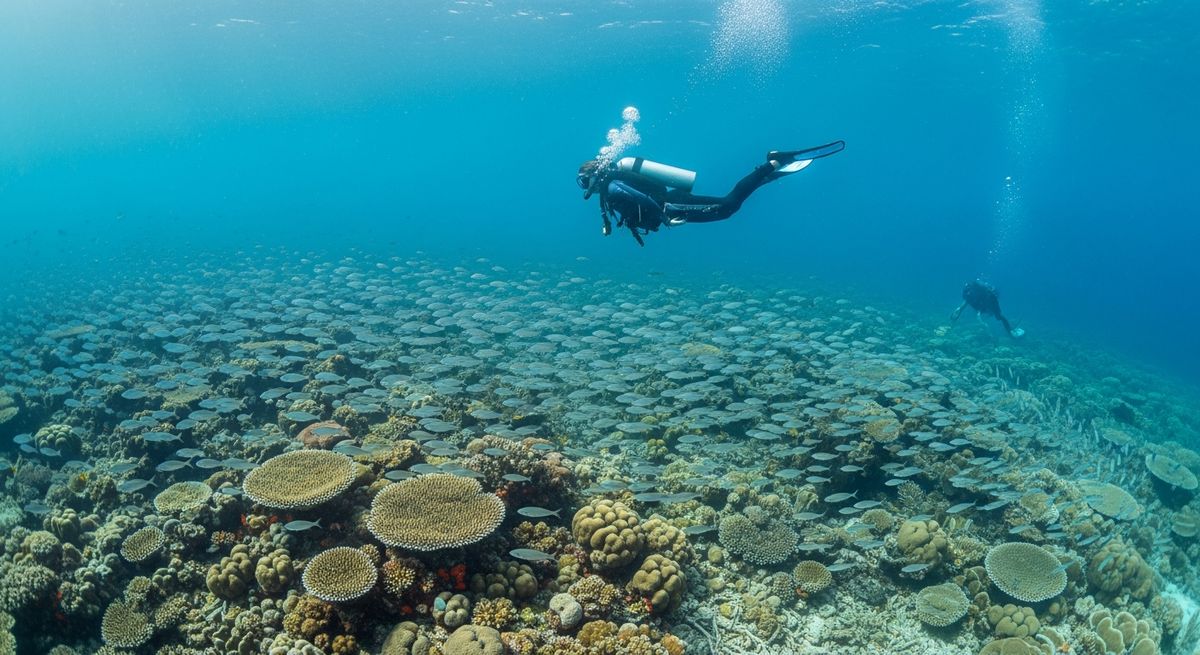
Sanur Beach
Protected Area
KKP-07 Semawang Denpasar
Why dive here
With 246+ marine species recorded in the area - including blue-spotted stingrays, bull sharks, grey reef sharks, manta rays and mobula rays (devil rays) - Sanur Beach offers some of Lombok & Gili Islands's richest drift diving. Water ranges 28-30°C, warmest April, May, November.
Sanur Beach gets a bad rap sometimes. People hear "beach dive" and think it's just a sandy bottom, but that's a mistake here. Our favourite thing about Sanur is the macro life that absolutely thrives in the shallows. We're talking ghost pipefish swaying with the soft corals, tiny sea moths scooting across the sand, and lionfish fanning their spines in crevices. Drop in before high tide, when the water is pushing in, and you’ll find a surprising amount of activity. The visibility averages around 9m, so you’re always close to your subject. It’s a shallow site, maxing out at 12m, making it perfect for long bottom times and really searching through the rubble and coral patches. We’ve spent entire dives just watching spotted green gobies tend their burrows, or carefully observing a prickly spotted drupe inching along. It's a photographer's dream, especially for those who love to slow down and really appreciate the small stuff. We'd suggest it for anyone who wants a relaxed dive with plenty of unique critters, without the boat ride.
Safety Notes
Drift dive - carry a surface marker buoy (SMB) and stay with your group. Brief the current direction before entry.
Nearest Dive Centres to Sanur Beach
Dive shops near Sanur Beach
Dune World
Crystal Divers
Black Manta Scuba
Bali Legends Dive Center
Scuba Go
Sea Gods
Reviews for Sanur Beach
Conditions
Ocean conditions, forecast and tides for Sanur Beach
Sanur Beach Ocean Conditions
Monthly averages for Sanur Beach, sourced from Open-Meteo marine data + Copernicus Marine (EU) - nearest station: Open-Meteo marine grid (-8.35, 116.05) (0km away)
October Averages
Sea Temperature
30°C
85°F · Range: 28.3–30.9°C
Current Speed
29.15 cm/s
Direction: SW (239°)
Chlorophyll-a
0.223 mg/m³
Clear water
Salinity
33.97 PSU
Based on 4 years of monitoring data · Data sources: Open-Meteo marine data + Copernicus Marine (EU)
Plan & book
Ways to dive Lombok & Gili Islands, from day trips to liveaboards.
Day trips & courses
via GetYourGuideGuided dives, courses and snorkel trips with instant booking.
Find dive trips in Lombok & Gili IslandsPlaces to stay
via Booking.comHotels and dive resorts near Lombok & Gili Islands.
Search stays in Lombok & Gili IslandsDive insurance
Most travel insurance excludes or limits scuba. Check what you need before you go.
Dive insurance explainedPartner links: we may earn a commission if you book, at no extra cost to you. How we make money
Where to Stay near Sanur Beach
Prices from Booking.com. We may earn a commission at no extra cost to you.