Kawe Island
Protected Area
Kawe / Kep. Wayag Sayang / Kep. Panjang
Why dive here
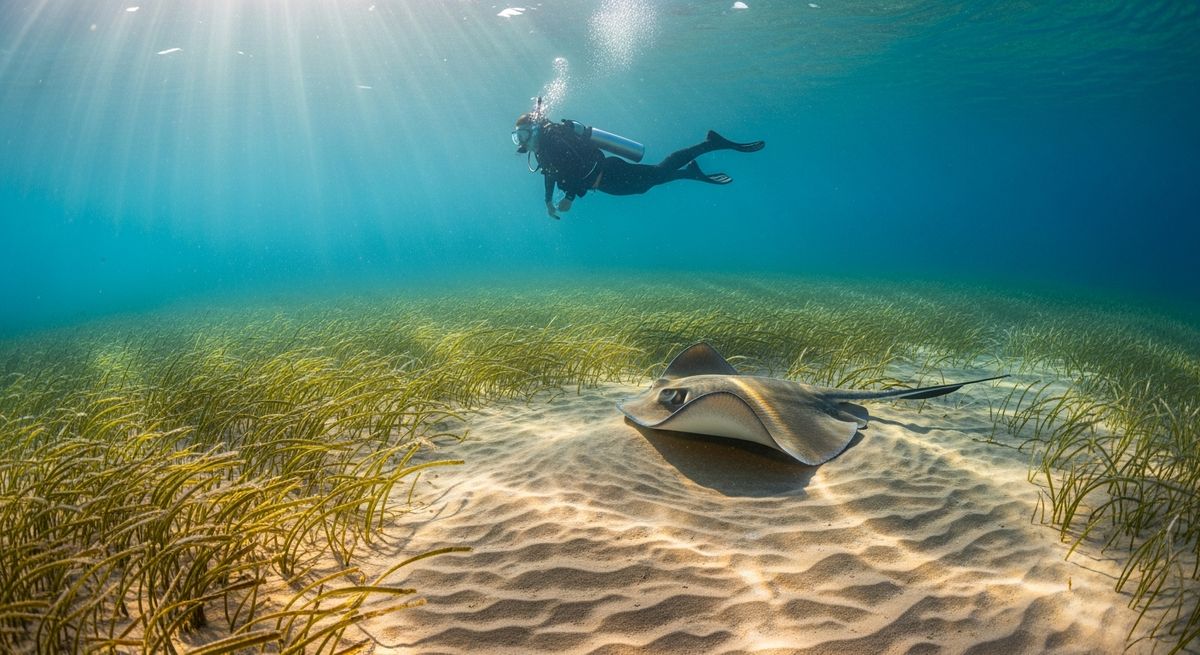
With 236+ marine species recorded in the area - including blacktip reef sharks, manta rays, mobula rays (devil rays), pygmy seahorses and sea turtles - Kawe Island offers some of Raja Ampat's richest diving. Water ranges 29-30°C, warmest May, November, December.
Kawe Island, up in the northern reaches of Raja Ampat, offers a real sense of remoteness. You won't find resorts here, just quiet dive boats and plenty of space. We've often found ourselves drifting along walls and ridges, watching schools of fusiliers so thick they almost block out the sun, with the occasional reef shark cruising by in the blue. The currents can pick up, no doubt about it, so it's a spot that really suits divers who are comfortable with a bit of a push, particularly if you’re hoping for those manta encounters. It’s a good choice for those who value solitude underwater.
Safety Notes
Strong currents typical this month (avg 35 cm/s). Good buoyancy control essential.
Nearest Dive Centres to Kawe Island
Dive shops near Kawe Island
Ambon Dive Explore
Andau Dive Resort
Coralia Liveaboards
Delvin
Dive Bluemotion
Dive into Raja Ampat
Gurara
Koranu Fyak Homestay
Lamima
Lumba Lumba
Mahu Lodge and Diving
Maluku Divers
Mangkur Kodong
Mantastic Scuba Paradise
Meridian Adventure Dive
Misool Resort
Naira Dive
Papua Diving - Kri Eco Resort
Papua Explorers Resort
Raja Ampat Aggressor
Raja Ampat Biodiversity Resort
Raja Ampat dive resort
Scuba republic
Tarzan-Diving
Wai Resort
Wobegong Dive Center
Yenkoranu Homestay
Zanclus Dive Center
Reviews for Kawe Island
Conditions
Ocean conditions, forecast and tides for Kawe Island
Kawe Island Ocean Conditions
Monthly averages for Kawe Island, sourced from Open-Meteo marine data + Copernicus Marine (EU) - nearest station: Open-Meteo marine grid (-0.5, 130.6) (0km away)
October Averages
Sea Temperature
30°C
86°F · Range: 29.2–30.9°C
Current Speed
34.71 cm/s
Direction: NW (311.5°)
Chlorophyll-a
0.138 mg/m³
Clear water
Salinity
34.33 PSU
Based on 4 years of monitoring data · Data sources: Open-Meteo marine data + Copernicus Marine (EU)
Plan & book
Ways to dive Raja Ampat, from day trips to liveaboards.
Day trips & courses
via GetYourGuideGuided dives, courses and snorkel trips with instant booking.
Find dive trips in Raja AmpatPlaces to stay
via Booking.comHotels and dive resorts near Raja Ampat.
Search stays in Raja AmpatDive insurance
Most travel insurance excludes or limits scuba. Check what you need before you go.
Dive insurance explainedPartner links: we may earn a commission if you book, at no extra cost to you. How we make money
Where to Stay near Kawe Island
Prices from Booking.com. We may earn a commission at no extra cost to you.