The Passage
Protected Area
SUAKA ALAM PERAIRAN KEPULAUAN RAJA AMPAT DAN LAUT SEKITARNYA
Why dive here
With 236+ marine species recorded in the area - including blacktip reef sharks, manta rays, mobula rays (devil rays), pygmy seahorses and sea turtles - The Passage offers some of Raja Ampat's richest cave diving. Water ranges 29-30°C, warmest May, November, December.
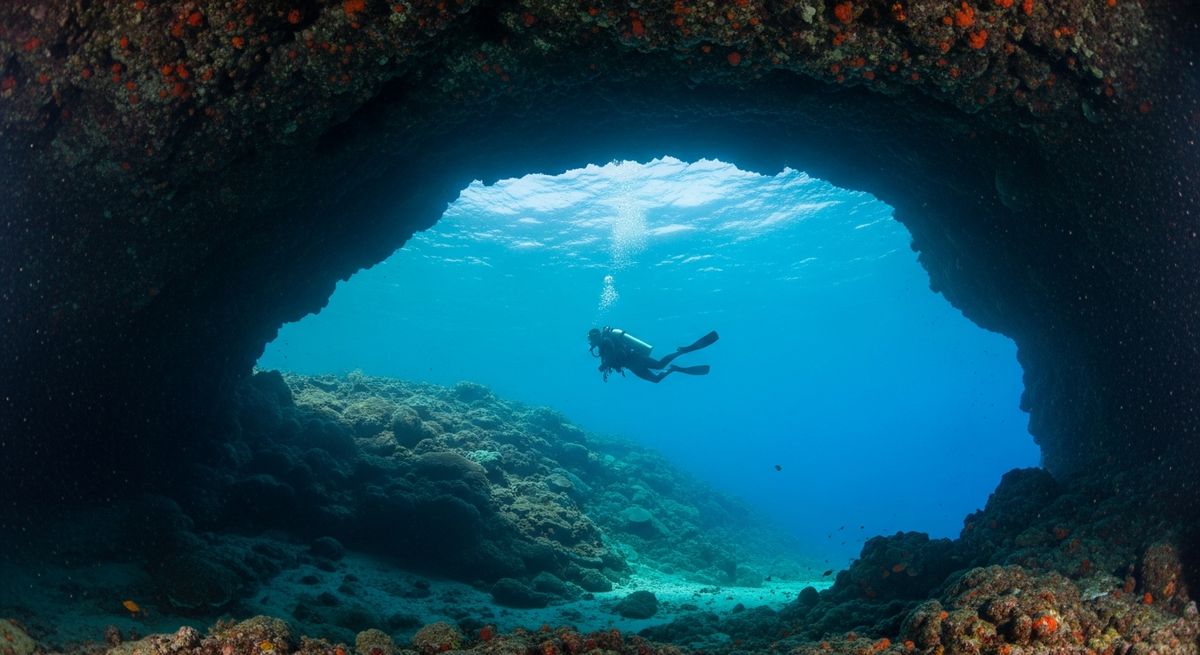
The Passage, tucked between Gam and Waigeo, really feels like diving a river. It’s a canyon, usually with a decent current, which makes for a thrilling drift. We’ve spotted scribbled angelfish darting among the coral, and if you look close, you might find a Denise’s pygmy seahorse clinging to a fan. It’s a shallower dive, topping out around 17m, perfect for those who enjoy a lively drift and have an eye for the smaller stuff. Visibility averages 14m, good enough to take in the movement.
Safety Notes
Overhead environment - never enter without proper cave/cavern training, redundant equipment, and a guideline.
Strong currents typical this month (avg 35 cm/s). Good buoyancy control essential.
Nearest Dive Centres to The Passage
Dive shops near The Passage
Papua Explorers Resort
Tarzan-Diving
Raja Ampat Biodiversity Resort
Mantastic Scuba Paradise
Mangkur Kodong
Delvin
Reviews for The Passage
Conditions
Ocean conditions, forecast and tides for The Passage
The Passage Ocean Conditions
Monthly averages for The Passage, sourced from Open-Meteo marine data + Copernicus Marine (EU) - nearest station: Open-Meteo marine grid (-0.5, 130.6) (0km away)
October Averages
Sea Temperature
30°C
86°F · Range: 29.2–30.9°C
Current Speed
34.71 cm/s
Direction: NW (311.5°)
Chlorophyll-a
0.138 mg/m³
Clear water
Salinity
34.33 PSU
Based on 4 years of monitoring data · Data sources: Open-Meteo marine data + Copernicus Marine (EU)
Plan & book
Ways to dive Raja Ampat, from day trips to liveaboards.
Day trips & courses
via GetYourGuideGuided dives, courses and snorkel trips with instant booking.
Find dive trips in Raja AmpatPlaces to stay
via Booking.comHotels and dive resorts near Raja Ampat.
Search stays in Raja AmpatDive insurance
Most travel insurance excludes or limits scuba. Check what you need before you go.
Dive insurance explainedPartner links: we may earn a commission if you book, at no extra cost to you. How we make money
Where to Stay near The Passage
Prices from Booking.com. We may earn a commission at no extra cost to you.