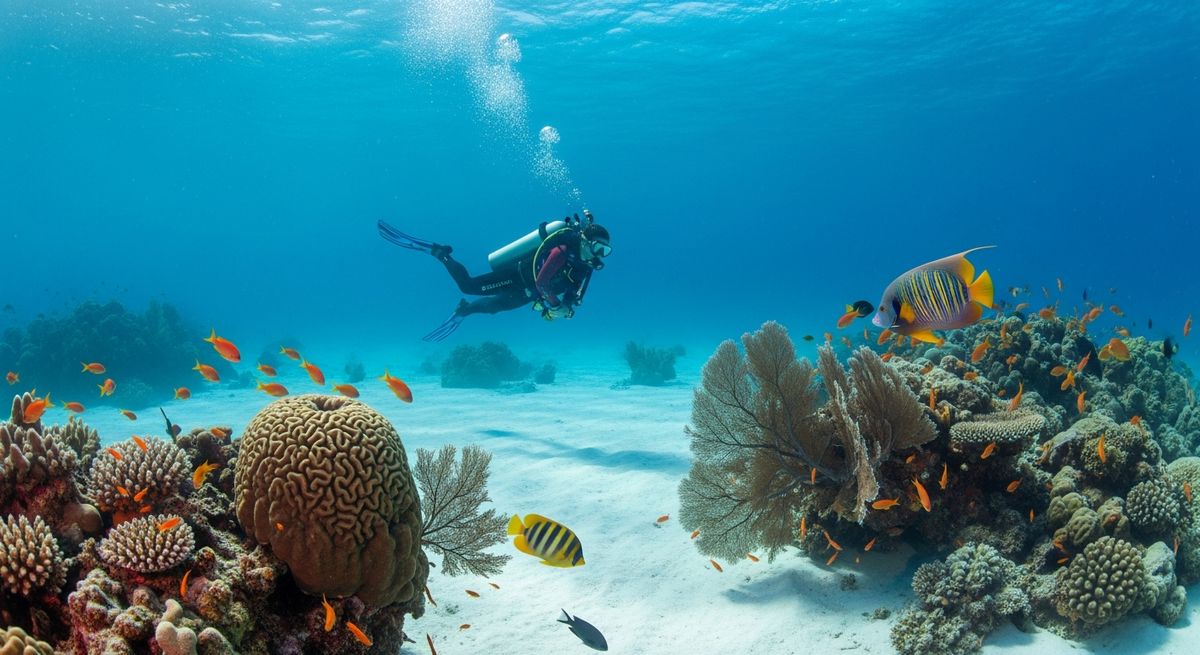
Waigeo - Raja Ampat

Waigeo, specifically the Bird Wall, offers a relaxed dive along a sloping reef that bottoms out around 30 meters. We often find ourselves drifting past small bommies and rocky outcrops, each one a miniature ecosystem in itself. It’s a spot where you can really slow down and appreciate the smaller things – look for cuttlefish lurking among the corals and keep an eye out for those fascinating nudibranchs like the striking Nembrotha. This site is excellent for macro enthusiasts and photographers who enjoy a leisurely pace without strong currents. Just remember to check your dive computer; it’s easy to lose track of time when you’re absorbed in the details here.

Location
Raja Ampat, Indonesia, Southeast Asia
Coordinates
-0.383300, 130.816700

Marine Protected Area: Teluk Mayalibit (Raja Ampat)

Best Time to Dive in Raja Ampat

The warmest water temperatures in Raja Ampat occur in November, averaging 30.3°C. The coolest conditions are in July at 29.3°C.

Monthly Water Temperatures

  • January: 29.7°C
  • February: 29.4°C
  • March: 29.6°C
  • April: 29.9°C
  • May: 29.9°C
  • June: 29.7°C
  • July: 29.3°C
  • August: 29.4°C
  • September: 29.6°C
  • October: 30.0°C
  • November: 30.3°C
  • December: 30.1°C

Nearby Dive Sites in Raja Ampat

Nearest Dive Centres to Waigeo

Marine Life in Raja Ampat

Home to 250 recorded species including 176 reef fish, 43 hard corals, 8 seagrass & algae, 5 sea cucumbers, 4 clams & mussels, 4 other.

Notable Species

Recommended Packing List for Waigeo

Based on average water temperature of 29.7°C, currents 20 cm/s.

  • Shorty or Rashguard - warm 30°C water needs minimal exposure protection
  • Mask - essential for every dive
  • Fins
  • BCD - buoyancy compensator
  • Regulator - your most safety-critical piece of gear
  • Dive Computer - tracks depth, time, and NDL
  • Surface Marker Buoy (SMB) - essential for boat pickups
  • Dive Torch - useful for crevices and colour at depth
  • Underwater Camera - capture your diving memories

Frequently Asked Questions

What are the typical dive depths and underwater visibility at Waigeo's dive sites?
At Waigeo, specific dive depths vary by site. For example, the Bird Wall reef on the south side of Waigeo Island is a gentle slope bottoming out at around 30 metres. While general typical dive depths for all sites are not specified in this data, divers should always monitor their computers. Information regarding typical underwater visibility is not provided in the current data.
What specific marine life and coral species are commonly encountered by divers in Waigeo?
Divers exploring Waigeo can expect to encounter an astonishing number of marine creatures. Specifically, you can spot fascinating cuttlefish here, along with very interesting and unusual nudibranchs such as Nembrotha and Funebris. The diverse reef environment supports a rich ecosystem for these species, though specific coral species are not detailed in this information.
How challenging are the dive conditions and currents around Waigeo, and are there sites suitable for less experienced divers?
The dive conditions around Waigeo are generally rated as intermediate difficulty. This suggests that while some sites may be suitable for divers with a bit more experience, less experienced divers should consult with local dive guides to choose appropriate sites. It's easy to lose track of depth and time due to the captivating environment, so careful dive planning is essential. Information on specific current strengths is not provided.
When is the best time of year to dive in Waigeo for the most favorable weather and marine life sightings?
The provided data does not specify the best time of year to dive in Waigeo for the most favorable weather and marine life sightings. For this information, we recommend checking our dedicated When to Dive section for Raja Ampat or consulting local dive operators. This will help you plan your trip for optimal conditions.
What diving certifications are generally required or recommended for exploring Waigeo's dive spots?
The specific diving certifications generally required or recommended for exploring Waigeo's dive spots are not detailed in the provided information. Given the intermediate difficulty rating, it is advisable for divers to have at least an Advanced Open Water certification or equivalent experience. Always ensure your equipment is in good working order and suitable for the planned dive.
What are the usual water temperatures and current strengths that divers experience in Waigeo?
The provided data does not specify the usual water temperatures or current strengths that divers experience in Waigeo. For detailed environmental conditions, divers should consult up-to-date local dive reports or their chosen dive operator before planning their trip to Raja Ampat. This will ensure you are well-prepared for the conditions you might encounter.