T3
Protected Area
Pinang Seribu Turtle Sanctuary
Why dive here
With 153+ marine species recorded in the area - including sea turtles, sperm whales, whale sharks and pufferfish - T3 offers some of Perhentian Islands's richest diving. Water ranges 28-31°C, warmest May, June, August.
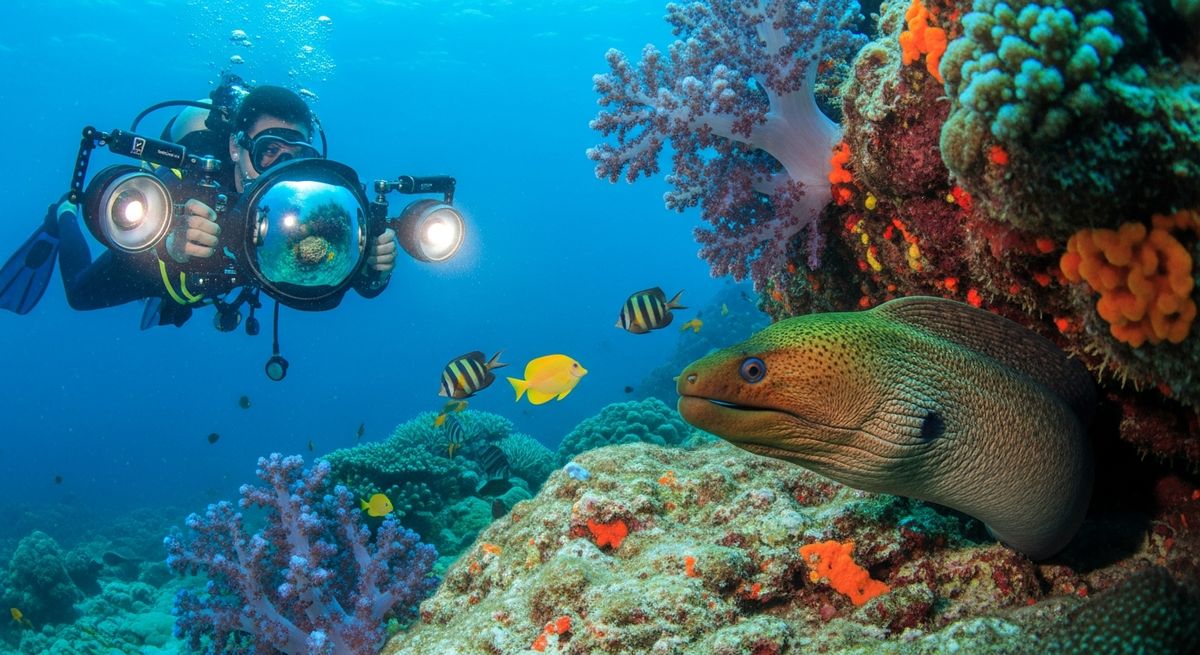
T3 is one of those Perhentian sites we often swing by when we’re looking for something a bit different, away from the bigger reefs. It’s not about dramatic drop-offs here. Instead, you're meandering over patches of seagrass, which often means you’ll find Green Turtles munching away, completely unbothered. Keep an eye out for the smaller stuff too, like the Blackspotted Sea Cucumbers and the surprisingly vibrant Bicolor nudibranchs tucked in the Branch and Honeycomb corals. It’s a good spot for a relaxed second dive, particularly if you enjoy macro life and taking your time.
Nearest Dive Centres to T3
Dive shops near T3
Flora Bay Divers
Perhentian Island Divers
Coral View Dive Center
The Barat Dive Center
Cosmic Divers
Dive Buddy Dive Center
Reviews for T3
Conditions
Ocean conditions, forecast and tides for T3
T3 Ocean Conditions
Monthly averages for T3, sourced from Open-Meteo marine data + Copernicus Marine (EU) - nearest station: Open-Meteo marine grid (5.91, 102.77) (0km away)
October Averages
Sea Temperature
30°C
87°F · Range: 29.4–31.2°C
Current Speed
6.71 cm/s
Direction: SE (116.6°)
Salinity
31.46 PSU
Based on 4 years of monitoring data · Data sources: Open-Meteo marine data + Copernicus Marine (EU)
Plan & book
Ways to dive Perhentian Islands, from day trips to liveaboards.
Day trips & courses
via GetYourGuideGuided dives, courses and snorkel trips with instant booking.
Find dive trips in Perhentian IslandsPlaces to stay
via Booking.comHotels and dive resorts near Perhentian Islands.
Search stays in Perhentian IslandsDive insurance
Most travel insurance excludes or limits scuba. Check what you need before you go.
Dive insurance explainedPartner links: we may earn a commission if you book, at no extra cost to you. How we make money
Where to Stay near T3
Prices from Booking.com. We may earn a commission at no extra cost to you.