Northern Rocky
Why dive here
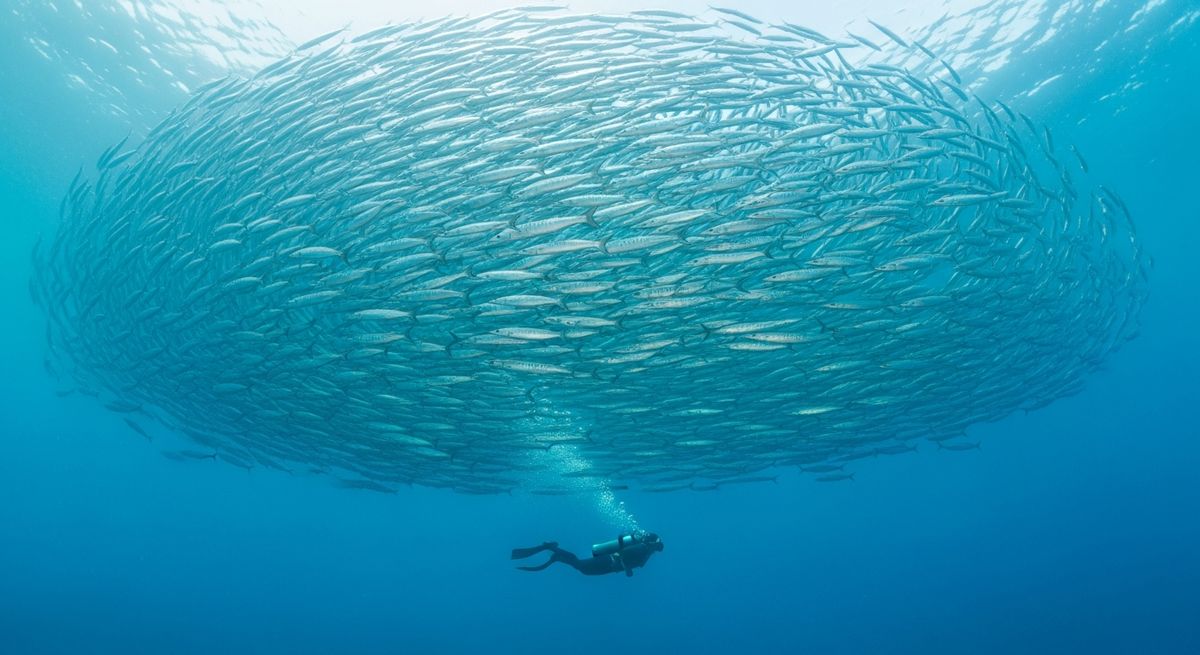
With 164+ marine species recorded in the area - including blacktip reef sharks, eagle rays, giant moray eels, whale sharks and clownfish - Northern Rocky offers some of Mergui Archipelago's richest diving. Water ranges 28-31°C, warmest April, May, June.
Northern Rocky, a modest limestone outcrop, sits a short skip west of MacLeod Island, about 50 km from Kawthaung. It looks a bit like a sail from the north, an unassuming start to a surprisingly vibrant wall dive. We love the colour here, especially if you’re into orange; cup corals and fan corals coat the rock face, and it’s a good spot to find hawkfish perched on gorgonians. The wall drops to around 23 meters before giving way to jumbled boulders. Currents can pick up, so it's best suited for intermediate divers, but it’s a solid dive for those who appreciate the smaller details and a splash of fiery colour.
Typical Northern Rocky Dive Profile
Illustrative profile based on site depth and type. Actual dive profiles vary - always follow your dive computer and training.
Safety Notes
Depth of 23m - Advanced Open Water certification recommended.
Always perform a 3-minute safety stop at 5m before surfacing.
Reviews for Northern Rocky
Conditions
Ocean conditions, forecast and tides for Northern Rocky
Northern Rocky Ocean Conditions
Monthly averages for Northern Rocky, sourced from Open-Meteo marine data + Copernicus Marine (EU) - nearest station: Open-Meteo marine grid (9.78, 97.85) (1km away)
October Averages
Sea Temperature
29°C
85°F · Range: 28–30.5°C
Current Speed
5.39 cm/s
Direction: S (201.8°)
Salinity
29.12 PSU
Based on 4 years of monitoring data · Data sources: Open-Meteo marine data + Copernicus Marine (EU)
Plan & book
Ways to dive Mergui Archipelago, from day trips to liveaboards.
Day trips & courses
via GetYourGuideGuided dives, courses and snorkel trips with instant booking.
Find dive trips in Mergui ArchipelagoPlaces to stay
via Booking.comHotels and dive resorts near Mergui Archipelago.
Search stays in Mergui ArchipelagoDive insurance
Most travel insurance excludes or limits scuba. Check what you need before you go.
Dive insurance explainedPartner links: we may earn a commission if you book, at no extra cost to you. How we make money
Where to Stay near Northern Rocky
Prices from Booking.com. We may earn a commission at no extra cost to you.