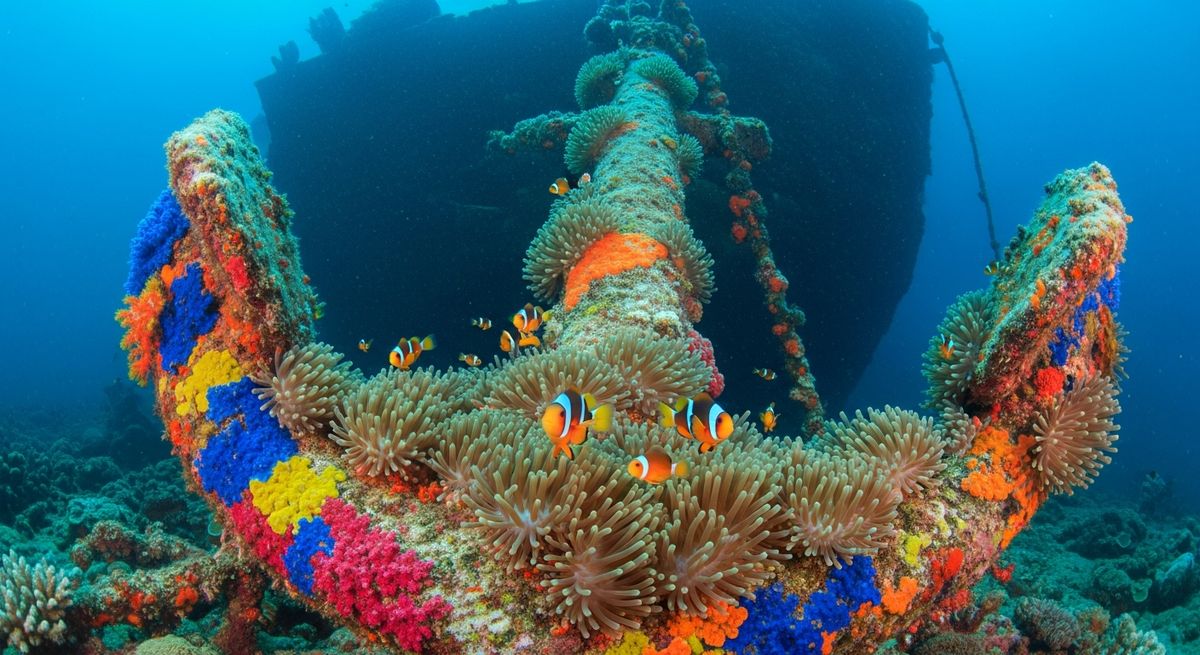
DON ENRIQUE
Protected Area
Sagay Marine Reserve
Why dive here
With 87+ marine species recorded in the area - including sea turtles, thresher sharks, lionfish and pufferfish - DON ENRIQUE offers some of Malapascua's richest wreck diving. Water ranges 28-31°C, warmest May, June, July.
The Don Enrique wreck isn't Malapascua’s biggest, but it's got character. We love how the story of its fiery end in 1964 just adds to the atmosphere as you descend. It’s a shallow dive, with the top of the wreck starting around 12 metres, making it perfect for longer bottom times and less demanding on air. You’ll find the wreck largely intact, though time and the ocean have certainly taken their toll. Penetration is possible in a few spots, but we’d suggest sticking to the exterior unless you’re wreck-trained and familiar with the layout. The bow is often the most interesting section, with schools of batfish circling overhead and the occasional reef shark gliding past in the blue. Keep an eye out for nudibranchs and flatworms, especially on the more sheltered parts of the hull. We've often found lionfish tucked into crevices, their spines fanned out. It’s a great second dive after a morning thresher shark encounter, offering a completely different feel and a chance to truly relax and explore.
Safety Notes
Wreck site - avoid penetration without wreck diving certification. Watch for sharp metal and entanglement hazards.
Nearest Dive Centres to DON ENRIQUE
Dive shops near DON ENRIQUE
Casa Del Mar Golf & Dive Hotel
Mabuhay
Dive Society
Dive Society Dive Center
Divelink Cebu
Blue Heaven Malapascua
Reviews for DON ENRIQUE
Conditions
Ocean conditions, forecast and tides for DON ENRIQUE
DON ENRIQUE Ocean Conditions
Monthly averages for DON ENRIQUE, sourced from Open-Meteo marine data + Copernicus Marine (EU) - nearest station: Open-Meteo marine grid (11.45, 124.02) (6km away)
October Averages
Sea Temperature
30°C
86°F · Range: 29.3–31.5°C
Current Speed
8.25 cm/s
Direction: S (194°)
Salinity
33.75 PSU
Based on 4 years of monitoring data · Data sources: Open-Meteo marine data + Copernicus Marine (EU)
Plan & book
Ways to dive Malapascua, from day trips to liveaboards.
Day trips & courses
via GetYourGuideGuided dives, courses and snorkel trips with instant booking.
Find dive trips in MalapascuaPlaces to stay
via Booking.comHotels and dive resorts near Malapascua.
Search stays in MalapascuaDive insurance
Most travel insurance excludes or limits scuba. Check what you need before you go.
Dive insurance explainedPartner links: we may earn a commission if you book, at no extra cost to you. How we make money
Where to Stay near DON ENRIQUE
Prices from Booking.com. We may earn a commission at no extra cost to you.