BLACKMARK
Protected Area
Labrador Nature Reserve
Why dive here
With 263+ marine species recorded in the area - including blue-spotted stingrays, dugongs, giant moray eels, seahorses and sea turtles - BLACKMARK offers some of Southern Islands's richest wreck diving. Water ranges 28-31°C, warmest May, June, November.
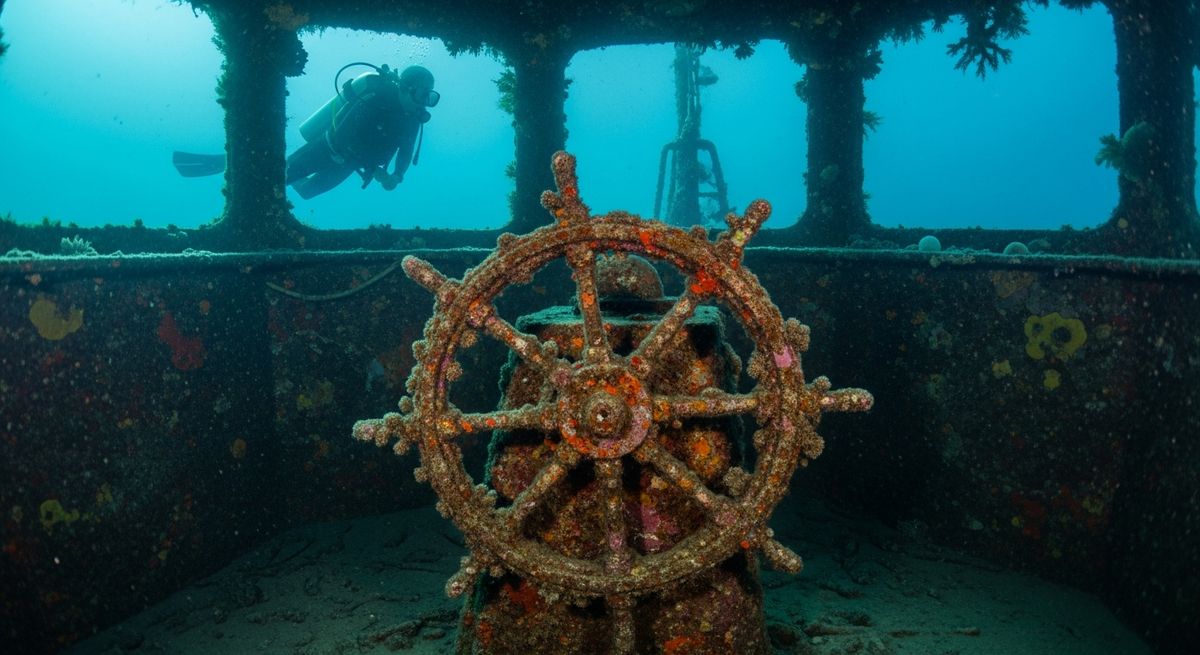
Blackmark is one of our favourites in the Southern Islands, not because it’s a giant wreck, but because of its character. This old ferro-concrete workboat, sunk back in ‘80, rests upright in about 11 metres of water. It’s pretty compact, maybe 15 metres end-to-end, but what it lacks in size it makes up for in how it’s aged. We always find something new here. The concrete hull has become a canvas for soft corals, particularly a striking orange cup coral that blooms in the darker sections. On a sunny day, with decent visibility, you can really appreciate the colour. Inside the open hold, we often spot robust ghost pipefish swaying with the surge, nearly invisible against the encrusted walls. Look closely for nudibranchs, especially on the propeller shaft. It’s a gentle dive, perfect for photographers or anyone wanting to spend time exploring the nooks and crannies of a unique artificial reef. Just keep an eye on the tide; the currents here can pick up, making it a bit more of a workout than you might expect for such a shallow spot. We usually aim for slack high tide for the clearest water and easiest conditions.
Typical BLACKMARK Dive Profile
Illustrative profile based on site depth and type. Actual dive profiles vary - always follow your dive computer and training.
Safety Notes
Wreck site - avoid penetration without wreck diving certification. Watch for sharp metal and entanglement hazards.
Always perform a 3-minute safety stop at 5m before surfacing.
BLACKMARK Wreck History
Year Sunk
1980
Vessel Type
cargo ship
Cause
unknown
The "Blackmark" was a highly unusual vessel: a roll-on/roll-off work boat constructed from ferro-concrete. This building method, which uses a steel mesh frame covered in concrete, was a rare and often experimental alternative to traditional steel hulls. On January 3, 1980, this unique boat sank for undocumented reasons in the busy waters near Singapore's Southern Islands, a popular area for local shipping and recreation.
Now lying at a shallow 11 meters, the Blackmark presents an intriguing but cautious dive. It is officially designated as a "Dangerous Wreck," likely due to hazards such as sharp, rusting rebar protruding from the decaying concrete hull, entanglement risks, and potential structural instability. For experienced divers who are properly equipped and mindful of the dangers, the wreck offers a rare opportunity to see a ferro-concrete ship up close and observe how this unconventional material has weathered decades on the seabed.
Nearest Dive Centres to BLACKMARK
Dive shops near BLACKMARK
Resorts World at Sentosa Pte Ltd
Diveonesg Pte Ltd
Penguin Swim School
Scuba Quest Pte Ltd
The Dive Company
Gill Divers
Reviews for BLACKMARK
Conditions
Ocean conditions, forecast and tides for BLACKMARK
BLACKMARK Ocean Conditions
Monthly averages for BLACKMARK, sourced from Open-Meteo marine data - nearest station: Open-Meteo marine grid (1.18, 103.96) (8km away)
October Averages
Sea Temperature
30°C
86°F · Range: 29.5–31.1°C
Air Temperature
27°C
81°F
Wind Speed
4.07 m/s
7.9 knots
Atmospheric Pressure
1009.8 hPa
Based on 4 years of monitoring data · Data sources: Open-Meteo marine data
Plan & book
Ways to dive Southern Islands, from day trips to liveaboards.
Day trips & courses
via GetYourGuideGuided dives, courses and snorkel trips with instant booking.
Find dive trips in Southern IslandsPlaces to stay
via Booking.comHotels and dive resorts near Southern Islands.
Search stays in Southern IslandsDive insurance
Most travel insurance excludes or limits scuba. Check what you need before you go.
Dive insurance explainedPartner links: we may earn a commission if you book, at no extra cost to you. How we make money
Where to Stay near BLACKMARK
Prices from Booking.com. We may earn a commission at no extra cost to you.