Diving in Southern Islands
Why dive here
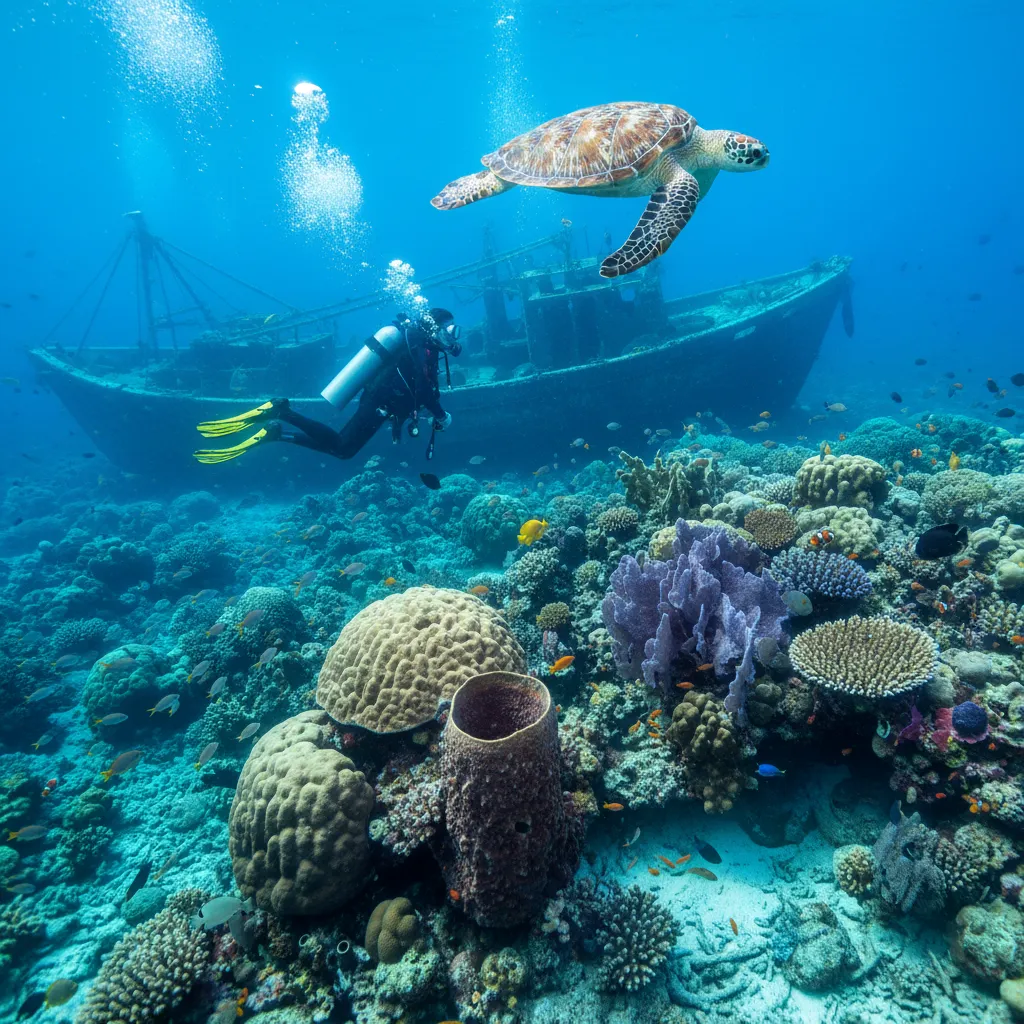
Southern Islands offers some of Singapore's richest diving, with 263+ marine species recorded in the area - including blue-spotted stingrays, dugongs, giant moray eels, seahorses and sea turtles. Water sits around 28°C.
Look, Singapore diving isn't the Maldives. Let's get that out of the way. But the Southern Islands, just a short boat ride from the city, offer a surprising amount for a quick fix. We’re talking about those fringing reefs and a few decent wrecks, often with stronger currents, which means more action. Drop into Pulau Hantu and keep your eyes peeled for common seahorses swaying gently in the current, or maybe a bearded flathead goby hunkered down on the sand. The vis can be temperamental, shifting from a murky five metres to a respectable ten or twelve metres on a good day, but that just adds to the hunt. We’ve had some fantastic encounters with spotted sea catfish cruising in formation, and the blue and yellow groupers are always a welcome sight against the soft corals. Our favourite insider tip? Dive here on an incoming tide. You’ll get better vis and usually, a more vibrant reef. The currents can pick up, so be ready for a bit of a workout, but that’s often when you spot the larger schools of Indian scad zipping past. It’s not pristine, but it’s real, and it’s right on Singapore’s doorstep.
Southern Islands Dive Site Map
Dive sites and dive centres in Southern Islands
Southern Islands Dive Sites
208 dive sites in Southern Islands
AB9
The AB9 wreck in Singapore's Southern Islands is a tanker vessel lying at 27 metres. It's a proper wreck dive, with plenty of metal to explore, though penetration is not advised due to its dangerous classification. We've seen various reef fish and some decent sized snapper making a home in its structure. It’s a good spot for divers keen on wrecks rather than coral, and comfortable with deeper dives in sometimes limited visibility.
ABU MOOSA
Abu Moosa is one of those Singapore wrecks that still feels like a proper mystery, even after all these years. This tug went down in 1989, and while it's officially classified as "dangerous" (which often just means it’s a bit of a scramble), we find it’s more exciting than alarming. You'll hit the deck around 25 metres. Visibility here can be a bit of a lottery; sometimes you get 8 metres, other times it’s more like 2, but that just adds to the adventure, right? What we love about Abu Moosa is the sheer scale of the thing. It’s upright and largely intact, providing plenty of nooks and crannies to poke your head into, assuming your buoyancy is dialled in. We’ve spent dives tracing the lines of the superstructure, imagining it as it was. Look out for the resident batfish; they're usually schooling off the bow. On a good day, with a bit of ambient light, the way the schools of snapper weave through the holds is quite something. It’s a dive for those who enjoy exploration and don't mind a bit of a challenge in lower vis. Go during slack tide for the best chance of a relaxed penetration.
AH LAM II
Ah Lam II is one of our favourites in the Southern Islands, definitely a standout. It's a tugboat that went down back in '92, and the story of its sinking – squeezed between a bulk carrier and its own tow – gives it a real character. Dropping to 27 metres, you'll find the wreck largely intact, sitting upright on the seabed. We love exploring the engine room, often finding large groupers lurking in the shadows. The wheelhouse is usually teeming with schooling fusiliers, so thick they almost block out the ambient light, and we've regularly seen barracuda circling the mast. It's a surprisingly fishy wreck, probably because it's one of the more substantial structures down there. For photographers, the way the light filters through the superstructure can be beautiful on a sunny day, especially around mid-morning. We'd suggest checking the tides; a slack tide makes for a much more relaxed exploration, though a gentle current often brings in more pelagics. Visibility here can be hit or miss, typical for Singapore, but when it's good, Ah Lam II really shines. It's an excellent dive for those who enjoy wreck penetration or just want to spend time observing the resident marine life.
ANGSA 3
Angsa 3 isn't just a wreck; it's a slice of history, well, a dangerous slice. We love how this site feels like an archaeological dig rather than just another dive. Maxing out at 10m, it's a shallow dive, but don't let that fool you into thinking it's easy. We've seen some pretty strong currents here, so pick your day carefully, ideally on a slack tide. The wreck itself is quite broken up, but that’s part of its charm. You’re not exploring a pristine ship, more a field of intriguing debris. Look for the large, corroded boiler – that's often our favourite spot. Schools of yellowtail scad dart through the metalwork, and we often spot cuttlefish camouflaged against the rust. It’s a site that rewards patience, allowing you to really pick through the pieces and imagine the ship's past. This is a site for divers who appreciate history, enjoy a bit of a challenge, and love the hunt for macro life amongst the ruins.
AOI MARU
The *Aoi Maru* isn’t the deepest wreck we dive in Singapore, topping out at a respectable 22 metres. But what it lacks in sheer depth, it makes up for in character. Sunk in 1975, this old motor vessel now lies on its side, a dark, hulking shape against the silty bottom. We love the way the light filters down, creating these dramatic shafts through the particles, especially on a sunny morning. You can still make out the superstructure, and there are plenty of entry points if you’re comfortable with overhead environments and have the right training. As you get closer, the wreck hums with activity. Look for lionfish tucked into shadowy crevices, their spines fanned out like feathered capes. We’ve spotted bamboo sharks resting in the sand nearby, almost perfectly camouflaged. Our favourite moments here are spent hovering over the deck, watching schools of fusiliers dart and swirl, occasionally parting to reveal a lone batfish inspecting you. It’s a proper historical dive, feeling a little like you’re exploring a forgotten time capsule rather than just a dive site. Best to hit this one on an incoming tide, before the current picks up too much. It’s ideal for wreck enthusiasts who appreciate the history as much as the marine life it now supports.
ARROW
The Arrow, a roll-on/roll-off vessel sunk back in ‘79 after hitting something submerged, sits at 25 metres in Singapore’s Southern Islands. It’s definitely a wreck dive, and while it might not have the dramatic structure of some others in the region, it’s got a personality all its own. We’ve found the wreck provides a decent home for various schooling fish, and you often see barracudas patrolling the perimeter. Visibility can be a bit hit or miss, so it’s one to jump on when conditions look good, usually early mornings. It’s a solid dive for those who enjoy exploring the bones of a ship rather than just a reef.
ARWANA
The Arwana, a carrier vessel, settled upright on the seafloor after an unfortunate encounter. She's a dangerous wreck, no doubt, but that's part of her charm – she’s not been picked clean or artificially stabilised. We love the eerie silhouette she casts against the sometimes murky Singaporean waters, a genuine challenge for navigation, even at just 21 metres. Diving Arwana feels like stepping into a forgotten corner of history. Penetration isn't really an option, but we still spend ages exploring the superstructure. Look closely at the hull and you’ll spot a surprising amount of soft coral growth, surprisingly vibrant given the low light. Our favourite game is spotting the resident batfish schools, often circling the mast in a slow, hypnotic dance. They’re usually joined by snappers and fusiliers, darting in and out of the darker sections. It’s a dive for those who appreciate the quiet mystery of a wreck, the kind of place that reveals more with each visit. Come prepared for limited visibility and you’ll be richly rewarded.
ASSIMI III
Assimi III, for us, is hands down the best wreck dive in Singapore. It’s a proper ship, not just a collection of scattered metal, and its history adds a layer of intrigue. We love dropping down onto the massive tanker, its sheer scale impressive even after all these years underwater. You can really feel the cold thermocline at 20-25 meters on the descent, a stark contrast to the warmer surface, before the wreck gradually emerges from the gloom. The fire in the engine room back in '68 left a dramatic mark, and exploring that area is our favourite part. It’s completely stripped, open to the elements, and light filters through in eerie shafts. We’ve found huge schools of fusiliers here, so thick they almost block out the light, darting around the superstructure. Look out for the resident batfish and emperor snappers, often lurking in the deeper, darker sections. Be mindful of the currents; they can pick up quickly, especially around the bow and stern, so good buoyancy control is key. This is a dive for experienced wreck enthusiasts who appreciate a bit of mystery and a tangible piece of maritime history.
BANTEN
The Banten wreck, down at 37 meters, is one of our favourites in the Southern Islands if you’re looking for a serious penetration dive. This motor vessel went down in 1980, and time’s really worked its magic on the structure. We love how the hull plates have buckled and torn, opening up all sorts of swim-throughs and gaps that weren’t there when she first sank. You’ll spend most of your bottom time exploring the engine room and cargo holds, where visibility can drop quickly if someone kicks up silt, so good buoyancy is key. Giant groupers and batfish school off the bow, and we often spot nurse sharks tucked away in the darker corners of the wreck. Keep an eye out for nudibranchs on the deck plating, too. This isn’t a site for beginners; we’d suggest divers have solid experience with deep dives and wreck penetration, and definitely bring a good torch. The currents here can be unpredictable, sometimes ripping, sometimes slack, so it’s always a bit of a gamble, but the reward is a genuinely atmospheric dive.
BETHLEHEM
Bethlehem is one of those Singapore wrecks that always gets us talking. It's not the easiest dive, sinking to 30m, but the rewards are there if you're comfortable with deeper profiles and potentially tricky conditions. This 125m cargo vessel, built in 1939 and tragically broken in three as it sank in 1969, feels properly substantial down there. We love how the sheer scale of the ship means there's always a new section to explore, even after multiple dives. Dropping down, the bow section is usually our first stop. You can still make out the anchor chains and some of the superstructure, now completely draped in soft corals and sponges. Schools of fusiliers often swirl around the mast, and we’ve even spotted marble rays resting on the sand nearby. The mid-section, where the break occurred, is a chaotic jumble of plates and beams, creating fantastic swim-throughs if you're cautious and well-trained. Look closely here for nudibranchs and flatworms, camouflaged against the encrusting life. The stern is often quieter, offering chances to peek into cargo holds where batfish hang in the gloom. It’s a dive for those who appreciate history and the slow, powerful reclamation of steel by the ocean.
BINTANG MAS
The Bintang Mas is, without a doubt, our favourite wreck in Singapore. Dropping down onto her, you immediately feel the history. This isn't just a pile of metal; she was a motor vessel, 32 metres long, and lies at a decent 35 metres. We love how intact she feels despite being classified as "dangerous," a nod to her age and the currents that sometimes sweep through here. What really makes the Bintang Mas special is the way marine life has completely taken over. We've seen schools of fusiliers so thick they block out the sun, and the resident batfish here are always curious, swimming right up to your mask. Look closely into the nooks and crannies of the superstructure and you’ll often spot massive groupers lurking, or even a bamboo shark tucked away. We’d suggest going during slack tide, usually around the moon’s quarters, for the best exploration. It lets you really take your time and appreciate the scale of her, from the bow right back to the stern, and peer into the hatches without fighting the flow. This site is definitely for those who appreciate a wreck with character, and a bit of a challenge when the current picks up.
BLACKMARK
Blackmark is one of our favourites in the Southern Islands, not because it’s a giant wreck, but because of its character. This old ferro-concrete workboat, sunk back in ‘80, rests upright in about 11 metres of water. It’s pretty compact, maybe 15 metres end-to-end, but what it lacks in size it makes up for in how it’s aged. We always find something new here. The concrete hull has become a canvas for soft corals, particularly a striking orange cup coral that blooms in the darker sections. On a sunny day, with decent visibility, you can really appreciate the colour. Inside the open hold, we often spot robust ghost pipefish swaying with the surge, nearly invisible against the encrusted walls. Look closely for nudibranchs, especially on the propeller shaft. It’s a gentle dive, perfect for photographers or anyone wanting to spend time exploring the nooks and crannies of a unique artificial reef. Just keep an eye on the tide; the currents here can pick up, making it a bit more of a workout than you might expect for such a shallow spot. We usually aim for slack high tide for the clearest water and easiest conditions.
Show all 208 dive sites in Southern Islands
- BLISSFUL REEFER
- BLISSFUL REEFER (POSSIBLY)
- BONNIE
- BRASTAGI
- BUKOM
- BUMI PERSADA
- BURUNG 3003
- Cai Jun 3
- CONDOR
- CRYSTAL 168
- DAMAR
- DIRGANTARA
- DONG WON NO 56
- Eastern Lagoon, Lazarus Island
- EKA DJAYA
- ENFIELD
- EU LEE 8
- EVER GRACE
- EVERISE GLORY
- GEMILANG JAYA 15
- GEO LAB BARGE NO 1
- GICHOON
- GLENROY (POSSIBLY)
- GOMBONG
- GOODWILL
- Gosong Ara
- Gosong Raleigh
- Gosong Timur
- GREAT EASTERN
- GRESABIL
- GUO LIANG 667
- HARAPAN JAYA I
- HAYATI
- Heluputan
- HEOGH TRANSPORTER
- HERO
- HMS GIANG BEE (PROBABLY)
- HMS HERALD
- HMS KUALA (POSSIBLY)
- HMS LABURNUM & OTHER HULKS
- HOP THANH 15
- HULU MAS (?TIRTA MAS)
- HYUNDAI NO 105
- IGARA (BOW SECTION)
- IRIAN SARMI
- I.S.A. 5
- JAMBI JAYA
- JARKU
- JBB 97
- JENSON
- Jong South
- KALISUSU
- Karang Bebek
- Karang Galang
- Karang Helen Mars
- Karang Itik
- Karang Kent
- Karang Pollux
- Karang Richardson
- Karang Rifleman
- Karang Tengah
- Karang Tombak
- KD PENDEKAR
- KHENGRENG II
- KIJANG NO.274
- KK.15 DENDANG
- KLM ARTIKA JAYA GT. 143
- KLM Ray Moon III
- KLM Star One
- KM. LAUT NATUNA 28/KM. SUDHITA 28
- KM Sampurna
- KM Tenaga Sakti
- KRITI SUN
- KUALA KANGSAR
- KYORYU MARU
- KYORYU MARU
- LAERTES
- LAUT LANCAR
- LISA II
- LUCONIA
- MANDIRI I
- MANO NO.11
- Marina at Keppel Bay - City Reef
- MARITIME FIDELITY
- MARITIME NO.1
- MARS
- MERSING
- MESONGO
- MOONLIGHT I
- MT. AWANG BAZO
- MT Sea Reader
- MV AMANDA
- MV Henghong No. 168
- MV. NURAH
- MV Star Centurion
- NAIS
- NATUNA SEA
- NIAGA 40
- NICHINAN MARU
- NIKKO 1
- NIPO MARU
- NO. 4128
- OCEAN 5
- Ocean Cooper 2
- OPL 118
- ORCHID GARDEN
- P 032
- PAC AQUARIUS
- PARAKOU 1
- PASIFIC
- Pempang Tengah South
- PERHUTANI I
- PERMATA INTAN
- PETAGAS
- PETER RICH
- PISANG PERAK
- PITHO
- POLAI
- POMPONG
- POST MAGAMI
- Pulai Springs Resort
- PULAU ANDALAS II
- PULAU GUNNUNG GGA NO 610
- Pulau Hantu
- Pulau Hantu North Jetty
- Pulau Hantu South
- Pulau Jong North
- Pulau Salu West
- PULAU SAMBU
- Pusat Akuatik MBJB Arena Larkin
- Putri Sea
- Raffles Lighthouse
- RAGAMAS TUNDA II & INTER ASIA I
- RAJAWALI VII
- RANEE
- REGULUS
- RMS Empress of Asia
- Rosa dini
- SAKURA 2
- SAMBU INDAH NO. 1
- SAMUDRA
- SB228BN
- SEA GLORY
- Sebangga
- Sebanggalaut
- Semakau Fish Farm
- Semakau West
- SEMPENA
- SENG HING
- SENG HING (POSSIBLY)
- SERAWAKU MARU
- SHAHABAT MULIA
- Shahraz
- SHIRETOKO MARU (PROBABLY)
- SINAR LAUT
- SINAR NUSANTARA
- SING YONG (POSSIBLY)
- Sisters' Islands
- SNF 1
- SST
- SUHIWA
- SUMBER INDAH
- SUMBER JAYA
- SUMIJATI
- Suwa Maru
- TAKARI 3
- TB Cakra 5 / YDA.3414
- TB. CHARLI
- TB Multi Sahabat 8
- TEERA AMUTARA
- Tepekong
- Terumbu Hipomenes
- Terumbu Tengah
- TERUSHIMA MARU
- THAI HOON NO.1
- THE ARK
- THORO CLOUD (BOW)
- THORO CLOUD (STERN)
- THSD King Richart X
- TINH TANG TAN
- Titimengalang
- TOSA MARU (STERN SECTION)
- TOTAL 1
- TRONOH
- UNION STAR 46
- UNIRI
- UNISON IV
- USAHA DUA
- VALLEY FORGE
- WESTERN
- WHITE MOUNTAIN
- YC 254
- YIH FA (POSSIBLY)
- YUAN HSIN NO.16
- YUSEUNG HO
- ZAMRUD
Southern Islands Dive Centres
40 dive shops and operators in Southern Islands
Blue Reef Scuba LLP
CF Divers Pte Ltd
CHANGE LIFESTYLE
DiveLab
Diveonesg Pte Ltd
Dugong Divers
Gill Divers
H2O Swimming Academy
Show all 40 dive centres in Southern Islands
- Hammerhead Dive Pte Ltd
- Hooyah Divers Pte Ltd
- Jolly Swim School
- Living Seas
- Marlin Divers Pte Ltd
- One Breath Samchon Freediving School
- OrcaNation Singapore
- Orpheus Dive
- Penguin Swim School
- PT Meimo Toronta Sera
- Pulamar Dive Centre
- REN Scubaworx
- Resorts World at Sentosa Pte Ltd
- Scuba Quest Pte Ltd
- Scuba Warehouse
- S.E.A
- Simply Scuba Private Limited
- Singapore Freediving Academy
- Singapore Oceanarium Dive Centre
- SPORTCREATES PTE LTD
- SS Scuba Pte Ltd
- Steady Swim School
- Swim2u Pte. Ltd.
- SWIMCRAFT SG PTE LTD
- Swim Hero Swimming Academy
- Swim Movement SG
- Swimwerks Asia Pte Ltd
- The Dive Company
- Turtle Buddy Divers
- Underwater Academy
- Waikiki Dive
- X-4
Ocean Wildlife in Southern Islands
263 species recorded in Southern Islands
Southern Islands Daylight & Sunrise/Sunset
Sunrise and sunset times for Southern Islands, calculated from coordinates
Today - Sunday 11 October
Sunrise
05:49
Sunset
17:54
Daylight
12h 6m
Golden Hour
17:27
First light (dawn) at 05:28 · Last light (dusk) at 18:15
Monthly Averages
| Month | Sunrise | Sunset | Daylight |
|---|---|---|---|
| Jan | 06:12 | 18:15 | 12h 4m |
| Feb | 06:17 | 18:21 | 12h 5m |
| Mar | 06:11 | 18:17 | 12h 6m |
| Apr | 06:00 | 18:09 | 12h 8m |
| May | 05:56 | 18:06 | 12h 10m |
| JunLongest | 06:00 | 18:11 | 12h 11m |
| Jul | 06:05 | 18:16 | 12h 11m |
| Aug | 06:05 | 18:14 | 12h 9m |
| Sep | 05:57 | 18:04 | 12h 7m |
| OctNow | 05:48 | 17:53 | 12h 5m |
| Nov | 05:47 | 17:51 | 12h 4m |
| DecShortest | 05:58 | 18:01 | 12h 3m |
Times are approximate local times based on longitude. Actual times may vary slightly depending on the exact timezone observed in Southern Islands.
Where to Stay near Southern Islands
Prices from Booking.com. We may earn a commission at no extra cost to you.
Marine Protected Areas near Southern Islands
1 protected area near Southern Islands - please respect local regulations when diving
Labrador Nature Reserve
Getting to Southern Islands
Batam
Singapore
Johor Bahru
Plan & book
Ways to dive Southern Islands, from day trips to liveaboards.
Day trips & courses
via GetYourGuideGuided dives, courses and snorkel trips with instant booking.
Find dive trips in Southern IslandsPlaces to stay
via Booking.comHotels and dive resorts near Southern Islands.
Search stays in Southern IslandsDive insurance
Most travel insurance excludes or limits scuba. Check what you need before you go.
Dive insurance explainedPartner links: we may earn a commission if you book, at no extra cost to you. How we make money