BONNIE
Protected Area
Labrador Nature Reserve
Why dive here
With 263+ marine species recorded in the area - including blue-spotted stingrays, dugongs, giant moray eels, seahorses and sea turtles - BONNIE offers some of Southern Islands's richest wreck diving. Water ranges 28-31°C, warmest May, June, November.
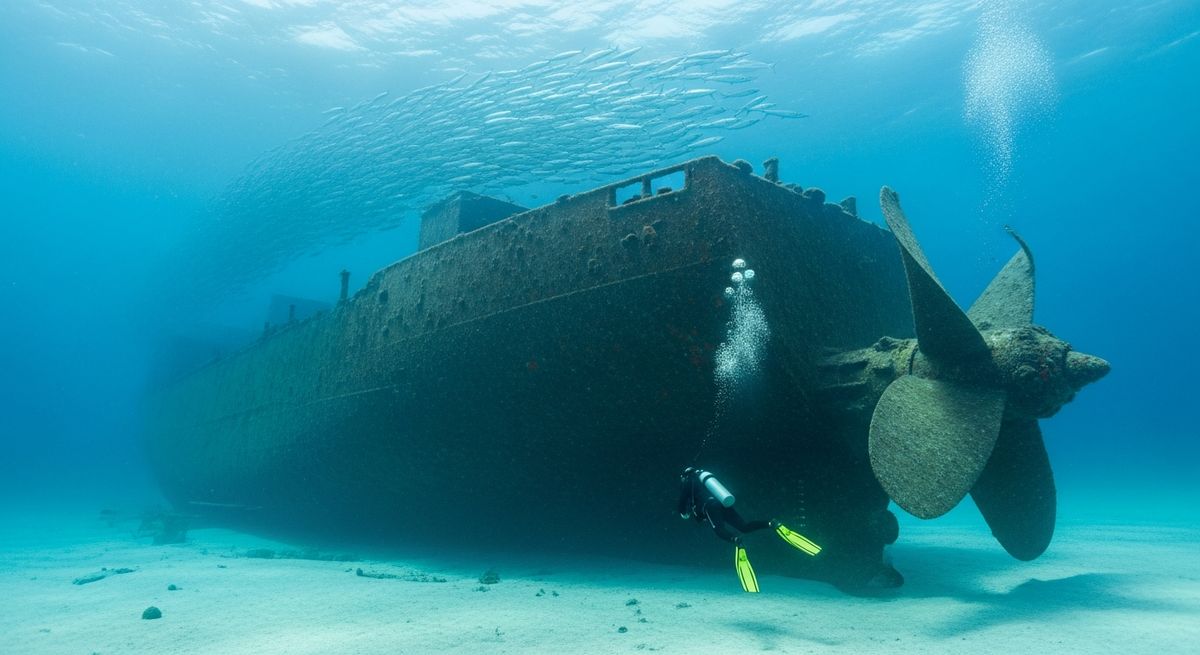
Bonnie is our top pick if you're diving Singapore’s Southern Islands. Forget the coral, this is all about the history. This old motor vessel, which went down back in '78 with a full load of machinery and timber, now rests upright at ten metres. It’s perfect for a leisurely explore, especially for divers who love poking around wrecks without worrying about deep deco stops. We love finning along the deck, imagining the heavy machinery it once carried. The wheelhouse is still largely intact, which is a rare treat for a wreck in these parts. Keep an eye out for batfish – they often hang out around the stern, fluttering in the gentle current. Sometimes, if you’re lucky, a big barracuda will cruise by, a silver flash against the murky green. The visibility can be hit or miss, usually around three to five metres, but that just adds to the atmospheric feel of exploring a sunken ship. It’s a proper wreck dive, even if you do have to deal with the occasional passing cargo ship rumble overhead. Our favourite tip? Go on a weekday morning; it’s usually quieter.
Typical BONNIE Dive Profile
Illustrative profile based on site depth and type. Actual dive profiles vary - always follow your dive computer and training.
Safety Notes
Wreck site - avoid penetration without wreck diving certification. Watch for sharp metal and entanglement hazards.
BONNIE Wreck History
Year Sunk
1978
Vessel Type
cargo ship
Cause
unknown
The story of the motor vessel Bonnie is one of a routine job gone wrong. In May 1978, the ship was at anchor in Singapore's Eastern Anchorage, taking on a heavy cargo of machinery and timber destined for Bangkok. Suddenly, the vessel began to develop a dangerous list. Before the situation could be controlled, the Bonnie capsized and sank where she was anchored.
Fortunately, all 15 crew members were rescued from the water, but the ship was a total loss. Today, the Bonnie rests in just 10 meters of water, making it a highly accessible wreck for novice divers and a great training site. Lying in the busy shipping lanes, the wreck serves as a reminder of the perils of the sea, even within the relative safety of an anchorage. Divers can explore the remains of this cargo vessel, now a home for local marine life, and imagine its final, dramatic moments.
Nearest Dive Centres to BONNIE
Dive shops near BONNIE
Penguin Swim School
Gill Divers
Diveonesg Pte Ltd
The Dive Company
Living Seas
Waikiki Dive
Reviews for BONNIE
Conditions
Ocean conditions, forecast and tides for BONNIE
BONNIE Ocean Conditions
Monthly averages for BONNIE, sourced from Open-Meteo marine data - nearest station: Open-Meteo marine grid (1.18, 103.96) (8km away)
October Averages
Sea Temperature
30°C
86°F · Range: 29.5–31.1°C
Air Temperature
27°C
81°F
Wind Speed
4.07 m/s
7.9 knots
Atmospheric Pressure
1009.8 hPa
Based on 4 years of monitoring data · Data sources: Open-Meteo marine data
Plan & book
Ways to dive Southern Islands, from day trips to liveaboards.
Day trips & courses
via GetYourGuideGuided dives, courses and snorkel trips with instant booking.
Find dive trips in Southern IslandsPlaces to stay
via Booking.comHotels and dive resorts near Southern Islands.
Search stays in Southern IslandsDive insurance
Most travel insurance excludes or limits scuba. Check what you need before you go.
Dive insurance explainedPartner links: we may earn a commission if you book, at no extra cost to you. How we make money
Where to Stay near BONNIE
Prices from Booking.com. We may earn a commission at no extra cost to you.