BUMI PERSADA
Why dive here
With 263+ marine species recorded in the area - including blue-spotted stingrays, dugongs, giant moray eels, seahorses and sea turtles - BUMI PERSADA offers some of Southern Islands's richest wreck diving. Water ranges 28-31°C, warmest May, June, November.
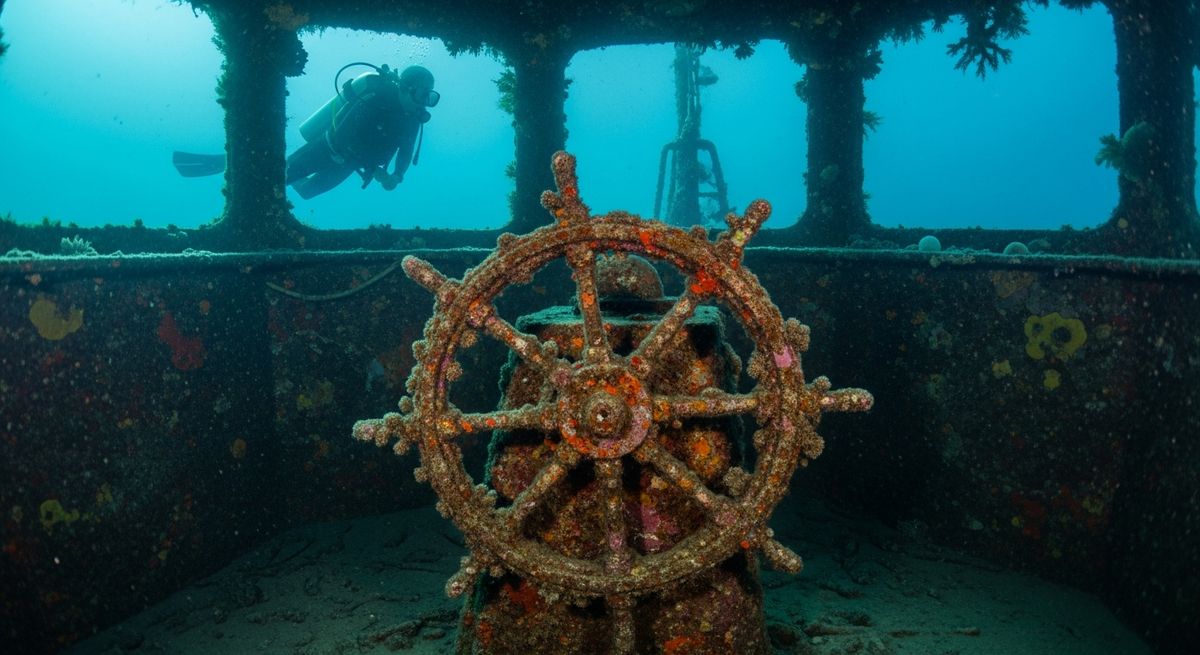
The Bumi Persada wreck is a proper dive, one that asks for a bit of experience. Dropping down onto the bow, you immediately feel the scale of this roll-on, roll-off vessel, sunk in 1986. At 81 metres long, she’s a substantial structure on the seabed at 35 metres, making it a deep dive for Singapore. Currents can be unpredictable, so we always suggest timing your descent for slack water if you can. What we love about the Bumi is the way the wreck has become a living reef. The entire structure is encrusted with sponges and soft corals, a vibrant counterpoint to the steel. You’ll find schools of yellowtail fusiliers swirling around the superstructure and often a giant grouper or two lurking in the deeper holds. Penetration is possible for trained wreck divers, with the vehicle ramps offering interesting swim-throughs, but it’s a silty environment, so good buoyancy is key. For those who enjoy deeper wreck diving with a bit of a challenge, and the thrill of exploring a piece of history, the Bumi Persada delivers.
Typical BUMI PERSADA Dive Profile
Illustrative profile based on site depth and type. Actual dive profiles vary - always follow your dive computer and training.
Safety Notes
Deep dive (35m) - monitor air consumption closely. Advanced certification recommended.
Wreck site - avoid penetration without wreck diving certification. Watch for sharp metal and entanglement hazards.
Always perform a 3-minute safety stop at 5m before surfacing.
BUMI PERSADA Wreck History
Year Sunk
1986
Vessel Type
ferry
Cause
storm
The Bumi Persada was a modern Roll On-Roll Off (Ro-Ro) vessel, built in 1977 and designed for the efficient transport of vehicles and cargo. These ships are characterized by their large, open vehicle decks, accessed by ramps in the bow or stern. In December 1986, the Bumi Persada was on a voyage from Surabaya to Singapore, navigating the busy shipping lanes of the region.
On December 20th, her journey was cut short when she was caught in a powerful storm about 80 miles east of Singapore. Battered by the elements, the vessel was overwhelmed and sank, coming to rest on the seabed at a depth of 35 meters. For today's divers, the Bumi Persada presents a challenging and rewarding exploration. As an advanced dive, it offers the chance to see a relatively modern and large vessel. Divers can investigate the superstructure and, with proper training and caution, peer into the vast, cavernous vehicle bay that makes this type of wreck so distinctive.
Reviews for BUMI PERSADA
Conditions
Ocean conditions, forecast and tides for BUMI PERSADA
BUMI PERSADA Ocean Conditions
Monthly averages for BUMI PERSADA, sourced from Open-Meteo marine data - nearest station: Open-Meteo marine grid (1.18, 103.96) (8km away)
October Averages
Sea Temperature
30°C
86°F · Range: 29.5–31.1°C
Air Temperature
27°C
81°F
Wind Speed
4.07 m/s
7.9 knots
Atmospheric Pressure
1009.8 hPa
Based on 4 years of monitoring data · Data sources: Open-Meteo marine data
Plan & book
Ways to dive Southern Islands, from day trips to liveaboards.
Day trips & courses
via GetYourGuideGuided dives, courses and snorkel trips with instant booking.
Find dive trips in Southern IslandsPlaces to stay
via Booking.comHotels and dive resorts near Southern Islands.
Search stays in Southern IslandsDive insurance
Most travel insurance excludes or limits scuba. Check what you need before you go.
Dive insurance explainedPartner links: we may earn a commission if you book, at no extra cost to you. How we make money
Where to Stay near BUMI PERSADA
Prices from Booking.com. We may earn a commission at no extra cost to you.