Japanese Garden
Protected Area
Suratthani Environmental Protected Area
Why dive here
With 54+ marine species recorded in the area - including sea turtles, tiger sharks and pufferfish - Japanese Garden offers some of Koh Tao's richest reef diving. Water ranges 29-31°C, warmest April, May, June.
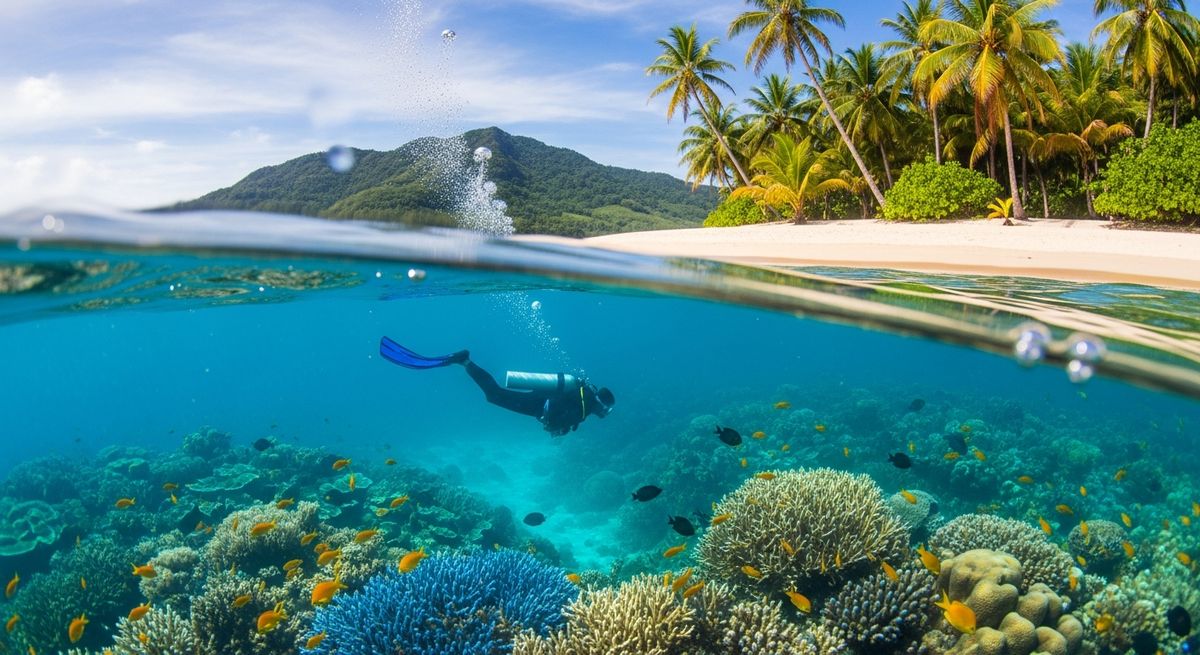
Okay, so everyone heading to Koh Tao gets told to dive Chumphon or Sail Rock for the big stuff, but we’re telling you, don't sleep on Japanese Garden. It’s tucked right off the shore of Koh Nangyuan, which means you often get that super calm, clear water, especially if you get there first thing. Our favourite part? It’s basically a natural aquarium. You’re weaving through these sprawling staghorn and branch coral formations, a real living garden, where the sunlight just slices through the water. We’ve spent entire dives just hovering, watching the endless parade of Bandcheek wrasse and iridescent Blue Trim Parrotfish munching away. Honestly, the sheer volume of small stuff here is incredible. You'll see Goldspeckled Shrimpgobies eyeballing you from their burrows and Coral Blennies perched on every other branch. It’s an easy dive, mostly shallow, maybe 12-15 metres at its deepest, which makes it perfect for longer bottom times and really slowing down. We'd suggest going early, before the day-trippers arrive, to truly appreciate the quiet ballet of the reef.
Nearest Dive Centres to Japanese Garden
Dive shops near Japanese Garden
Nang Yuan Easy Divers
Goodtime Adventures
Blue Immersion
Mojo Divers
DJL (Davey Jones Locker) Diving
French Kiss Divers - Sairee
Reviews for Japanese Garden
Conditions
Ocean conditions, forecast and tides for Japanese Garden
Japanese Garden Ocean Conditions
Monthly averages for Japanese Garden, sourced from Open-Meteo marine data + Copernicus Marine (EU) - nearest station: Open-Meteo marine grid (11.17, 101.33) (40km away)
October Averages
Sea Temperature
30°C
86°F · Range: 29.1–31.1°C
Current Speed
7.07 cm/s
Direction: E (98.1°)
Salinity
31.67 PSU
Based on 4 years of monitoring data · Data sources: Open-Meteo marine data + Copernicus Marine (EU)
Plan & book
Ways to dive Koh Tao, from day trips to liveaboards.
Day trips & courses
via GetYourGuideGuided dives, courses and snorkel trips with instant booking.
Find dive trips in Koh TaoPlaces to stay
via Booking.comHotels and dive resorts near Koh Tao.
Search stays in Koh TaoDive insurance
Most travel insurance excludes or limits scuba. Check what you need before you go.
Dive insurance explainedPartner links: we may earn a commission if you book, at no extra cost to you. How we make money
Where to Stay near Japanese Garden
Prices from Booking.com. We may earn a commission at no extra cost to you.