Diving in Hoi An & Cu Lao Cham
Why dive here
Hoi An & Cu Lao Cham offers some of Vietnam's richest diving, with 41+ marine species recorded in the area - including seahorses and sea turtles. Water ranges 24-31°C, warmest June, August, September.
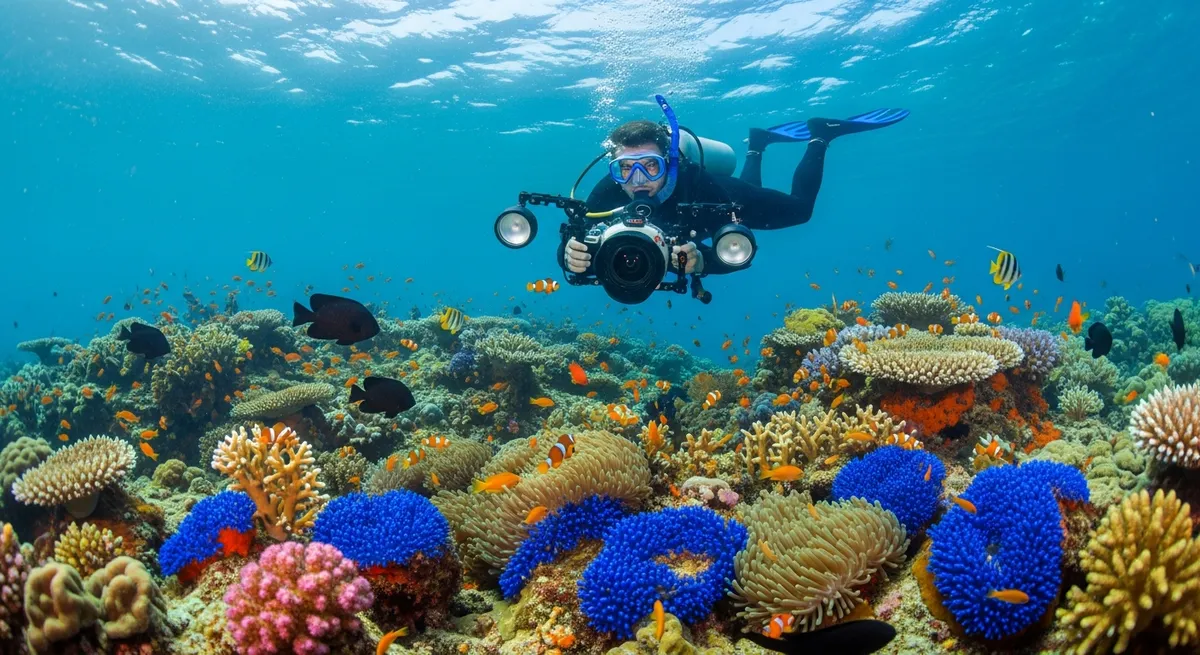
Hoi An and Cu Lao Cham offer a really unique blend of diving and culture, especially since you’re right on the doorstep of the ancient town. We love how easy it is to combine a morning underwater with an afternoon exploring the old streets. The diving itself around the Cu Lao Cham Marine Park often feels like a well-kept secret, though we’ve seen a few more boats lately. You'll find gentle coral gardens, mostly at depths around 10 to 18 metres, with plenty of reef fish like fusiliers and damselfish flitting about. Keep your eyes peeled for nudibranchs, particularly the Common delphinula, which we find beautiful. Visibility can be a bit variable, averaging 10-15 metres, but on a good day, the light plays wonderfully through the shallows. We've had a few incredible encounters with loggerhead turtles here, slowly making their way across the reef, completely unfazed by us. We’d suggest going in the morning to beat the heat and catch the best light. It’s not a place for huge pelagics, but if you’re into macro and enjoying a quiet reef, it’s a winner.
Hoi An & Cu Lao Cham Dive Site Map
Dive sites and dive centres in Hoi An & Cu Lao Cham
Hoi An & Cu Lao Cham Dive Sites
19 dive sites in Hoi An & Cu Lao Cham
90208
The 90208 wreck, a fishing vessel that went down in February 2024, is still quite new to the Hoi An dive scene. It’s sitting at 51 metres, so it’s one for the experienced technical crowd. We’ve found it’s already attracting some juvenile fish, like fusiliers and small trevally, hovering around the superstructure. Given its depth, the ambient light is pretty low, so a good torch is essential for peering into the holds and along the deck. Over time, we expect this wreck to become a proper artificial reef, drawing in more pelagics, but for now, it's a fascinating glimpse into the very early stages of a wreck’s colonisation.
BRIGHT STAR
Bright Star isn't about depth or big fish. This is about history, plain and simple, and getting right up close to it. We love this site because it’s a living museum, sitting in just 5 metres of water, perfect for an extended rummage. You’re diving a genuine piece of World War II, a Japanese cargo ship that went down in 1944. The bow section is the most intact, still holding its shape, and it’s surprisingly big when you’re finning around it. Look inside; you can still make out the remains of machinery, and we've spotted pipefish and ghost pipefish tucked into the nooks. It’s also home to some impressively large lionfish, so keep your distance but enjoy the show. For photographers, it’s a dream, especially on a sunny afternoon when the light streams through the water, illuminating the ghostly form of the ship. We'd suggest getting there early to avoid any crowds, though it’s never overly busy. This site is definitely our pick for anyone who loves wrecks, history, or just wants a completely different kind of dive.
Cham Island
Cham Island offers a gentle introduction to diving in Vietnam. We typically find a good mix of hard and soft corals here, with plenty of small reef fish like damselfish and parrotfish zipping around. Depths range from 8 to 33 metres, making it suitable for newer divers looking for a relaxed experience or those keen on longer bottom times. It’s a solid spot for an easy day trip out of Hoi An.
Cu Lao Cham
Cu Lao Cham offers straightforward diving, a good option if you’re looking to get wet while based in Hoi An. You’ll typically find healthy hard coral formations and a decent variety of smaller reef fish. It’s a comfortable spot for newer divers or those who prefer a relaxed pace, usually without strong currents. Expect pleasant, unchallenging dives here, a nice escape from the town’s bustle.
CULLONG 115
Diving the *Cullong 115* is a real journey back in time, a sobering experience. This isn't a colourful reef dive, it’s a deep penetration into maritime history, lying at a profound 55m. The wreck itself, a large motor vessel, went down in 1986, and the years have turned its structure into an artificial reef, now draped in soft corals and sponges. We love the way schooling fusiliers blanket the deck, parting like a curtain as you approach, and the occasional lionfish that just hangs, perfectly still, in the silty gloom. Visibility can be a bit of a lottery here, but when it’s good, you can make out the scale of the ship, its holds yawning open, inviting exploration for those properly trained and equipped. Our favourite part has to be the stern, where the propeller still sits, an eerie, silent testament to its last voyage. This site is definitely for experienced wreck divers comfortable with deep profiles and limited natural light. We’d suggest a sidemount configuration for easier access into some of the tighter spaces, and definitely pack a good torch.
DNa 37068 TS
The DNa 37068 TS wreck near Hoi An is our pick for divers who enjoy a bit of history with their nitrogen narcosis. This isn't some pristine, intact vessel; it's a properly broken-up wreck, scattered across the seabed at 32 meters, hinting at the force that put it down. We love picking through the debris, finding old machinery, chunks of hull, and imagining the final moments. What you'll find here now is a canvas for marine life. Look for big groupers lurking in the shadows of the larger sections, and we often spot lionfish perched dramatically on corroded metal. Schools of yellow-lined snapper swirl around the taller structures, occasionally parting to reveal a moray eel peeking from a pipe. It's a site for those who appreciate the slower pace of exploration, for divers who want to feel the weight of history and observe how nature reclaims man-made objects. Bring a good torch; there are plenty of nooks to illuminate.
DNA 46182 TS
The DNA 46182 TS wreck isn't your pristine, upright behemoth, but that's precisely what we love about it. This isn't a deep dive, sitting at a comfortable 25 meters, so you get plenty of bottom time to explore the scattered remains of what was once a fishing vessel. It's truly a dangerous wreck, broken and spread across the sandy bottom, which makes for some fantastic hidey-holes for marine life. You’ll find a good number of lionfish here, often hovering lazily around the larger metal plates, and we’ve seen some surprisingly large groupers peeking out from beneath collapsed sections. Visibility can be a bit hit or miss, typical for the area, but when it's good, the light plays beautifully through the fragmented structure. We’d suggest going early in the morning; the currents tend to be calmer then, and you often have the site to yourselves before the day boats arrive. This site is perfect for wreck enthusiasts who enjoy a bit of detective work and aren’t looking for intact superstructures, but rather the way nature reclaims man-made objects.
ENKI MARU
The Enki Maru, a steamship resting at 40 metres, is a significant piece of history off Cu Lao Cham. Sunk by a US submarine in January 1945, the wreck offers a fascinating dive into the past. Down on the seabed, the ship's structure is largely intact, providing plenty of nooks and crannies to explore. Schools of snapper often congregate around the deeper sections, and we've seen moray eels peeking out from various openings. It’s a dive for those who appreciate historical wrecks and are comfortable with deeper profiles, a really unique experience in Vietnamese waters.
KYOKUUN MARU (PROBABLY)
Diving the Kyokuun Maru, or what we’re pretty sure is the Kyokuun Maru, offers a tangible piece of history just off Cu Lao Cham. It’s a shallow wreck, sitting at just 10 meters, so you get plenty of bottom time to really explore. We love picking out the twisted metal plates and imagining the sheer force that brought this tanker down in 1945. What makes it special is how the sea has reclaimed it. Schools of fusiliers often swirl around the main structure, and we’ve spotted moray eels peeking out from shadowed compartments. The visibility here can vary, but on a good day, the sunlight filters through the water beautifully, illuminating the wreck in a hazy green glow. It’s not a massive wreck, but there’s enough here for a solid dive, especially if you take your time to peer into every crevice. We’d suggest going early in the morning to catch the best light and avoid any potential boat traffic. It’s an easy dive, perfect for those new to wreck diving, or anyone who enjoys the quiet contemplation of history beneath the waves.
MINH KHAI 126
The Minh Khai 126 is our kind of wreck. Not some manufactured reef sunk for tourism, but a genuine fishing vessel, lying upright at 41 metres off Cu Lao Cham. Descending, the hull gradually resolves from the blue, an imposing silhouette. We love how the deckhouse is still largely intact, allowing for some interesting swim-throughs if you're comfortable in overhead environments and have the right training. Schools of juvenile snapper often mass around the bow, flickering in the ambient light. Keep an eye out for moray eels tucked into crevices, their heads poking out with that classic inquisitive stare. This site suits experienced divers with deep diving certifications looking for something a bit more substantial than the shallower reefs. It’s a proper dive, one that gives you that satisfying sense of exploring history, not just another coral patch. We’d suggest a good dive light to really pick out the details in the darker sections.
NAM SANH
Nam Sanh is an oddball, and we love it for that. This isn’t a deep, dramatic wreck for technical divers. No, the Nam Sanh is a beached steamship, run aground by Typhoon Hester in 1971, and now sitting literally on the shoreline. It’s barely submerged, the bow often poking out of the water like a rusted warning sign. We’ve even walked on parts of it during particularly low tides. Diving here is more like an archaeological snorkel. You’re weaving through the skeletal remains of what was once a 46-meter vessel, now a jumble of metal plates and twisted girders. Sunlight spears through the gaps, illuminating schools of tiny damselfish darting between the rusty bulkheads. We’ve found surprising numbers of moray eels here, tucked deep into the darker recesses, and plenty of crabs scuttling across the barnacle-encrusted hull. It’s not about grand scale, but intimate details – the way a coral polyp has colonised a rivet, or a juvenile snapper sheltering in a cracked porthole. It’s a fascinating glimpse into history, perfect for photographers who appreciate the interplay of light and decay, or anyone who enjoys exploring a wreck without the pressure of depth limits. Just watch out for sharp edges; this old girl is definitely a bit dangerous.
OAKLAND
Oakland is a real conversation starter, a massive container vessel that went down in 1988. We’re talking about a wreck so big, it’s actually two distinct dive sites: the bow and stern sections, separated by a fair swim, with the main cargo area somewhere in the middle. Diving the bow, you’re looking at serious steel, barnacle-encrusted plates, and the remains of the superstructure that offer some intriguing swim-throughs if you’re comfortable with overhead environments. It’s a site for advanced divers, no question, given the depth and potential currents. The scale alone is impressive. We love tracing the deck features, imagining the ship in its former life. You’ll see schools of fusiliers and yellowtail snapper darting through the rusted metal, and often a few lionfish lurking in the shadows. Look closely, and you might spot a stonefish blending into the growth. It’s a proper wreck dive, more about the history and the sheer presence of the sunken ship than vibrant corals, though the soft corals here add pops of colour to the industrial grey. Go early, before the thermocline settles in, for the best visibility.
Show all 19 dive sites in Hoi An & Cu Lao Cham
Hoi An & Cu Lao Cham Dive Centres
3 dive shops and operators in Hoi An & Cu Lao Cham
Ocean Wildlife in Hoi An & Cu Lao Cham
41 species recorded in Hoi An & Cu Lao Cham
Hoi An & Cu Lao Cham Daylight & Sunrise/Sunset
Sunrise and sunset times for Hoi An & Cu Lao Cham, calculated from coordinates
Today - Sunday 11 October
Sunrise
05:38
Sunset
17:30
Daylight
11h 51m
Golden Hour
17:01
First light (dawn) at 05:17 · Last light (dusk) at 17:51
Monthly Averages
| Month | Sunrise | Sunset | Daylight |
|---|---|---|---|
| Jan | 06:18 | 17:35 | 11h 17m |
| Feb | 06:13 | 17:50 | 11h 37m |
| Mar | 05:56 | 17:57 | 12h 2m |
| Apr | 05:33 | 18:02 | 12h 29m |
| May | 05:18 | 18:09 | 12h 52m |
| JunLongest | 05:16 | 18:20 | 13h 4m |
| Jul | 05:23 | 18:23 | 12h 59m |
| Aug | 05:32 | 18:12 | 12h 40m |
| Sep | 05:36 | 17:50 | 12h 14m |
| OctNow | 05:39 | 17:27 | 11h 48m |
| Nov | 05:50 | 17:14 | 11h 24m |
| DecShortest | 06:06 | 17:18 | 11h 12m |
Times are approximate local times based on longitude. Actual times may vary slightly depending on the exact timezone observed in Hoi An & Cu Lao Cham.
Where to Stay near Hoi An & Cu Lao Cham
Prices from Booking.com. We may earn a commission at no extra cost to you.
Marine Protected Areas near Hoi An & Cu Lao Cham
6 protected areas near Hoi An & Cu Lao Cham - please respect local regulations when diving
Cù Lao Chàm-Hội An
Tam Giang-Cau Hai
Cồn Cỏ
Dao Ly Son
Cu Lao Cham (marine)
Hai Van-Hon Son Tra
Getting to Hoi An & Cu Lao Cham
Da Nang
Pakse
Sanya (Tianya)
Plan & book
Ways to dive Hoi An & Cu Lao Cham, from day trips to liveaboards.
Day trips & courses
via GetYourGuideGuided dives, courses and snorkel trips with instant booking.
Find dive trips in Hoi An & Cu Lao ChamPlaces to stay
via Booking.comHotels and dive resorts near Hoi An & Cu Lao Cham.
Search stays in Hoi An & Cu Lao ChamDive insurance
Most travel insurance excludes or limits scuba. Check what you need before you go.
Dive insurance explainedPartner links: we may earn a commission if you book, at no extra cost to you. How we make money