Eden
Why dive here
With 231+ marine species recorded in the area - including barracuda, blacktip reef sharks, blue sharks, grey reef sharks and manta rays - Eden offers some of Cocos (Keeling) Islands's richest reef diving. Water ranges 27-29°C, warmest January, February, March.
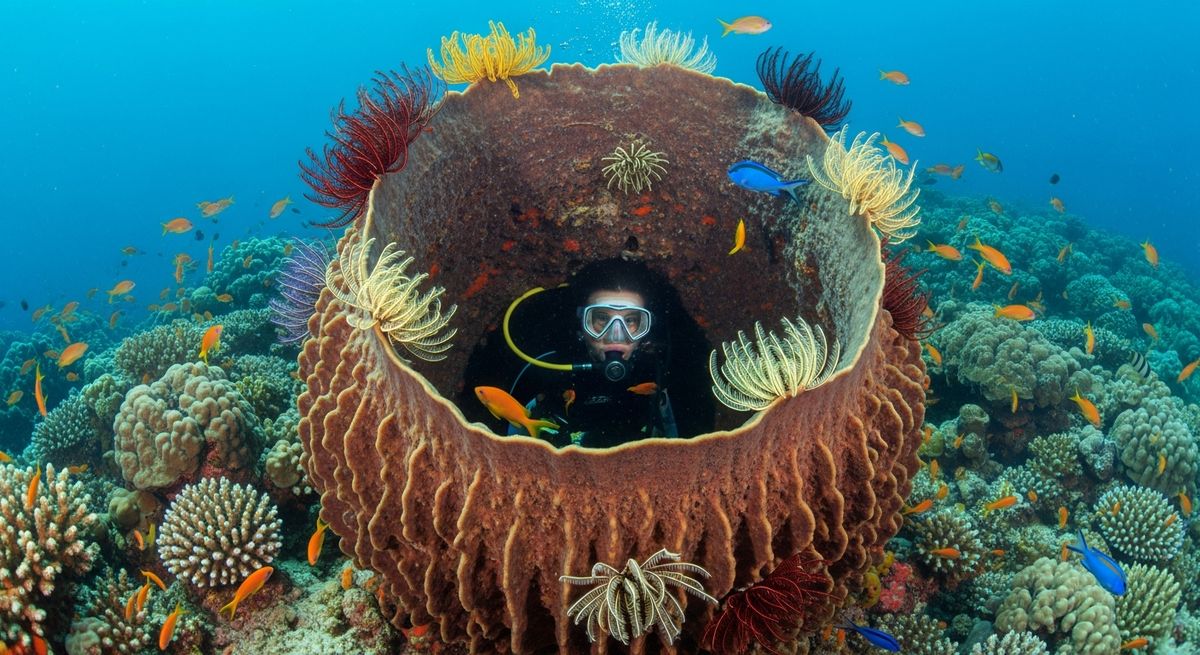
Eden. There's a reason we love this site so much, and it's not just the big eye trevally that often swirls here like a silver tornado. What really makes Eden stand out are the gorgonian sea fans. They truly are like trees, stretching up from 20 metres, swaying gently in the current, creating these incredible, colourful alleys you can fin through. It’s a sensory experience, the light filtering through the fans, the soft push and pull of the water. This is a site for divers who appreciate the subtle beauty of a reef and who are comfortable handling a bit of current. We’d suggest keeping an eye on the dive brief; Eden can be prone to strong, unpredictable flows, which is why it’s only really diveable in the summer when the wind drops. When conditions align, the visibility can be an easy 30 metres, giving you a clear view of those fan forests and the blackspot pygmy wrasse flitting between them. You might also spot leopard blennies poking their heads out, or even a sleek unicornfish cruising by. It’s a dive that rewards attention to detail and a good sense of drift.
Nearest Dive Centres to Eden
Dive shops near Eden
View all dive centres in Cocos (Keeling) IslandsReviews for Eden
Conditions
Ocean conditions, forecast and tides for Eden
Eden Ocean Conditions
Monthly averages for Eden, sourced from Open-Meteo marine data - nearest station: Open-Meteo marine grid (-12.09, 96.86) (1km away)
October Averages
Sea Temperature
27°C
81°F · Range: 25.6–27.8°C
Air Temperature
26°C
79°F
Wind Speed
9.53 m/s
18.5 knots
Atmospheric Pressure
1012.9 hPa
Based on 4 years of monitoring data · Data sources: Open-Meteo marine data
Plan & book
Ways to dive Cocos (Keeling) Islands, from day trips to liveaboards.
Day trips & courses
via GetYourGuideGuided dives, courses and snorkel trips with instant booking.
Find dive trips in Cocos (Keeling) IslandsPlaces to stay
via Booking.comHotels and dive resorts near Cocos (Keeling) Islands.
Search stays in Cocos (Keeling) IslandsDive insurance
Most travel insurance excludes or limits scuba. Check what you need before you go.
Dive insurance explainedPartner links: we may earn a commission if you book, at no extra cost to you. How we make money
Where to Stay near Eden
Prices from Booking.com. We may earn a commission at no extra cost to you.