Enterprise
Why dive here
With 231+ marine species recorded in the area - including barracuda, blacktip reef sharks, blue sharks, grey reef sharks and manta rays - Enterprise offers some of Cocos (Keeling) Islands's richest wall diving. Water ranges 27-29°C, warmest January, February, March.
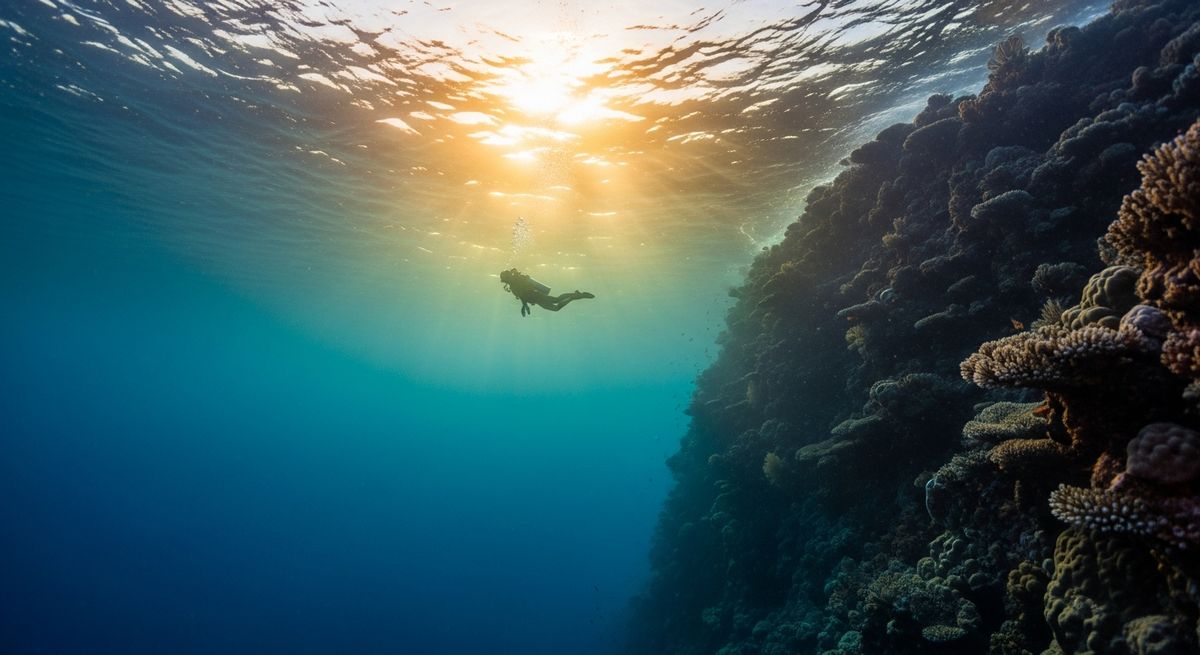
Enterprise is exactly what we look for when we dive Cocos, a site that just feels wild. You’ll drop onto a massive bommie sitting right on the edge of a deep drop-off, a proper ocean interface. We love to get there on an incoming tide. That upwelling really gets the food chain fired up. We’re talking grey reef sharks cruising past, often a dozen at a time, and big dogtooth tuna launching themselves into schools of fusiliers. That deep blue wall holds promise. For those comfortable with a bit of exposure, slipping down to 26m reveals a small cave, more an overhang really, but it’s cool to poke your head in and see what's lurking in the shadows. Keep an eye out for those big groupers often hanging around the bommie at the end of the dive. This site is for experienced divers who appreciate raw energy and big pelagics.
Nearest Dive Centres to Enterprise
Dive shops near Enterprise
View all dive centres in Cocos (Keeling) IslandsReviews for Enterprise
Conditions
Ocean conditions, forecast and tides for Enterprise
Enterprise Ocean Conditions
Monthly averages for Enterprise, sourced from Open-Meteo marine data - nearest station: Open-Meteo marine grid (-12.09, 96.86) (1km away)
October Averages
Sea Temperature
27°C
81°F · Range: 25.6–27.8°C
Air Temperature
26°C
79°F
Wind Speed
9.53 m/s
18.5 knots
Atmospheric Pressure
1012.9 hPa
Based on 4 years of monitoring data · Data sources: Open-Meteo marine data
Plan & book
Ways to dive Cocos (Keeling) Islands, from day trips to liveaboards.
Day trips & courses
via GetYourGuideGuided dives, courses and snorkel trips with instant booking.
Find dive trips in Cocos (Keeling) IslandsPlaces to stay
via Booking.comHotels and dive resorts near Cocos (Keeling) Islands.
Search stays in Cocos (Keeling) IslandsDive insurance
Most travel insurance excludes or limits scuba. Check what you need before you go.
Dive insurance explainedPartner links: we may earn a commission if you book, at no extra cost to you. How we make money
Where to Stay near Enterprise
Prices from Booking.com. We may earn a commission at no extra cost to you.