Noritaki
Why dive here
With 231+ marine species recorded in the area - including barracuda, blacktip reef sharks, blue sharks, grey reef sharks and manta rays - Noritaki offers some of Cocos (Keeling) Islands's richest reef diving. Water ranges 27-29°C, warmest January, February, March.
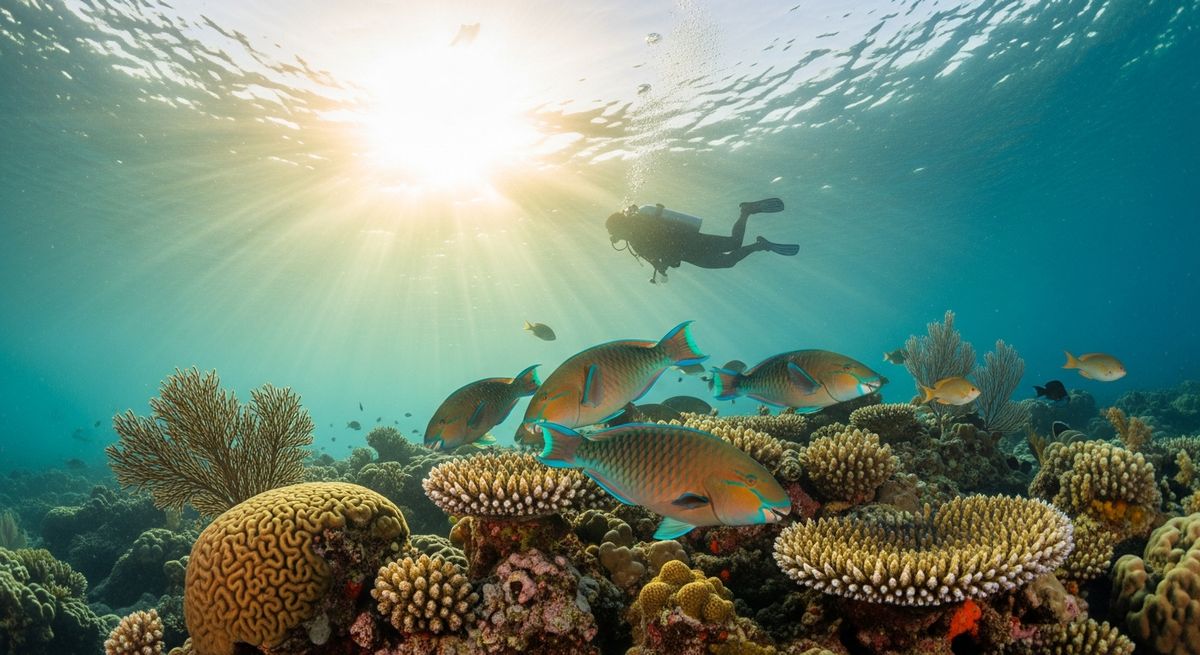
Noritaki, for us, is all about the plate corals. Seriously, so many plates, like a massive, elaborate dinner party thrown by the ocean. It’s pretty shallow too, topping out around 21 metres, which means the light just floods the whole place. We love drifting over these recovering formations, spotting tiny reef inhabitants tucked amongst the frills. Keep an eye out for the Sickle Butterflyfish weaving through, and if you’re lucky, you might even spot a Blacktip reef shark cruising the deeper ledge. We’ve also had incredible encounters here just watching mantas glide past on their way to cleaning stations further south. It's a relaxed, beautiful dive, perfect for photographers or anyone who just wants to soak in the gentle rhythm of a recovering reef.
Typical Noritaki Dive Profile
Illustrative profile based on site depth and type. Actual dive profiles vary - always follow your dive computer and training.
Nearest Dive Centres to Noritaki
Dive shops near Noritaki
View all dive centres in Cocos (Keeling) IslandsReviews for Noritaki
Conditions
Ocean conditions, forecast and tides for Noritaki
Noritaki Ocean Conditions
Monthly averages for Noritaki, sourced from Open-Meteo marine data - nearest station: Open-Meteo marine grid (-12.09, 96.86) (1km away)
October Averages
Sea Temperature
27°C
81°F · Range: 25.6–27.8°C
Air Temperature
26°C
79°F
Wind Speed
9.53 m/s
18.5 knots
Atmospheric Pressure
1012.9 hPa
Based on 4 years of monitoring data · Data sources: Open-Meteo marine data
Plan & book
Ways to dive Cocos (Keeling) Islands, from day trips to liveaboards.
Day trips & courses
via GetYourGuideGuided dives, courses and snorkel trips with instant booking.
Find dive trips in Cocos (Keeling) IslandsPlaces to stay
via Booking.comHotels and dive resorts near Cocos (Keeling) Islands.
Search stays in Cocos (Keeling) IslandsDive insurance
Most travel insurance excludes or limits scuba. Check what you need before you go.
Dive insurance explainedPartner links: we may earn a commission if you book, at no extra cost to you. How we make money
Where to Stay near Noritaki
Prices from Booking.com. We may earn a commission at no extra cost to you.