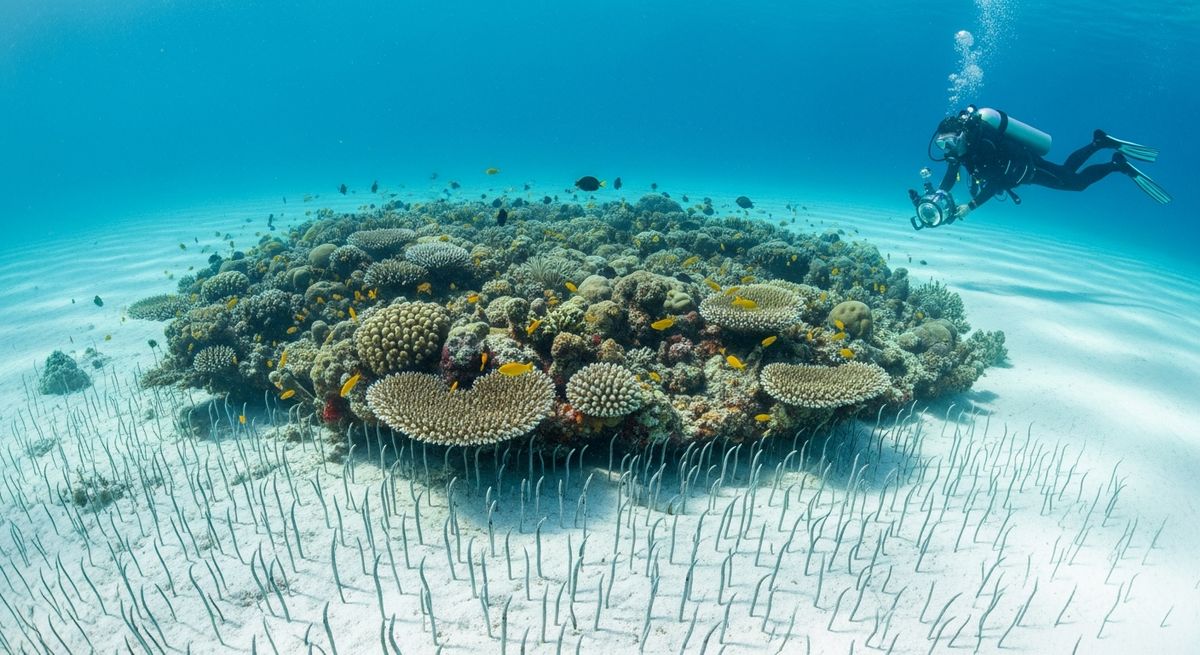
Desoto Inlet
Protected Area
Bird Island
Why dive here
With 199+ marine species recorded in the area - including blue sharks, bull sharks, dolphins, dugongs and great white sharks - Desoto Inlet offers some of Sydney & New South Wales's richest reef diving. Water ranges 18-23°C, warmest January, February, March.
Desoto Inlet is one of those Sydney sites we keep coming back to. It’s a shallow boat dive, dropping to about 14m, but don’t let that fool you into thinking it's simple. The wall here is riddled with overhangs and crevices, perfect for poking around. We love drifting along, eyes peeled for Port Jackson sharks tucked into ledges, their sleepy faces surprisingly endearing. The visibility averages around 8m, which feels pretty typical for Sydney, but sometimes you get a cracker day and it opens right up. Look closely at the rocks; we've found some fantastic nudibranchs here, miniature splashes of colour against the grey. You’ll often see schools of yellowtail and silver sweep shimmering by, and if you’re patient, a wobbegong might just be snoozing under an overhang. Our favourite time to dive Desoto is on a calm morning, just as the light starts to filter down, illuminating the soft corals. It's a relaxed dive, ideal for photographers or anyone who likes to take their time exploring nooks and crannies.
Typical Desoto Inlet Dive Profile
Illustrative profile based on site depth and type. Actual dive profiles vary - always follow your dive computer and training.
Nearest Dive Centres to Desoto Inlet
Dive shops near Desoto Inlet
DIVE SWANSEA
CENTRAL COAST DIVERS
Grey Nurse Charters
FREEDIVING CENTRAL PTY LTD
Reviews for Desoto Inlet
Conditions
Ocean conditions, forecast and tides for Desoto Inlet
Desoto Inlet Ocean Conditions
Monthly averages for Desoto Inlet, sourced from Open-Meteo marine data - nearest station: Open-Meteo marine grid (-33.18, 151.63) (7km away)
October Averages
Sea Temperature
20°C
67°F · Range: 18.5–20.7°C
Air Temperature
17°C
63°F
Wind Speed
5.95 m/s
11.6 knots
Atmospheric Pressure
1016.2 hPa
Based on 4 years of monitoring data · Data sources: Open-Meteo marine data
Plan & book
Ways to dive Sydney & New South Wales, from day trips to liveaboards.
Day trips & courses
via GetYourGuideGuided dives, courses and snorkel trips with instant booking.
Find dive trips in Sydney & New South WalesPlaces to stay
via Booking.comHotels and dive resorts near Sydney & New South Wales.
Search stays in Sydney & New South WalesDive insurance
Most travel insurance excludes or limits scuba. Check what you need before you go.
Dive insurance explainedPartner links: we may earn a commission if you book, at no extra cost to you. How we make money
Where to Stay near Desoto Inlet
Prices from Booking.com. We may earn a commission at no extra cost to you.