Flagstaff
Protected Area
Moon Island
Why dive here
With 199+ marine species recorded in the area - including blue sharks, bull sharks, dolphins, dugongs and great white sharks - Flagstaff offers some of Sydney & New South Wales's richest wreck diving. Water ranges 18-23°C, warmest January, February, March.
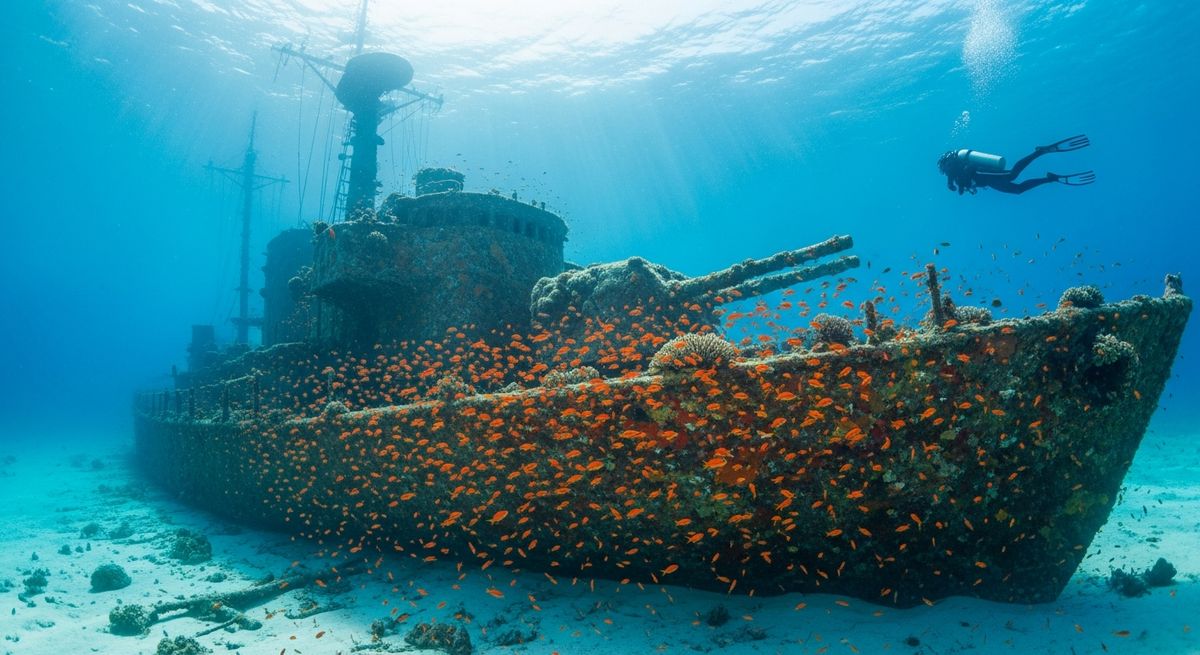
Flagstaff, right there in Port Stephens, is one of those sites we always suggest for an easy Sunday morning dive. It’s shallow, capping out around seven metres, so you get plenty of bottom time to really poke around. We love it because it’s surprisingly rich for a sandy bottom, with those rocky edges by the bay entrance providing plenty of nooks. You’ve got two ways in: a gentle entry through the bay or, our preferred, a step over the rocks. Just time that rock entry for high tide, it makes things much smoother. Once you’re in, we usually head for the rock structures outside the bay, where the real show happens. We’ve had incredible luck here spotting southern eagle rays gliding over the sand flats, and the nudibranch variety is impressive if you’re looking closely – we’ve found everything from vibrant reds to subtle browns. Schools of bannerfish often hang around the rock walls, and in winter, if you’re lucky, a grey nurse shark might just cruise past. Visibility averages about seven metres, so it’s never a vast blue, but it’s clear enough to appreciate the details. It’s perfect for macro enthusiasts or just a chilled-out dive where you don't need to worry about depth or complex navigation.
Safety Notes
Wreck site - avoid penetration without wreck diving certification. Watch for sharp metal and entanglement hazards.
Nearest Dive Centres to Flagstaff
Dive shops near Flagstaff
DIVE SWANSEA
Grey Nurse Charters
CENTRAL COAST DIVERS
FREEDIVING CENTRAL PTY LTD
Reviews for Flagstaff
Conditions
Ocean conditions, forecast and tides for Flagstaff
Flagstaff Ocean Conditions
Monthly averages for Flagstaff, sourced from Open-Meteo marine data - nearest station: Open-Meteo marine grid (-33.18, 151.63) (7km away)
October Averages
Sea Temperature
20°C
67°F · Range: 18.5–20.7°C
Air Temperature
17°C
63°F
Wind Speed
5.95 m/s
11.6 knots
Atmospheric Pressure
1016.2 hPa
Based on 4 years of monitoring data · Data sources: Open-Meteo marine data
Plan & book
Ways to dive Sydney & New South Wales, from day trips to liveaboards.
Day trips & courses
via GetYourGuideGuided dives, courses and snorkel trips with instant booking.
Find dive trips in Sydney & New South WalesPlaces to stay
via Booking.comHotels and dive resorts near Sydney & New South Wales.
Search stays in Sydney & New South WalesDive insurance
Most travel insurance excludes or limits scuba. Check what you need before you go.
Dive insurance explainedPartner links: we may earn a commission if you book, at no extra cost to you. How we make money
Where to Stay near Flagstaff
Prices from Booking.com. We may earn a commission at no extra cost to you.