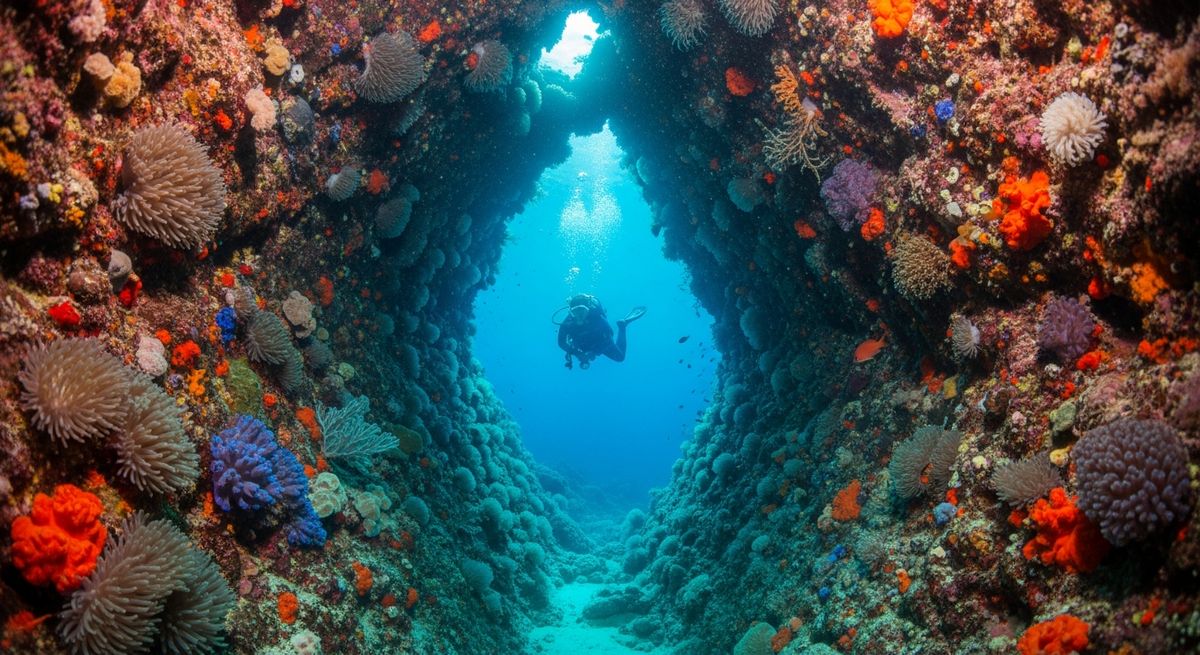
Lou’s Reef
Protected Area
Bushrangers Bay
Why dive here
With 199+ marine species recorded in the area - including blue sharks, bull sharks, dolphins, dugongs and great white sharks - Lou’s Reef offers some of Sydney & New South Wales's richest cave diving. Water ranges 18-23°C, warmest January, February, March.
Lou’s Reef, for us, is one of those Sydney sites that constantly delivers, even on an average day. We’ve had dives here where the visibility was a murky 5 metres, yet the sheer volume of fish still made it worthwhile. It’s a rocky reef, dropping to around 24 metres, but it’s the smaller details that really make it special. Look closely and you’ll find a surprising amount of invertebrate life: those intricate sea spiders crawling over sponges, and vibrant sea tulips swaying gently in the surge. The current, which can sometimes be a bit of a push, is exactly what feeds the place, drawing in schools of yellowtail scad and trevally. Our favourite encounters often involve the smaller, rarer stuff-we’ve spotted Carnelian Cowries here that are just stunning. It’s a site that rewards patience and a good torch, perfect for divers who appreciate the subtle beauty of temperate reefs rather than just big pelagics.
Safety Notes
Overhead environment - never enter without proper cave/cavern training, redundant equipment, and a guideline.
Nearest Dive Centres to Lou’s Reef
Dive shops near Lou’s Reef
View all dive centres in Sydney & New South WalesReviews for Lou’s Reef
Conditions
Ocean conditions, forecast and tides for Lou’s Reef
Lou’s Reef Ocean Conditions
Monthly averages for Lou’s Reef, sourced from Open-Meteo marine data - nearest station: Open-Meteo marine grid (-33.18, 151.63) (7km away)
October Averages
Sea Temperature
20°C
67°F · Range: 18.5–20.7°C
Air Temperature
17°C
63°F
Wind Speed
5.95 m/s
11.6 knots
Atmospheric Pressure
1016.2 hPa
Based on 4 years of monitoring data · Data sources: Open-Meteo marine data
Plan & book
Ways to dive Sydney & New South Wales, from day trips to liveaboards.
Day trips & courses
via GetYourGuideGuided dives, courses and snorkel trips with instant booking.
Find dive trips in Sydney & New South WalesPlaces to stay
via Booking.comHotels and dive resorts near Sydney & New South Wales.
Search stays in Sydney & New South WalesDive insurance
Most travel insurance excludes or limits scuba. Check what you need before you go.
Dive insurance explainedPartner links: we may earn a commission if you book, at no extra cost to you. How we make money
Where to Stay near Lou’s Reef
Prices from Booking.com. We may earn a commission at no extra cost to you.