Îlot Maître
Protected Area
Îlot Maître
Why dive here
With 73+ marine species recorded in the area - including dugongs, great white sharks, humpback whales and sperm whales - Îlot Maître offers some of Prony Bay's richest reef diving. Water ranges 22-27°C, warmest January, February, March.
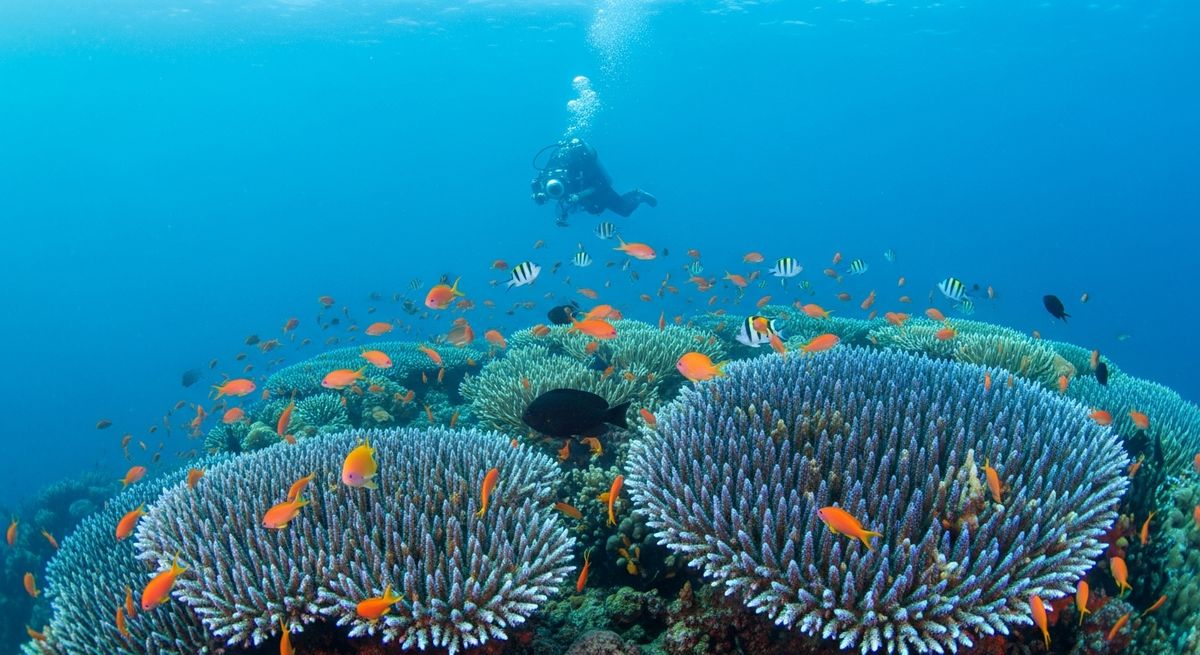
We’re often asked about easy, shallow dives in New Caledonia, and Îlot Maître is always high on our list for a relaxed afternoon. It’s got this wonderfully gentle sandy bottom, speckled with big, knobbly potato corals, which are fantastic for just finning around, watching the light play. We love that it’s so sheltered from the wind, making for reliably calm conditions. With a max depth of 7m, it’s not about grand, dramatic walls here, but rather a slow, deliberate exploration. Keep an eye out for the cleaner mimics darting amongst the coral branches, and we’ve spotted a good number of Schlegel's Parrotfish grazing the shallows. The real joy, though, is the sheer number of turtles that glide by, seemingly unbothered by divers. If you take your time over the sand patches, you might even catch a glimpse of a ray or some of those quirky nudibranchs. It’s a perfect spot for refining buoyancy or just decompressing after a deeper morning dive, especially good for newer divers or anyone craving a peaceful swim.
Nearest Dive Centres to Îlot Maître
Dive shops near Îlot Maître
Abyss Plongée
IATOK DIVING PARADISE
STIM - Plongée
Reviews for Îlot Maître
Conditions
Ocean conditions, forecast and tides for Îlot Maître
Îlot Maître Ocean Conditions
Monthly averages for Îlot Maître, sourced from Open-Meteo marine data + Copernicus Marine (EU) - nearest station: Open-Meteo marine grid (-22.43, 166.43) (4km away)
October Averages
Sea Temperature
23°C
74°F · Range: 21.8–26.2°C
Current Speed
6.71 cm/s
Direction: SW (206.6°)
Chlorophyll-a
0.061 mg/m³
Very clear (oligotrophic)
Salinity
35.39 PSU
Based on 4 years of monitoring data · Data sources: Open-Meteo marine data + Copernicus Marine (EU)
Plan & book
Ways to dive Prony Bay, from day trips to liveaboards.
Day trips & courses
via GetYourGuideGuided dives, courses and snorkel trips with instant booking.
Find dive trips in Prony BayPlaces to stay
via Booking.comHotels and dive resorts near Prony Bay.
Search stays in Prony BayDive insurance
Most travel insurance excludes or limits scuba. Check what you need before you go.
Dive insurance explainedPartner links: we may earn a commission if you book, at no extra cost to you. How we make money
Where to Stay near Îlot Maître
Prices from Booking.com. We may earn a commission at no extra cost to you.