sea horse
Protected Area
Épave du Humboldt
Why dive here
With 73+ marine species recorded in the area - including dugongs, great white sharks, humpback whales and sperm whales - sea horse offers some of Prony Bay's richest drift diving. Water ranges 22-27°C, warmest January, February, March.
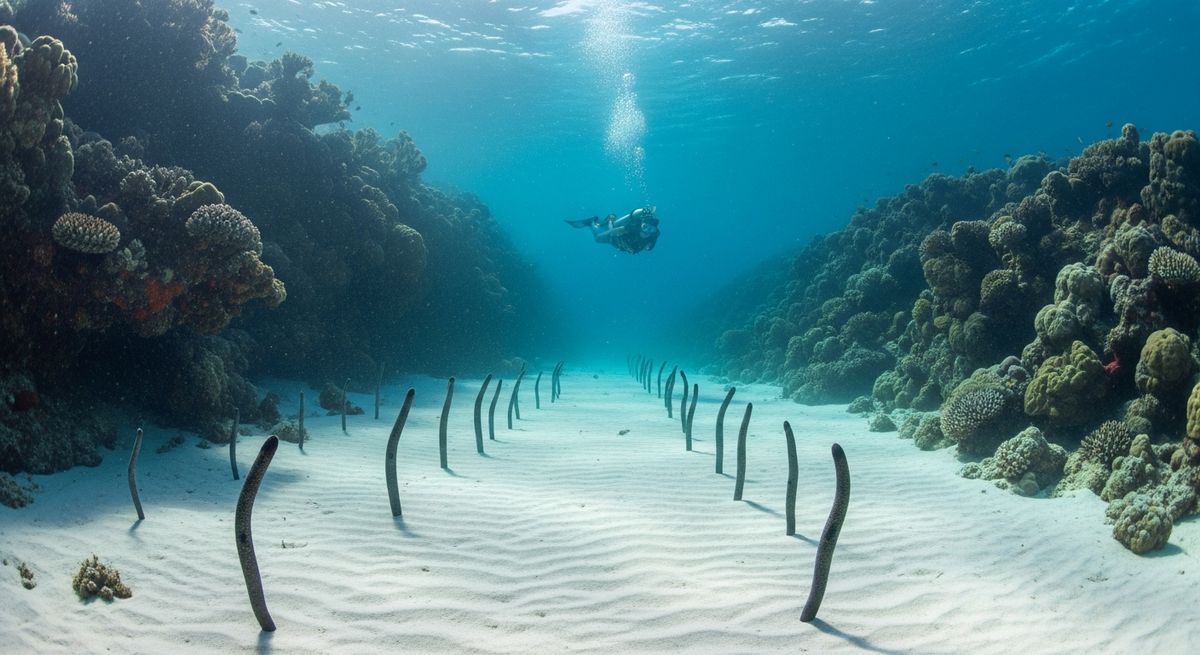
Prony Bay’s Sea Horse site is our pick when you want a dive that keeps you guessing. It’s got this great plateau, shallow enough that you can really take your time, packed with the usual suspects like blue and gold fusiliers. But the real show starts as that plateau spills into the drop-off. We've seen some impressive stuff cruise by here – eagle rays gliding past, occasionally a hammerhead ghosting out of the blue. What makes it standout, though, is the sheer variety. One dive, you’re watching a banded blenny dart into a coral head, the next you’re catching a glimpse of a swordfish out in the deeper water. The current can be brisk, so you'll want to be comfortable with a bit of drift, but that's often what brings in the bigger fish. Visibility usually holds around 25 metres, giving you a good chance to spot those pelagics as they come in from the open ocean. It's a site that rewards patience and a good eye, perfect for those who appreciate both the small details and the big picture.
Typical sea horse Dive Profile
Illustrative profile based on site depth and type. Actual dive profiles vary - always follow your dive computer and training.
Safety Notes
Drift dive - carry a surface marker buoy (SMB) and stay with your group. Brief the current direction before entry.
Nearest Dive Centres to sea horse
Dive shops near sea horse
IATOK DIVING PARADISE
Abyss Plongée
STIM - Plongée
Reviews for sea horse
Conditions
Ocean conditions, forecast and tides for sea horse
sea horse Ocean Conditions
Monthly averages for sea horse, sourced from Open-Meteo marine data + Copernicus Marine (EU) - nearest station: Open-Meteo marine grid (-22.43, 166.43) (4km away)
October Averages
Sea Temperature
23°C
74°F · Range: 21.8–26.2°C
Current Speed
6.71 cm/s
Direction: SW (206.6°)
Chlorophyll-a
0.061 mg/m³
Very clear (oligotrophic)
Salinity
35.39 PSU
Based on 4 years of monitoring data · Data sources: Open-Meteo marine data + Copernicus Marine (EU)
Plan & book
Ways to dive Prony Bay, from day trips to liveaboards.
Day trips & courses
via GetYourGuideGuided dives, courses and snorkel trips with instant booking.
Find dive trips in Prony BayPlaces to stay
via Booking.comHotels and dive resorts near Prony Bay.
Search stays in Prony BayDive insurance
Most travel insurance excludes or limits scuba. Check what you need before you go.
Dive insurance explainedPartner links: we may earn a commission if you book, at no extra cost to you. How we make money
Where to Stay near sea horse
Prices from Booking.com. We may earn a commission at no extra cost to you.