Cray’s Crack
Protected Area
Piopiotahi
Why dive here
With 46+ marine species recorded in the area - including blue sharks, great white sharks, seahorses and southern right whales - Cray’s Crack offers some of Fiordland's richest wreck diving. Water ranges 12-17°C, warmest January, February, March.
Cray’s Crack in Fiordland, it’s a site that really delivers on that true New Zealand vibe. We love dropping into the cool, dark water, the kelp stalks swaying above like a curtain. The real show starts at about 10 meters, where the rocky slope transforms into a proper wall. This isn't your vibrant tropical reef, but the colours here are subtler, deeper – the glow of orange zoanthids, the deep purple of kina, and of course, the famed black coral. We’ve found the best time to visit is often on an overcast day; the ambient light filtering through makes the black coral truly pop. Keep an eye out for those big crayfish tucked into crevices – they’re everywhere here, giving the site its name. Our favourite moments have been spotting schools of butterfly perch flitting amongst the coral branches and watching lazy dogsharks cruise by. The visibility can be hit or miss, usually around 10-12m, but it only adds to the moody, mysterious feel. It’s a straightforward dive to about 18m, making it a great pick for intermediate divers looking for that classic Fiordland experience without extreme depths or currents.
Safety Notes
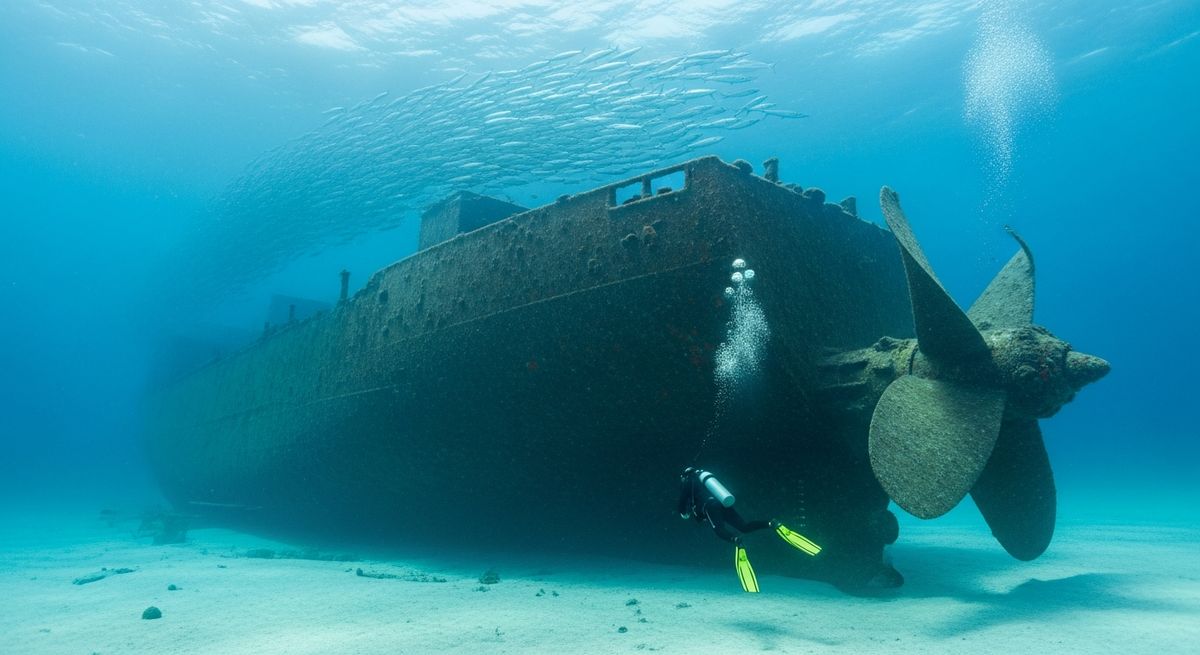
Wreck site - avoid penetration without wreck diving certification. Watch for sharp metal and entanglement hazards.
Cold water this month (avg 12°C). Drysuit or thick wetsuit (7mm+) recommended.
Reviews for Cray’s Crack
Conditions
Ocean conditions, forecast and tides for Cray’s Crack
Cray’s Crack Ocean Conditions
Monthly averages for Cray’s Crack, sourced from Open-Meteo marine data + Copernicus Marine (EU) - nearest station: Open-Meteo marine grid (-44.66, 167.9) (28km away)
October Averages
Sea Temperature
12°C
54°F · Range: 11.5–13.4°C
Current Speed
11.4 cm/s
Direction: NE (37.9°)
Chlorophyll-a
0.27 mg/m³
Clear water
Salinity
34.67 PSU
Based on 4 years of monitoring data · Data sources: Open-Meteo marine data + Copernicus Marine (EU)
Plan & book
Ways to dive Fiordland, from day trips to liveaboards.
Day trips & courses
via GetYourGuideGuided dives, courses and snorkel trips with instant booking.
Find dive trips in FiordlandPlaces to stay
via Booking.comHotels and dive resorts near Fiordland.
Search stays in FiordlandDive insurance
Most travel insurance excludes or limits scuba. Check what you need before you go.
Dive insurance explainedPartner links: we may earn a commission if you book, at no extra cost to you. How we make money
Where to Stay near Cray’s Crack
Prices from Booking.com. We may earn a commission at no extra cost to you.